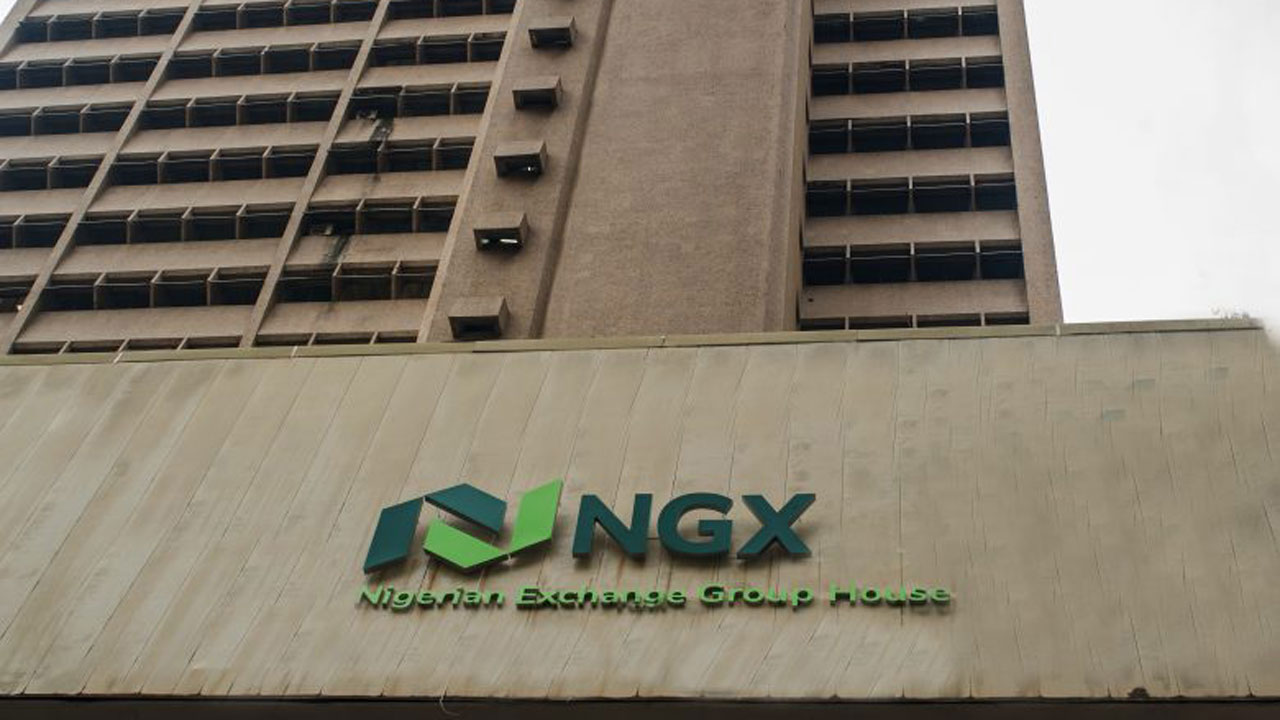
Nigerian equities closed the latest trading week firmly higher as renewed demand for banking and other major stocks lifted the NGX All-Share Index by 2.78 per cent to 249,804.60 points.
Market capitalisation similarly advanced to approximately ₦163.50 trillion, reflecting improved investor appetite across several segments of the market.
The rally came as investors repositioned following earlier liquidity caution surrounding the massive Dangote Petroleum Refinery public offer.
Trading activity also strengthened considerably.
Investors exchanged approximately 3.20 billion shares worth ₦168.67 billion through 287,919 transactions during the week ended September 18.
Compared with the previous week, trading volume increased 23.83 per cent while value climbed 30.81 per cent.
Financial Stocks Dominate Trading
Financial services remained at the centre of activity.
Fidelity Bank, Sterling Financial Holdings and Mutual Benefits Assurance were among the equities accounting for substantial volumes during the week.
Market breadth also strengthened significantly.
A total of 61 stocks advanced against 32 decliners, producing a market breadth of 1.91.
Sovereign Trust Insurance led the gainers after rising 30.95 per cent to ₦2.20, while Transcorp Power recorded the largest decline, falling 18.94 per cent to ₦178.
The broad participation is significant because a market rally driven by numerous stocks can indicate wider investor appetite than one produced almost entirely by movements in a handful of heavyweight companies.
Investors Put ₦168.67bn to Work
The jump in weekly trading value is another notable indicator.
Approximately ₦168.67 billion worth of equities changed hands, demonstrating substantial liquidity despite the large amount of capital simultaneously being targeted by the Dangote Refinery IPO.
The refinery opened its public offer on September 14, seeking roughly ₦2.15 trillion through 4.1 billion shares priced at ₦525 each.
A transaction of that scale can temporarily affect market liquidity because investors may sell existing securities or hold cash to participate in the offer.
The latest NGX numbers suggest that appetite for existing equities nevertheless remained strong.
Nigeria Returns to FTSE Frontier Status
The rally also arrives immediately before an important change in Nigeria’s international market classification.
FTSE Russell’s reclassification of Nigeria from Unclassified to Frontier Market status becomes effective from the opening of trading on September 21.
FTSE has identified 31 Nigerian equities as eligible across different segments of its Frontier Index Series.
The change increases the visibility of Nigerian equities to international investors whose portfolios or benchmarks track FTSE indices.
However, index inclusion does not guarantee automatic or permanent capital inflows.
Foreign investors will continue to evaluate valuations, corporate earnings, exchange-rate stability, FX liquidity and the ability to repatriate investment proceeds.
Bond Market Attracts ₦1.49tn Demand
Investor demand was not restricted to equities.
The Federal Government’s September bond auction generated approximately ₦1.49 trillion in subscriptions against ₦1 trillion offered across the reopened September 2036 and June 2038 instruments.
The level of demand highlights the large amount of liquidity still moving through Nigeria’s financial markets.
Secondary bond-market conditions were less positive, however, with average yields rising four basis points to 16.58 per cent.
Treasury-bill yields eased marginally to approximately 18.85 per cent.
NGX Approaches 250,000-Point Milestone
At 249,804.60 points, the NGX All-Share Index ended the week just short of the psychologically significant 250,000-point level.
But index milestones alone do not determine whether the market remains attractive.
Investors will increasingly focus on corporate earnings, dividend expectations and whether valuations remain justified following the substantial gains recorded by Nigerian equities.
The market also enters the new week with two potentially important catalysts operating simultaneously: Nigeria’s return to FTSE Frontier Market status and the continuing Dangote Refinery IPO.
Together, they place Nigeria’s capital market under greater international scrutiny.
For the NGX, the challenge is turning that renewed attention into sustained liquidity, new listings and broader participation rather than another short-lived market rally.