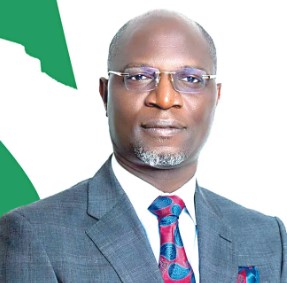
The Director General of the Securities and Exchange Commission (SEC), Dr. Emomotimi Agama, has described the newly enacted Investment and Securities Act (ISA) 2025 as a comprehensive reform agenda designed to modernize Nigeria’s regulatory environment and reposition the nation’s capital market. Agama, who was represented by John John Briggs, Head Lagos Zonal Office, Securities & Exchange Commission, made this known while speaking at the Capital Market Correspondents Association of Nigeria (CAMCAN) 2025 Workshop in Lagos.
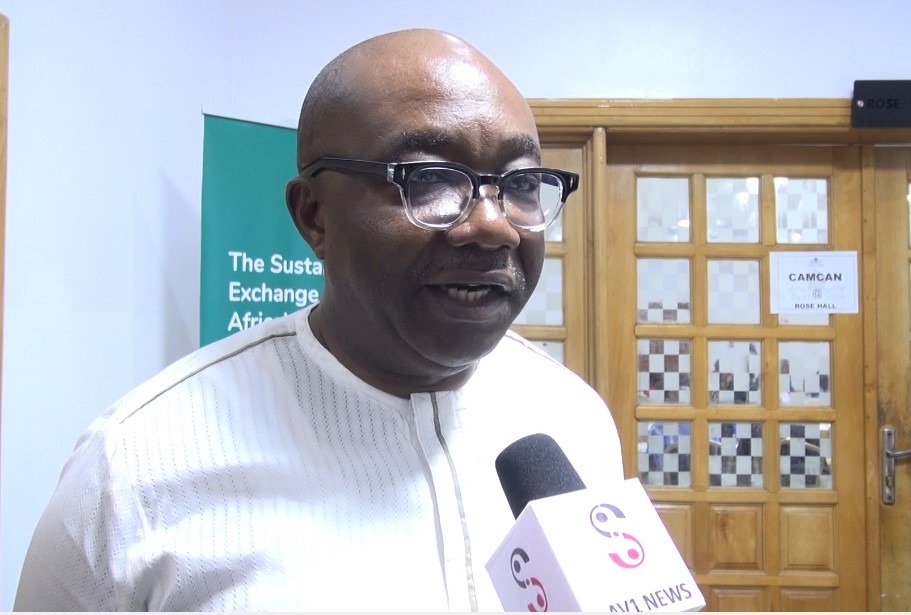
He described the ISA 2025 is far more than a replacement for the 2007 Act. He said it “consolidates nearly two decades of experience, closes long-standing regulatory gaps, aligns our framework with global standards, and provides a stronger legal foundation for innovation, market stability, and investor protection.”
Briggs, speaking on behalf of the DG, emphasised that regulatory reforms are central to Nigeria’s economic transformation. “As the theme of today’s workshop suggests, regulatory reforms play a defining role in shaping the nation’s investment climate, and ISA 2025 is central to that transformation,” he noted.
Agama explained that the Act reflects almost ten years of work, beginning from the Market-Wide Review Committee in 2016 to its eventual enactment in March 2025. He said the reforms became necessary due to the rise of digital trading, fintech platforms, virtual assets, and the need for Nigeria to align with IOSCO standards.
One of the major innovations highlighted was the strengthened mandate of the SEC. “For the first time, the Act explicitly sets out the regulatory objectives, functions, and powers of the Commission,” he said, adding that this clarity enhances accountability and improves predictability—key elements investors look for when assessing a market’s attractiveness.
He further stated that “the ISA 2025 tells the SEC exactly who it is, what it must do, and how it must do it,” stressing that this new clarity sends a strong message about Nigeria’s commitment to serious regulatory governance.
The DG also pointed to the expanded regulatory scope of the Act, which now covers digital asset exchanges, warehouse receipt systems, crowdfunding intermediaries, credit enhancement providers, commodities platforms, and market-infrastructure operators. According to him, this shift aligns regulation with today’s realities and “ensures that all significant market actors are properly supervised, reducing risk and increasing transparency.”
On commodities and agriculture, Agama said the new framework for commodities exchanges and warehouse receipts is a game-changer. “By turning commodities into bankable assets, the ISA 2025 strengthens Nigeria’s diversification efforts and opens new channels for investment,” he said.
He also noted that the Act introduces global-standard insolvency frameworks for Financial Market Infrastructures and codifies systemic-risk monitoring for the first time. “This signals a more resilient market environment—one better able to withstand shocks,” he added.
Speaking on investor protection, Agama highlighted the strengthened Investor Protection Fund (IPF) and faster administrative penalties. “These provisions help build trust, reduce uncertainty, and make the market a safer destination for investors,” he said.
On the digital economy, he explained that recognising virtual assets as securities where applicable “creates a regulated environment for fintech innovation and provides clarity for entrepreneurs and investors.”
Agama concluded by describing ISA 2025 as “a blueprint for improving Nigeria’s investment climate and building a capital market that is deeper, stronger, more innovative, and more inclusive.”
He added: “It strengthens the SEC. It protects investors. It empowers operators. It creates a more predictable regulatory environment. And it positions Nigeria as a competitive destination for long-term investment.”
He called on stakeholders to ensure full implementation, saying “our collective responsibility now is to bring this framework to life through collaboration and capacity building.”