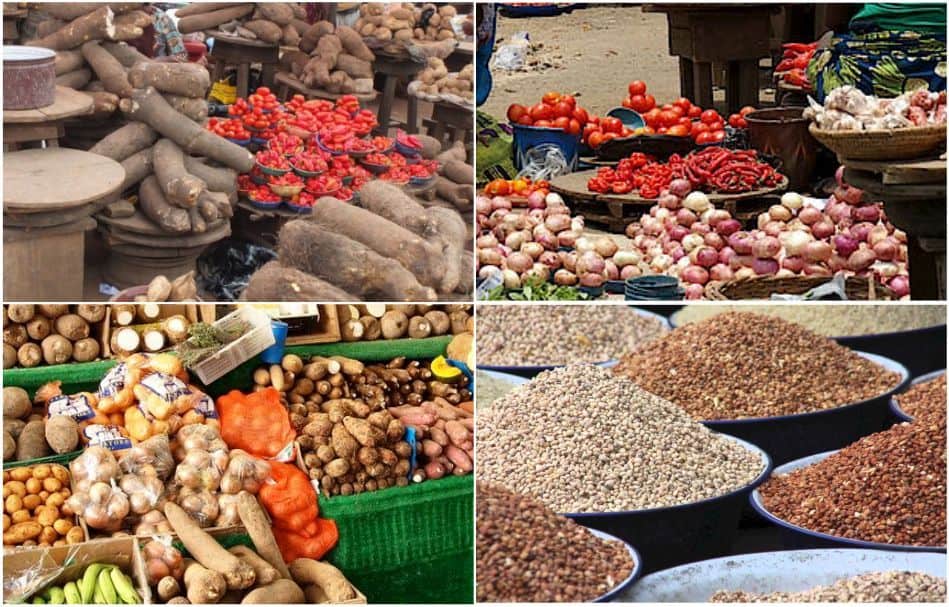
Some residents of Abuja have commended the Federal Government’s intervention in the food sector, saying the recent drop in prices of major food items has brought relief to households in the Federal Capital Territory and across the country.
The residents spoke in separate interviews with the News Agency of Nigeria (NAN) on Tuesday, attributing the development to increased supply and government-backed measures aimed at stabilising food prices.
Mrs Vivian Uche, a foodstuff vendor at the Lugbe market, praised the Federal Government, noting that its interventions had helped to curb the persistent hike in food prices.
“In an unexpected development, food prices have dropped in the market across Nigeria, bringing much relief to Nigerians who have been struggling with the rising cost of living,” she said.
According to her, prices of key staples have reduced significantly in recent months.
“I sell beans, rice and other food items; the prices have dropped notably in the market. A bag of rice that was selling for ₦76,000 a few months ago now goes for ₦55,000.
“A module of gari was ₦1,000 to ₦1,200 but now ₦500 to ₦600. Beans dropped from ₦3,000 to ₦600 or ₦800, depending on quality. The same thing goes for yam flour and others.
“Truly speaking, this is a relief for us traders and the customers that buy our products to consume,” she said.
Also speaking, Mrs Ifeoma Iwuji, a civil servant, said the Federal Government’s efforts to make food more available and affordable could not be overemphasised.
She attributed the decline in prices to policies that have boosted food production and supply nationwide.
“The cost of food has been a major burden; with the price dropping, we can now afford to buy more food,” she said.
However, Mrs Cynthia Chukwuma, a buyer at Lugbe market, urged caution, saying the sustainability of the price reduction remained key.
“We need to see if this price drop is sustainable for a long time. We have seen prices of foodstuffs drop before, only for them to increase again. For now, families are enjoying lower food prices,” she said.
Mr Kayode Iyiola, a mechanised farmer, told NAN that the drop in food prices was due to both government intervention and seasonal factors.
He explained that the ongoing harvest season had increased food supply, while improved security in farming communities had enabled farmers to return to their farmlands.
“Farmers can now access their lands and produce more food. Additionally, the federal government’s free import waiver has led to a surge in cheap imports, further driving down prices.
“Government intervention, like subsidised fertiliser distribution and dry-season farming initiatives, has also supported the price drop,” he said.
Despite the improvement, Iyiola noted that many Nigerians were still grappling with low purchasing power and stagnant incomes, which continued to limit access to basic food items for some households.