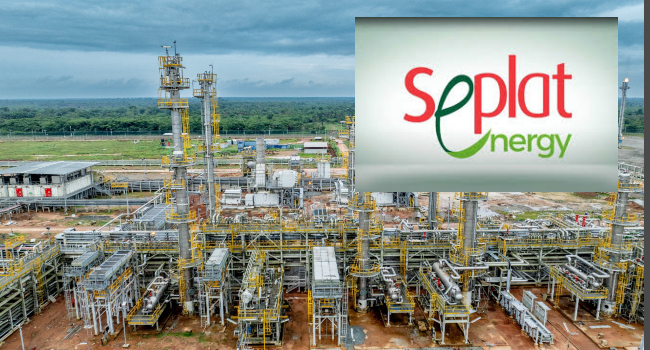
Seplat Energy Plc has announced that its 300 Million Standard Cubic Feet per Day (MMscfd) ANOH gas project has achieved first gas, marking a major milestone for the company and Nigeria’s domestic gas sector.
A statement released on Tuesday noted that the achievement followed completion of the 11km Indorama gas export pipeline and receipt of regulatory approval from the Nigerian Upstream Petroleum Regulatory Commission (NUPRC).
“On Friday, 16th January 2026, ANOH Gas Processing Company (AGPC) commenced gas supply to Indorama, under a firm and interruptible offtake Gas Sales Agreements (GSAs),” the company said. The four upstream wells, which had been on standby since November 2025, were brought online to enable the gas flow.
Since first gas, wet gas production has stabilized, delivering 40-52 MMscfd directly from the ANOH plant to the Indorama Petrochemical Plant. Condensate production has reached 2.0-2.5 kboepd and is expected to rise as the plant ramps up to its design capacity.
Preparations are also underway to initiate sales of processed gas to Nigeria LNG (NLNG) on an interruptible offtake basis, supporting further scale-up towards the plant’s full 300 MMscfd capacity. Meanwhile, construction of the OB3 pipeline export route by Nigerian Gas Infrastructure Company (NGIC)—the primary channel for ANOH gas supply to the domestic market—has resumed, with a revised completion date to be announced.
Developed by AGPC, a joint venture between Seplat Energy and NGIC, the ANOH gas plant consists of two 150 MMscfd gas processing units, LPG recovery and condensate stabilization units, a 16MW power plant, and supporting facilities, all designed to operate with zero routine flaring. The plant unlocks an estimated 4.6 Tcf of condensate-rich gas from the unitised OML 53 and OML 21 fields.
Seplat’s CEO, Roger Brown, described the project as a strategic milestone for both the company and Nigeria.
“ANOH is the first of the seven critical gas development projects identified by the Federal Government of Nigeria to commence operations. It is an important strategic project for Seplat, our partner NGIC, and Nigeria as a whole,” he said.
Brown added that the ANOH plant will generate material income streams for Seplat, reduce carbon intensity, enhance energy access through power and clean cooking fuel, and advance the company’s 2030 production target of 200 kboepd. The plant has also achieved a remarkable safety record, with zero Lost Time Incidents across 17.5 million man-hours.
The project further positions Seplat as a leading supplier of clean cooking fuel in Nigeria, complementing LPG production at the Sapele and Bonny River Terminal facilities. The plant will also process flared gas from the Ohaji field, contributing to Seplat’s onshore End of Routine Flaring programme.