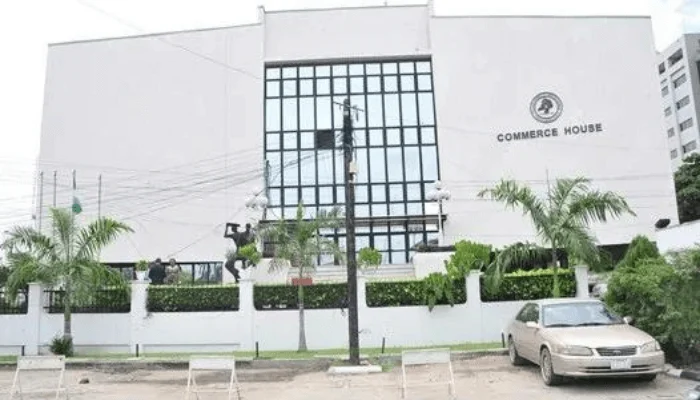
The Lagos Chamber of Commerce and Industry (LCCI) has called on the Federal Government to urgently settle verified 2024 capital project liabilities to ease the growing financial distress faced by indigenous contractors.
President of the LCCI, Leye Kupoluyi, made the call on Thursday during his address on the state of the economy in Lagos. He described the N1.7tn earmarked for contractor payments in the 2026 Federal Budget as a recognition of long-standing payment delays.
“The Federal Government’s earmarking of N1.7tn in the 2026 budget reflects a formal acknowledgement of persistent payment delays to contractors,” Kupoluyi said. “This provision aims to settle verified 2024 capital project liabilities and ease the financial distress faced by indigenous contractors.”
He stressed that beyond budgetary provisions, sustained fiscal discipline and prompt cash backing were critical to restoring contractor confidence and ensuring timely infrastructure delivery.
Highlighting recurring backlogs in project execution, Kupoluyi noted that structural challenges such as weak budget performance and delayed capital releases have continued to undermine the effective implementation of public projects.
On inflation, the LCCI president urged governments at all levels to address pressures arising from high energy costs, elevated interest rates, logistics bottlenecks and insecurity. He also emphasised the need to sustain agricultural production and fuel supply policies to ease the cost of living.
According to him, reducing the cost of doing business would benefit both citizens and enterprises, particularly low- and middle-income households.
Kupoluyi commended the relative stability of the naira in 2025, noting that the currency appreciated by 6.52 per cent against the dollar at the official market. He attributed the improvement to enhanced transparency in the foreign exchange market and stronger policy credibility.
“Improved transparency in the foreign exchange market and stronger policy credibility have enhanced market confidence,” he said, adding that Nigeria’s external reserves rose to $45.5bn by the end of the year.
Reviewing the 2026 Federal Budget, Kupoluyi described it as an opportunity for economic consolidation, saying it supports infrastructure development, industrial expansion and productivity growth.
However, he warned that debt servicing, projected at N15.52tn, remains a significant fiscal burden, calling for stricter borrowing discipline and greater use of public-private partnerships.
The LCCI president also cautioned that weak budget implementation capacity and overlapping budget cycles could hinder effective project execution. He identified agriculture, manufacturing, infrastructure, energy and human capital development as key growth drivers in 2026, stressing the need for decisive implementation.
Kupoluyi urged the government to explore non-debt financing options, improve revenue efficiency and expand tax compliance to sustainably fund development. On the planned sale of national assets, he called for transparency, competitive processes and reinvestment of proceeds into infrastructure and productivity-enhancing projects.
He further lauded the increase in domestic liquefied petroleum gas production, noting that it strengthens Nigeria’s energy security and resilience. He also encouraged businesses to comply with the new tax regime to enhance competitiveness and boost government revenue.
Concluding his address, Kupoluyi reaffirmed the LCCI’s commitment to engaging government and stakeholders on practical policy solutions to improve Nigeria’s business environment.
“We call on the government to tackle these economic issues to deliver gains to citizens and businesses,” he said.