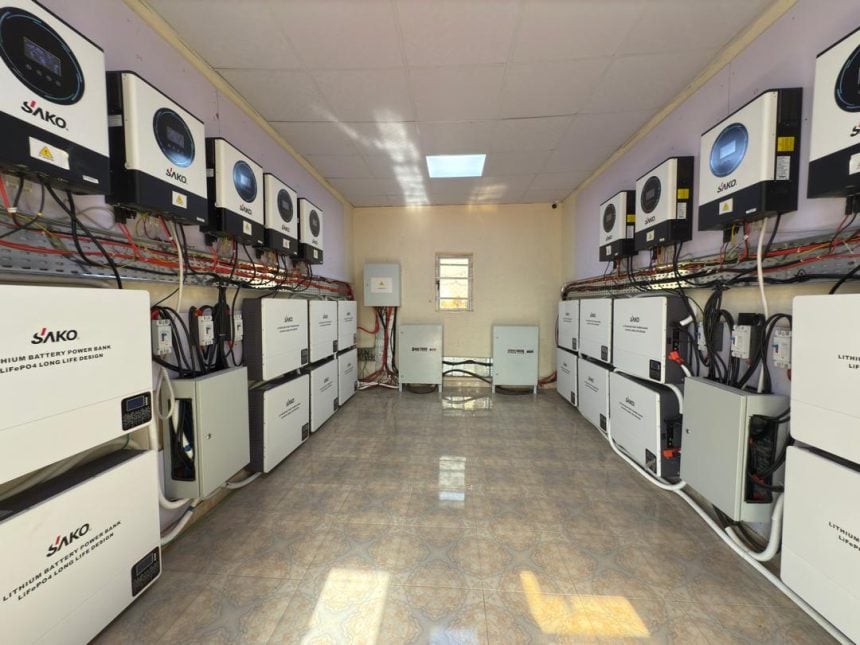
The Rural Electrification Agency (REA) has unveiled a 100-kilowatt-peak (kWp) solar mini-grid in Damau village, Kubau Local Government Area of Kaduna State, providing clean electricity and a reliable water supply to more than 2,500 residents.
The project, delivered through the Federal Government’s capital subvention, forms part of the REA’s broader effort to expand sustainable energy access and stimulate socio-economic development in underserved rural communities across Nigeria.
In a statement, the agency said the Damau facility is one of 39 new mini-grids being added to Nigeria’s clean energy assets under its 2024 capital projects, which are currently being concluded nationwide.
According to the REA, the impact of the intervention is already evident in the community. The 100 kWp mini-grid is powering homes, small businesses, and public infrastructure, while also supporting a solar-powered submersible borehole with sufficient storage capacity.
The borehole now provides clean and potable water to residents, significantly reducing water scarcity in Damau. The agency noted that the project has eased the burden on women and children who previously travelled long distances to fetch water, ensuring consistent, safe, and sustainable access.
The REA explained that, in recent years, it has adopted a more impact-driven deployment strategy under the Federal Government’s capital projects. This approach prioritises renewable energy solutions and productive-use anchor loads to maximise socio-economic benefits beyond traditional grid extension projects, while optimising public funding.
Speaking at the unveiling, the Managing Director and Chief Executive Officer of the REA, Dr Abba Aliyu, said the project reflects a strategic shift in the agency’s rural electrification approach.
“The Damau project reflects the agency’s evolving approach to rural electrification, one that deliberately integrates energy access with social infrastructure and community needs, rather than deploying power in isolation,” Aliyu said.
He added that the Federal Government’s ongoing energy access scale-up demonstrates how decentralised renewable energy can transform rural communities. Aliyu also commended Kaduna State Governor, Uba Sani, for his continued support for REA initiatives that address community priorities.
Also speaking, the Executive Director, Technical Services, Engr Umar Abdullahi, disclosed that the agency has recently unveiled harmonised technical standards and specifications to guide the sustainable deployment of off-grid energy infrastructure nationwide.
According to him, the Damau mini-grid showcases the agency’s technical rigour and long-term sustainability focus.
“By integrating electricity with essential services like water supply, we are ensuring that power access translates into real social impact, sustainability, and a clear pathway for future expansion,” Abdullahi said.
The REA noted that the project was delivered through close engagement with community leaders and political representatives, reinforcing inclusive planning, local ownership, and accountability.
The agency added that early demand from households, commercial users, and productive enterprises indicates growing energy needs in Damau, positioning the community as a strong candidate for future expansion beyond the current 100 kWp capacity.