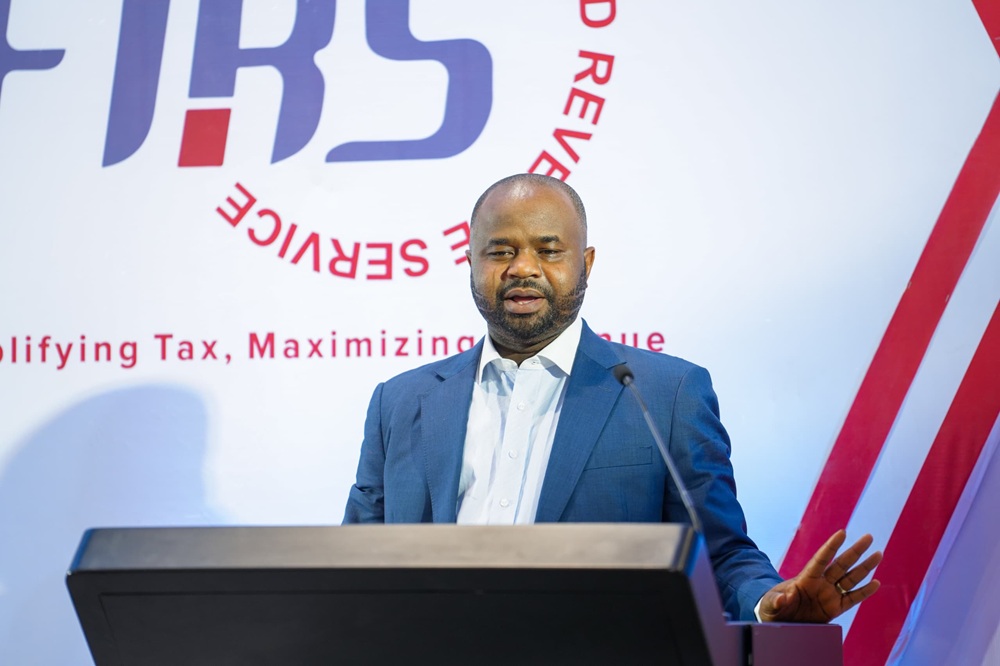
Chairman of the Nigeria Revenue Service (NRS), Zacch Adedeji, has called for a paradigm shift from reliance on raw material exports to an economy driven by ideas, innovation, and the production of complex goods as a pathway to sustainable growth and national prosperity.
Adedeji made the remarks while delivering the maiden distinguished personality lecture of the Faculty of Administration at Obafemi Awolowo University (OAU), Ile-Ife, Osun State, on Thursday. The lecture was titled “From Potential to Prosperity: Export-led Economy.”
According to a statement by his Special Adviser on Media, Dare Adekanmbi, Adedeji emphasized the importance of rethinking growth through the lens of complexity rather than simply increasing the production of the same low-value goods.
He noted that Nigeria possesses a high-tech oil sector but a low-productivity informal sector and lacks a vibrant, labour-absorbing industrial base that could bridge the economy to higher complexity.
“Nigeria witnessed stagnation in its exportation drive for three decades between 1998 and 2023, adding only six new products to its export basket between 2008 and 2023,” Adedeji said. “Because of our current position, the Harvard Atlas concluded that we are positioned to take advantage of very few opportunities to diversify using what we already know.”
Adedeji urged Nigeria to learn from the experiences of countries like Vietnam, Bangladesh, Indonesia, South Africa, and Brazil, highlighting that successful economies adopt strategies to build productive capabilities and integrate into global value chains (GVCs).
“Vietnam used global trade to build a resilient, complex economy, positioning itself as the assembly hub for the world’s electronics, importing high-tech parts and exporting finished products. This allowed them to ‘borrow’ technology and management skills from abroad to build their own know-how,” he said.
In contrast, Nigeria remains primarily a supplier of raw materials, missing opportunities to actively participate in global value chains. Adedeji warned that over-reliance on natural resources creates economic and political incentives that can crowd out the long-term work needed to build a robust industrial base.
“Relying solely on our natural endowments isn’t just a path to stagnation; it’s a path to regression. The global economy increasingly rewards knowledge and complexity, not just what you can dig out of the ground. If we want to move from potential to prosperity, we must stop being just a source of raw materials and start being a source of ideas, innovation, and complex products,” he added.
Adedeji further commended President Bola Tinubu for beginning efforts to rebuild the economy and cultivate collective knowledge to drive innovation, production, and resilience.
“The journey from potential to prosperity is not a short one, but with the right map and the right resolve, it is a journey we can finally complete,” he concluded.