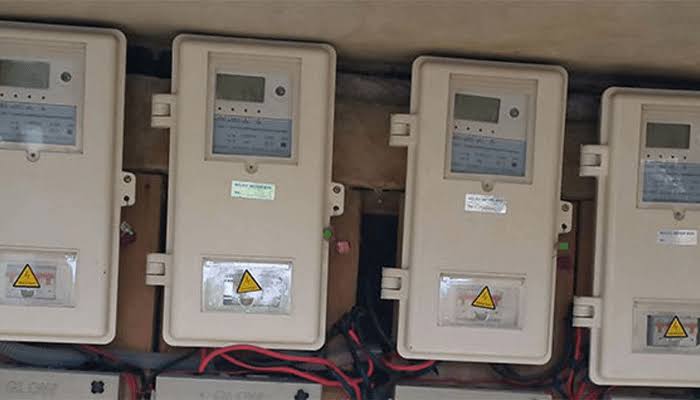
The Nigerian Electricity Regulatory Commission (NERC) has clarified that not all electricity meters being installed across Nigeria are free, amid confusion over the Federal Government’s metering initiatives and warnings against illegal charges by electricity distribution companies (DisCos).
NERC Chairman Musiliu Oseni made the clarification on Saturday during a radio interview with Adeola Samuel-Ilori on Fresh FM, explaining that meters supplied under government-funded programmes are free at the point of installation, while other options are available for customers who prefer not to wait.
“The meter provided by the government is 100 per cent free. The DISREP meter is free because it is paid for by the government. DisCos are to provide it at no cost to customers,” Oseni said. He added that the cost of the meter is recovered indirectly through tariffs and that no DisCo is allowed to collect any payment for the free meters.
The chairman noted that customers who cannot wait for the rollout of free meters may opt for the Meter Asset Provider (MAP) scheme, paying for a meter from a licensed company rather than an individual.
Oseni explained how consumers can distinguish free DISREP meters from MAP meters: “When the MAP meter gets to them, they can check whether it is a meter meant to be free or one provided after payment. Free meters have the inscription ‘DISREP’ alongside the DisCo’s name.”
He further assured that customers who previously paid upfront for meters under approved arrangements are entitled to refunds.
The clarification follows directives by the Minister of Power, Adebayo Adelabu, who recently warned that meters procured under the World Bank-funded Distribution Sector Recovery Programme (DISREP) must be installed free of charge. “It is an offence for officials of DisCos to request any payment before installation,” Adelabu said.
Despite the directive, some distribution companies expressed concerns about cost recovery and financial sustainability, noting that the expense of meters would eventually be borne through tariffs. The Bureau of Public Enterprises (BPE) later confirmed this, explaining that consumers ultimately pay for infrastructure investments, including meters, through the tariff design.
Currently, Nigeria has about 5.9 million unmetered customers, and NERC stressed that closing the meter gap remains a priority under both DISREP and the Presidential Metering Initiative, which is ongoing under the office of the Special Adviser to the President on Energy.
Oseni’s explanation aims to address widespread confusion and reassure consumers that free meters are indeed provided at no direct cost, while optional paid schemes exist only for those who need immediate installation.