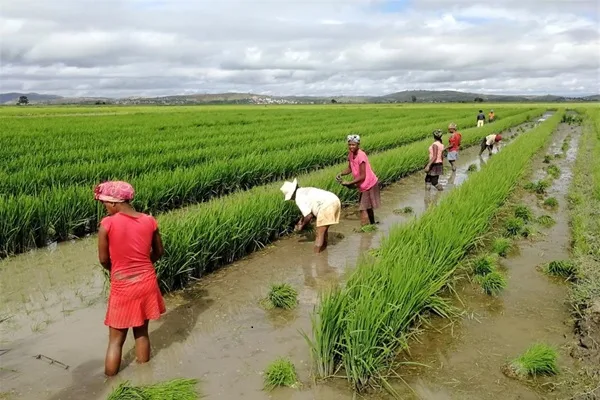
Madagascar has unveiled plans to develop 150,000 hectares of new rice-growing areas in a bid to strengthen domestic production and reduce reliance on imports.
On February 14, the Agriculture Ministry signed a memorandum of understanding with private firm COM’ON HOLDING & PARTENAIRE to support the initiative. Pilot sites will be launched in major production regions, including Atsinanana and Alaotra Mangoro, to trial modern farming techniques such as mechanized transplanting and combine harvesting.
The project will use certified seeds from AfricaRice and will operate under scientific supervision by FOFIFA, the National Center for Applied Research in Rural Development. Output from the initiative will primarily serve the domestic market, with potential exports of specialty rice if national food security targets are met.
The move comes amid growing import dependence, as Madagascar’s rice imports more than doubled to 800,000 tons in 2025 from nearly 300,000 tons the previous year. Production prospects have been weak, with the U.S. Department of Agriculture estimating milled rice output at 2.7 million tons in 2025/26, down 19% from the previous season and 12% below the five-year average.
The decline is attributed to reduced cultivated area, lower average yields, drought, delayed seasonal rains, and above-average temperatures. Experts say the 2025/26 season recorded the lowest rice yields in 20 years.
The public-private partnership aims to rebuild the sector’s production base by promoting large-scale hybrid rice cultivation, modern mechanization, and improved input access. Hybrid varieties, which can yield up to 8.5 tons per hectare, have the potential to triple traditional production levels.
In its 2025 budget, the government allocated 573 billion ariary to purchase hybrid rice seeds for farmers, reflecting its commitment to modernizing the rice sector and reducing the gap between current and potential yields.