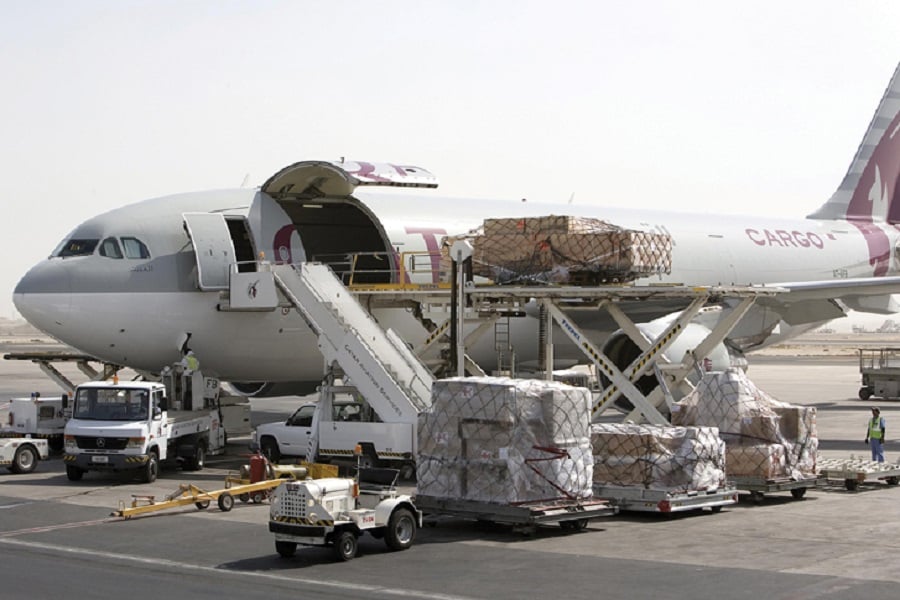
The Sea Empowerment and Research Centre has called on the Ministry of Aviation and Aerospace Development to treat air cargo reform as a strategic national economic priority rather than a routine administrative or revenue matter.
SEREC made the call while presenting a ministerial brief addressing structural, governance and competitiveness concerns in Nigeria’s aviation air cargo ecosystem.
The brief followed recent tariff adjustment disputes between the Federal Airports Authority of Nigeria and freight forwarders and air cargo agents.
The document, made available to Daily Sun by SEREC’s Head of Research, Eugene Nweke, acknowledged the temporary understanding reached on revised cargo tariffs. However, it stressed that the core issues extend beyond pricing.
According to SEREC, the concerns touch on Nigeria’s preparedness under the African Continental Free Trade Area, the efficiency of national logistics infrastructure, and the country’s long-term trade and export ambitions.
Nweke said that in the evolving AfCFTA environment, air cargo plays a decisive role in facilitating high-value and time-sensitive intra-African trade.
He noted that it supports non-oil exports such as agro-produce, pharmaceuticals and manufactured goods. It also enables Nigeria’s participation in regional value chains and enhances competitiveness relative to other African aviation hubs.
“Globally, air cargo is increasingly recognised as critical trade infrastructure, not a subsidiary aviation function,” he said.
However, he warned that Nigeria’s air cargo system continues to face fragmented governance, inconsistent policy implementation, weak linkage between tariffs and service performance, and underutilisation of internationally recognised regulated agent regimes.
SEREC argued that these gaps risk positioning Nigeria as a high-cost, low-efficiency cargo origin. This, it said, could undermine government efforts at export diversification and trade expansion.
The centre described the recent FAAN–freight forwarder dispute over tariff increments as a symptom of deeper systemic challenges.
These include the absence of a structured cargo economic framework, reactive stakeholder engagement, and cost increases without corresponding efficiency gains.
According to SEREC, cargo tariffs have historically been adjusted without a transparent, multi-stakeholder economic model anchored in cost-to-serve analysis and export competitiveness assessments.
It added that consultations often occur after policy announcements rather than as part of an institutionalised pre-decision framework aligned with international best practice and guidance from the International Civil Aviation Organization.
The centre further noted that tariff increases have not been sufficiently linked to measurable improvements in service delivery, infrastructure upgrades, cargo processing speed and digitalisation.
Under AfCFTA, SEREC warned that excessive airport and cargo-related charges could function as non-tariff barriers, discouraging trade flows and eroding Nigeria’s price competitiveness.
It listed key risks to include Nigerian exports becoming uncompetitive compared to cargo routed through Addis Ababa, Nairobi, Kigali or Johannesburg, diversion of regional cargo volumes from Nigerian airports, and underutilisation of aviation infrastructure.
If unresolved, the centre cautioned, these challenges could undermine broader government investments in export promotion, industrialisation and logistics reform.
SEREC urged policymakers to adopt a comprehensive, evidence-based reform agenda to ensure Nigeria’s air cargo sector aligns with continental trade realities and long-term economic goals.