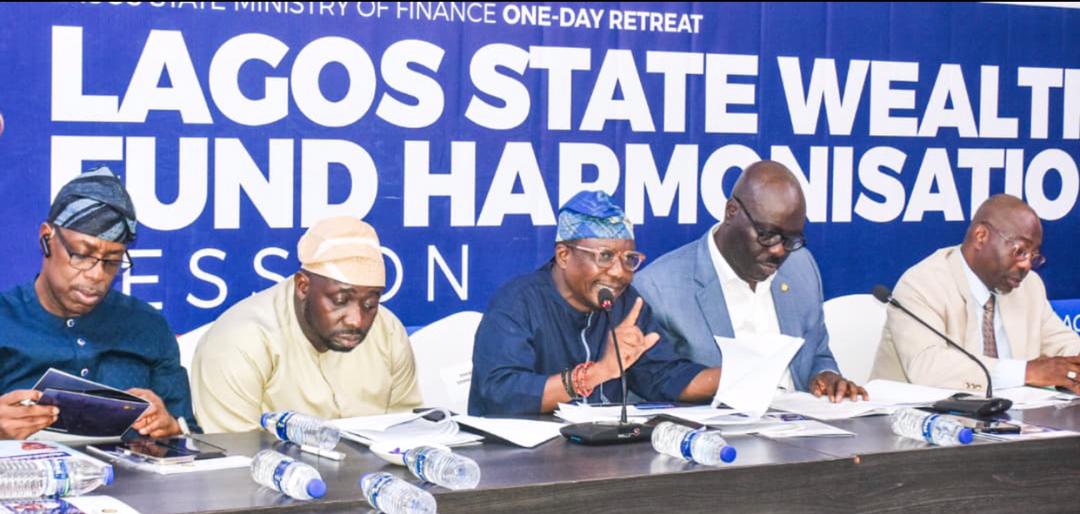
The Lagos State Government has taken a major step toward establishing a Sovereign Wealth Fund (SWF) aimed at safeguarding the state’s future and creating financial security for generations to come. The initiative was highlighted during the Lagos State Wealth Fund (LSWF) Bill Harmonisation Session held on Tuesday at Four Points by Sheraton, Oniru, Lagos.
The session, themed “Designing a Coherent and Bankable Wealth Fund Architecture for Lagos”, brought together members of the Lagos State Executive Council, the House of Assembly, and private sector stakeholders to review and refine the provisions of the proposed bill.
Finance Commissioner Abayomi Oluyomi explained that the fund would serve as a strategic investment vehicle, channeling capital into infrastructure development, economic diversification, long-term savings, and fiscal stabilisation. Drawing inspiration from the Nigerian Sovereign Investment Authority, the framework will feature four major investment windows to boost infrastructure financing, protect public resources, and generate returns.
The Attorney General, Lawal Pedro (SAN), described the fund as a legacy project, positioning Lagos as Africa’s first subnational government to implement a structured wealth fund. He highlighted benefits such as revenue maximisation, asset management, and economic diversification.
Special Adviser on Corporate and Finance Strategy, Akintayo Sanwo-Olu, stressed that the fund would institutionalise long-term savings while attracting both domestic and international investment. He noted, “It is not about short-term gains — it is about building sustainable prosperity for future generations, creating jobs, improving public services, and strengthening fiscal resilience.”
Stakeholders at the retreat emphasised the importance of private sector participation, noting that the harmonised fund framework could serve as a model for subnational wealth management in Nigeria. Once passed into law, the Lagos State Wealth Fund is expected to provide a sustainable financial pillar for Africa’s largest subnational economy, supporting infrastructure development, reducing fiscal risks, and ensuring long-term economic growth.