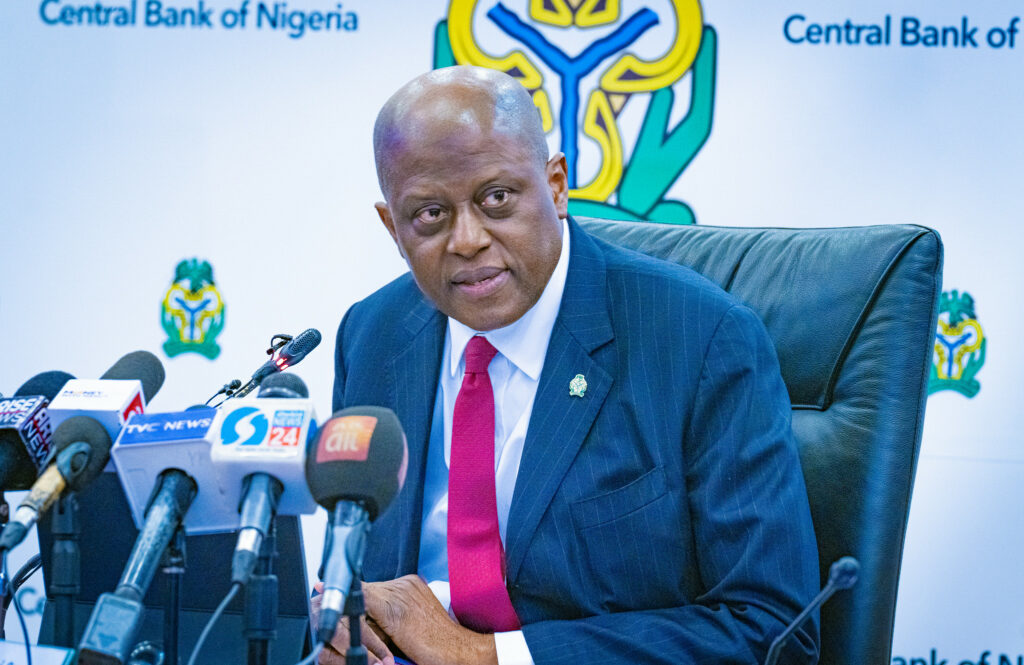
The unexpected slowdown in inflation has strengthened expectations that the Monetary Policy Committee of the Central Bank of Nigeria could begin easing monetary policy at its next meeting scheduled for Monday and Tuesday next week.
Analysts at FXTM said the latest inflation figures provide policymakers with greater flexibility after months of aggressive tightening.
Ahead of the January inflation release, several analysts had projected a rise to about 19 per cent due to the base-year effect. However, headline inflation moderated to 15.10 per cent, slightly lower than 15.15 per cent recorded in December 2025.
The moderation was largely driven by softer food prices, which helped offset broader price pressures in the economy.
Commenting on the development, Senior Market Analyst at FXTM, Lukman Otunuga, described the slowdown as a welcome surprise that strengthens the argument for a rate cut.
“In a welcome development for Nigeria’s economy, inflation unexpectedly slowed in January, with prices rising 15.1 per cent year-on-year. This represented a slight decline from 15.2 per cent in December and was well below the 19.5 per cent median estimate,” he said.
Otunuga noted that lower food prices have helped ease inflationary pressures, potentially paving the way for the CBN to cut rates in February after maintaining benchmark rates at 27 per cent in November.
He added that the naira’s eight per cent appreciation against the dollar year-to-date further reinforces the case for lower rates.
“So, the question is not if but how much the CBN will slash interest rates next week,” he stated.
The MPC maintained a largely hawkish stance throughout 2025, keeping rates elevated in a bid to stabilise prices and support the currency.
Analysts said a rate cut could reduce borrowing costs for businesses and households, potentially supporting economic activity at a time when growth remains fragile.
However, they warned that risks persist. Although inflation has moderated, it remains elevated relative to long-term targets. Any premature easing could reignite currency pressures or reverse gains in price stability.
For now, FXTM maintained that the latest inflation print strengthens the case for a measured policy shift.
Beyond Nigeria, Otunuga said global markets remain cautious.
“The dollar is rangebound, gold is lower, bitcoin lacks direction, while oil benchmarks await a fundamental spark,” he said.
He added that key economic data from Europe, the United Kingdom, Japan and Australia could inject fresh momentum into global foreign exchange markets.
In the crypto market, Bitcoin is down more than 20 per cent year-to-date, with prices hovering around $70,000. Reports indicate that $60,000 has been identified as a potential liquidation level.
Otunuga also highlighted upcoming United States data releases, including the Federal Reserve minutes, US Personal Consumption Expenditures report and the delayed fourth-quarter GDP figures, as potential market movers.
On gold, he noted that prices ended last week above the psychological $5,000 level but began the week cautiously. He said thinner liquidity, due to market closures in China, could amplify price movements driven by geopolitical developments and US data.
Should $5,000 hold as support, gold could rally toward $5,100. However, a break below that level may see prices retreat toward $4,880 and $4,850, he added.