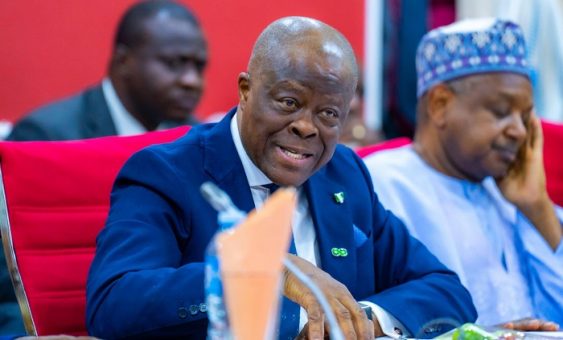
The Olawale Edun, Minister of Finance and Coordinating Minister of the Economy, yesterday assured the Senate Committee on Appropriations that the proposed ₦58.472 trillion 2026 Appropriation Bill is within safe limits in both size and underlying assumptions.
Edun led Nigeria’s economic team in defending the budget before the committee, chaired by Solomon Olamilekan Adeola, responding to lawmakers’ concerns about the realism of projections and funding plans for the 2024 and 2025 budgets.
Other members of the team included the Minister of Budget and Economic Planning, Atiku Bagudu; Minister of State for Finance, Dr. Doris Nkiruka Uzoka-Anite; the Accountant-General of the Federation, Mr. Shamsedeen Babatunde Ogunjimi; and the Chairman of the Nigeria Revenue Service, Dr. Zacch Adedeji.
Edun stressed that the budget parameters were carefully considered and aligned with standard budgeting practices. He emphasised that the government is exploring ways to boost revenue, attract investments, and foster sustainable economic growth.
On oil production, Edun said the benchmark of 1.84 million barrels per day is a stretch target designed to ensure authorities do not settle for lower output. He highlighted that forward crude contracts are standard practice globally, helping to secure future production while maximising commodity value.
Addressing concerns about debt servicing, Edun noted that Nigeria’s main challenge is the high cost of borrowing in international markets, not the debt-to-GDP ratio. He added that Nigeria is chairing the G24 technical group, where debt sustainability and rising interest costs are key discussion points. President Bola Ahmed Tinubu has advocated for an African credit rating agency to enable fairer assessments and more affordable financing for African economies.
On security, Edun reassured lawmakers that spending had been prioritised, with emergency funding consistently released for critical military procurements. He explained that some expenditures may not be immediately visible in conventional budget classifications but confirmed that urgent obligations are being met within approved fiscal limits.
Edun concluded that fiscal discipline and monetary credibility remain essential to sustaining macroeconomic stability and ensuring that Nigeria’s 2026 budget is both realistic and actionable.