The Forum of State Commissioners of Finance has expressed support for President Bola Tinubu’s Executive Order 9, describing the policy as a measure to strengthen fiscal governance rather than merely expand state revenue.
Speaking on behalf of the states on Arise Television, its Chairman and Akintunde Oyebode said the directive is aimed at restoring constitutional oversight over federation revenues and addressing long-standing leakages in Nigeria’s oil and gas revenue framework.
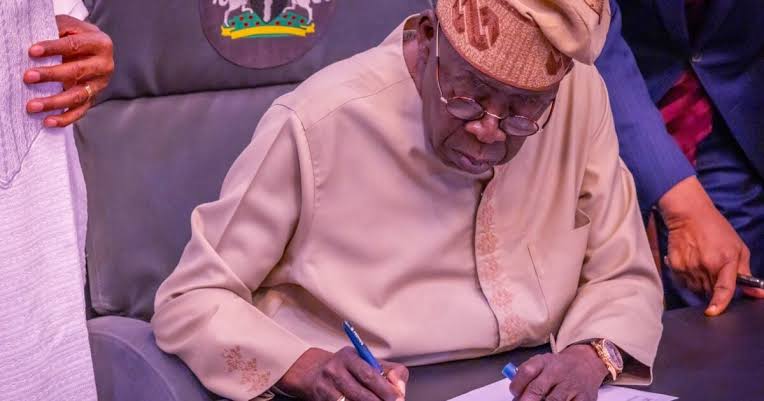
President Tinubu signed Executive Order 9 in February 2026, directing that oil and gas revenues due to the federation be remitted directly into the Federation Account, curbing deductions and retentions by agencies, and requiring statutory inflows to be paid in full before any spending or appropriation.
Oyebode estimated that management fees, frontier exploration funds, and gas flaring penalties could add about N1.5 trillion annually to the account, but stressed that this is only a modest increase relative to the more than N30 trillion the account receives yearly.
“In monetary terms, this is not even a significant increase to the Federation Account. It’s a single-digit impact in terms of growth. But that’s not the point,” he said, emphasizing that the order is about constitutional compliance, not subnational windfalls.
The Commissioner dismissed concerns that the order might unsettle the Nigerian National Petroleum Company Limited (NNPC Limited) or discourage investors, noting that the sums involved are marginal relative to the company’s scale. He highlighted that NNPC posted a N4.5 trillion profit in 2024 on revenues of roughly N45 trillion.
Oyebode also pointed to what he described as a significant decline in joint venture inflows following the implementation of the Petroleum Industry Act, with contributions dropping from about $12 billion to roughly $2 billion — an area he said has received little public attention.
Responding to concerns about executive overreach, Oyebode said any constitutional disputes should be resolved in court, and urged stakeholders to await guidelines from a government committee set up to implement the order.
He further defended states against criticisms of overreliance on federal allocations, citing declining domestic debt levels and transparency reforms under the State Fiscal Transparency, Accountability and Sustainability Programme, which require states to publish budgets, procurement records, implementation reports, and audited accounts.
Oyebode stressed that Executive Order 9’s overriding purpose is to enforce constitutional custody of oil and gas earnings and address structural revenue leakages that have historically cost the federation far more than the incremental N1.5 trillion at stake.