Economic watchers have highlighted a growing concern: Nigeria’s improving macroeconomic indicators are being tempered by a steadily rising public debt profile.
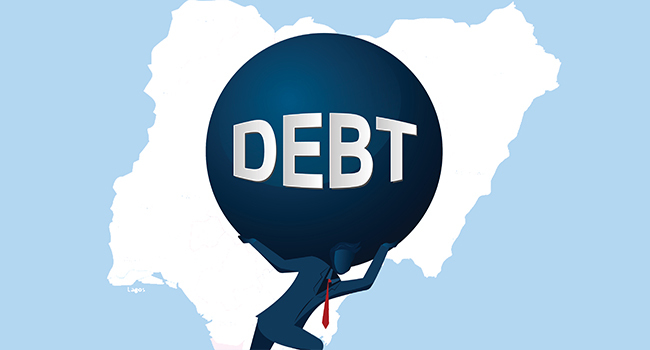
According to the Debt Management Office (DMO), Nigeria’s total public debt reached N153.29 trillion as of September 2025, marking a 7.71% year-on-year increase from N142.32 trillion in September 2024 and a 0.59% rise from N152.39 trillion in June 2025. Both domestic and external borrowings contributed to this uptick.
Domestic debt stood at N81.82 trillion in Q3 2025, up 11.42% year-on-year, while external debt rose 3.76% to N71.48 trillion. Domestic debt now accounts for 52.90% of total public debt, reflecting Nigeria’s continued reliance on local borrowing.
Nonetheless, the country’s debt-to-GDP ratio improved to 37.13% from 40.68% in 9M:2024, aided by stronger GDP growth and slower debt accumulation. Domestic debt servicing rose 47.56% year-on-year to N6.32 trillion, largely due to Treasury bill interest payments, while external debt service fell 6.79% to $3.34 billion.
Experts at Afrinvest Research noted that the combination of the Central Bank of Nigeria’s 50-basis-point rate cut, the DMO’s debt report, and Q4:2025 GDP data have significant implications for the economy. The Monetary Policy Committee (MPC) reduced the Monetary Policy Rate to 26.5%, citing easing inflation, exchange rate stability, real sector expansion, stronger external reserves, and increased foreign portfolio inflows.
“Looking ahead, risk factors may remain broadly tilted to the downside, allowing the rate cut to ease pressure on corporate balance sheets and support equity investment,” the experts said. However, they warned that pre-election fiscal spending ahead of the rescheduled 2027 elections could complicate monetary management.
Meristem Securities added that public debt is expected to rise further in 2026, driven by higher domestic and external borrowings, even as debt service growth may moderate due to lower stop rates and sustained exchange rate stability.