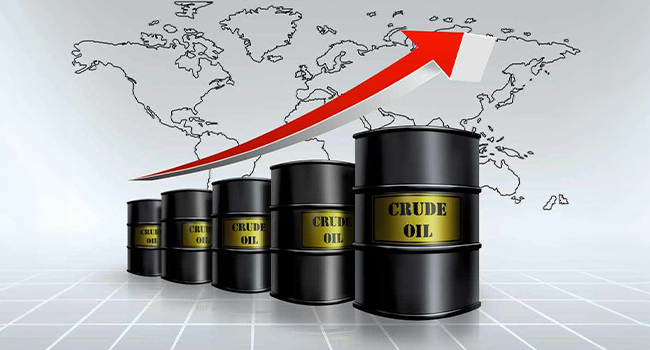
Oil prices jumped sharply on Monday as US-Israeli strikes killed Iran’s supreme leader, Ayatollah Ali Khamenei, and other senior officials, sparking fears of a wider Middle East conflict. Brent crude briefly surged nearly 14 percent, while West Texas Intermediate gained almost 12 percent at the start of trading.
The attacks, combined with threats to the Strait of Hormuz — through which around 20 percent of global seaborne oil passes — sent equities across Asia tumbling. Markets in Tokyo, Hong Kong, Singapore, Mumbai, Bangkok, Wellington, and Taipei all registered losses, while US futures dropped more than one percent. Airline stocks suffered steep declines, with Cathay Pacific down three percent, Qantas off 5.4 percent, and Singapore Airlines down 4.3 percent.
Energy firms, however, rallied as traders bet on higher oil prices. Australia’s Woodside Energy and Santos each rose more than six percent, PetroChina gained nearly four percent, and Japan’s Inpex climbed over six percent. Gold prices rose two percent, and the US dollar strengthened amid a flight to safe-haven assets.
Market analysts warned of potential inflationary pressures from soaring energy costs. Charu Chanana of Saxo Markets noted that sustained high oil prices could slow improvements in headline inflation and influence US Federal Reserve policy decisions.
Amid escalating tensions, Iran continued missile and drone attacks in the Gulf, targeting shipping and signaling that the conflict could persist. Several vessels were struck near Oman and the UAE, with insurance costs spiking and shipping companies suspending passage through the Strait of Hormuz. Analysts project that crude could hit $90, while prices above $100 remain possible if the blockade continues.
Rising energy costs, higher shipping fees, and losses in air transport revenue have raised concerns over global economic growth, with economists warning of potential recessionary effects if disruptions persist.