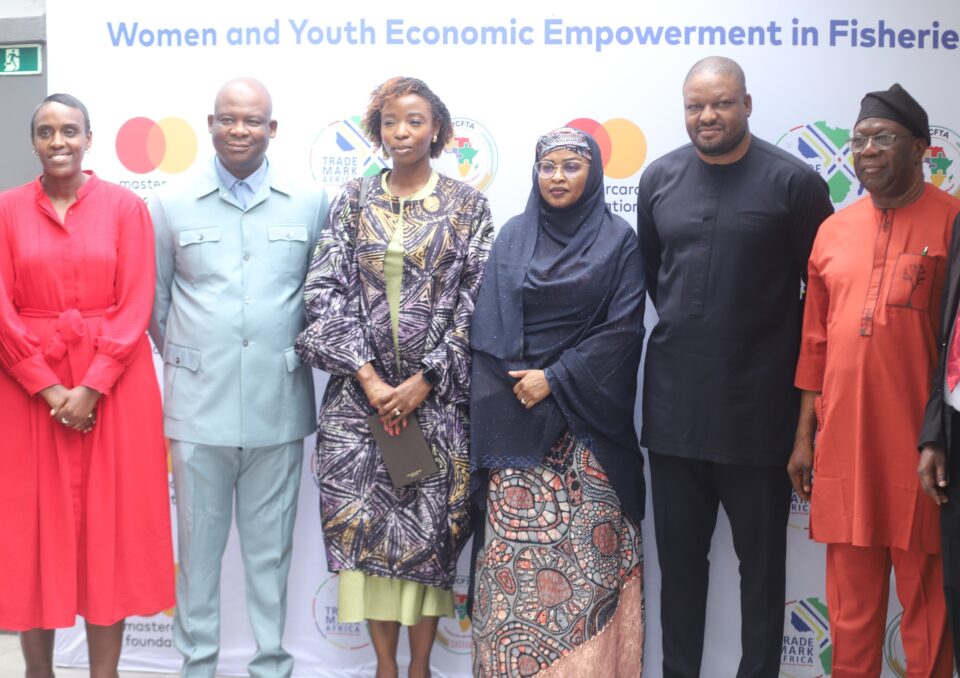
The Federal Government is intensifying collaboration with fisheries stakeholders and development partners to expand fish farming, increase trade, and create jobs for women and youth as part of efforts to strengthen food security in Nigeria.
The initiative was the focus of the Nigeria National Fisheries Stakeholders Forum held in Lagos on Wednesday, themed “Strengthening Inclusive and Sustainable Fisheries, Aquaculture and Blue Economy for Job Creation in Nigeria.”
The programme is part of the five-year Women and Youth Economic Empowerment in the Fisheries Sector through the Inclusive Market Access Programme, running from 2024 to 2029. It is led by the African Continental Free Trade Area (AfCFTA) Secretariat, in partnership with the Mastercard Foundation, WorldFish, and TradeMark Africa.
Speaking at the forum, Permanent Secretary of the Federal Ministry of Marine and Blue Economy, Fatima Mahmood, said the government is working to remove barriers that limit the participation of women and youth in the fisheries value chain.
“The whole essence of this stakeholders forum is to engage with fisheries stakeholders in Nigeria to see what the barriers to trade are and how we can simplify and enable the participation, particularly of youth and women,” Mahmood said.
She highlighted the critical role of the fisheries sector in national food security, noting that fish is nutrient-dense and contributes significantly to nutrition and overall food systems.
Mahmood added that the Federal Government fully supports the programme under President Bola Tinubu’s Renewed Hope agenda, aimed at creating jobs, facilitating trade, and attracting investment.
Under the leadership of Minister Adegboyega Oyetola, the government plans to strengthen the fisheries value chain and create employment opportunities for youth and women while optimising trade between African countries.
Anataria Uwamariya, Director of Business Competitiveness at TradeMark Africa, said the programme would identify challenges affecting women and youth in fisheries and improve their market access.
“The main purpose of this programme is to enhance work opportunities for women and youth, especially young women, in the fisheries value chain while leveraging increased intra-African trade,” Uwamariya said, noting efforts to reduce bottlenecks such as border trade processes, market standards compliance, non-tariff barriers, and access to finance.
Themba Khumalo, Head of Private Sector Unit at the AfCFTA Secretariat, emphasised the opportunities the continental free trade area offers for expanding Nigeria’s fisheries sector across African markets.
“We believe the AfCFTA presents enough economies of scale to justify investments in the sector and allow Nigerian producers to expand their markets beyond the country,” Khumalo said.
Dr Charles Iyangbe, Country Representative of WorldFish Nigeria, noted that the partnership will reduce Nigeria’s reliance on imported fish and strengthen local production, supporting job creation for youth under 35 and integrating informal operators into the formal value chain.
The Inclusive Market Access Programme is being implemented in several African countries, including Nigeria, Kenya, Uganda, Tanzania, the Democratic Republic of the Congo, Zambia, Comoros, and Cabo Verde, aiming to create over 242,000 decent jobs while improving economic opportunities for women and youth.