ADVERTISEMENT
  • Africa
  • World
  • Our Shows
    • Entrepreneurship
    • Destination Business
    • 101business TV Show
Business 360 News
  • Home
  • Africa
    • East Africa
    • West Africa
    • South Africa
  • News
    • Feature
  • Economy
    • Maritime
    • Agriculture
      • Agribusiness
    • Energy
      • Electricty
      • Oil
      • Petrol
      • Gas
  • Finance
    • Insurance
    • Tax
    • Real Estate
  • Capital Market
  • Tech
    • ICT
    • Solar Energy
    • Electric Vehicles
    • Blockchain
    • IoT
    • AI
    • EV
  • SMEs
    • Success Stories
    • Start-Ups
    • Entrepreneurship
  • Global Economy
    • UK
    • US
    • Russia
    • CHINA
    • Japan
  • Business 360 Weekly
No Result
View All Result
  • Home
  • Africa
    • East Africa
    • West Africa
    • South Africa
  • News
    • Feature
  • Economy
    • Maritime
    • Agriculture
      • Agribusiness
    • Energy
      • Electricty
      • Oil
      • Petrol
      • Gas
  • Finance
    • Insurance
    • Tax
    • Real Estate
  • Capital Market
  • Tech
    • ICT
    • Solar Energy
    • Electric Vehicles
    • Blockchain
    • IoT
    • AI
    • EV
  • SMEs
    • Success Stories
    • Start-Ups
    • Entrepreneurship
  • Global Economy
    • UK
    • US
    • Russia
    • CHINA
    • Japan
  • Business 360 Weekly
No Result
View All Result
Business 360 News
No Result
View All Result
Home Economy

Poverty Rate in Nigeria Rises to 63% After Petrol Subsidy Removal – Study

Victoria Emeto by Victoria Emeto
March 13, 2026
in Economy
0
Poverty Rate in Nigeria Rises to 63% After Petrol Subsidy Removal – Study

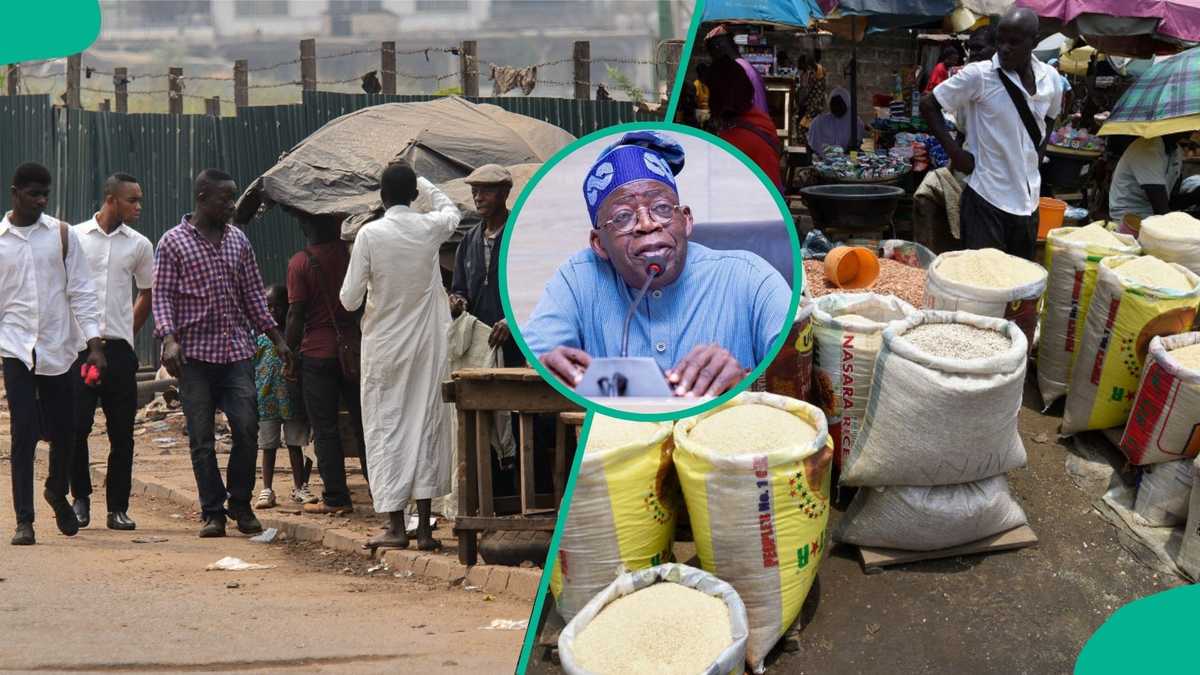
A new study has revealed that about 63 per cent of Nigerians fell below the poverty line following the removal of petrol subsidy, highlighting the severe welfare impact of the country’s recent economic reforms.

The research was presented on Thursday at a stakeholders’ dialogue organised by Agora Policy in Abuja. The study showed that the national poverty headcount rose sharply from a baseline of about 49.8 per cent to roughly 63 per cent after the subsidy removal.

The event, themed “Sustaining and Deepening Economic Reforms in Nigeria,” brought together policymakers, economists, civil society leaders and private sector representatives to examine the impact of the Federal Government’s reform agenda.

Among those present were the Deputy Governor for Economic Policy at the Central Bank of Nigeria, Muhammad Abdullahi; the Special Adviser to the President on Finance and Economy, Sanyade Okoli; the World Bank Senior Economist for Nigeria, Samer Matta; the Country Director of CARE International, Hussaini Abdu; and the Executive Director of Agora Policy, Waziri Adio.

The study was presented by a Senior Lecturer at the Department of Economics, University of Abuja, Mohammed Shuaibu. It examined the economic and social consequences of key reforms introduced by the Federal Government, including the removal of petrol subsidy and adjustments in electricity tariffs.

President Bola Tinubu announced the end of petrol subsidy during his inaugural address on May 29, 2023. According to the study, the policy triggered widespread price increases across the economy and significantly affected household welfare.

“After the subsidy removal, poverty increased from a baseline of about 50 per cent to 63 per cent,” Shuaibu said.

He explained that the introduction of social protection measures helped soften the impact, but did not completely reverse the worsening welfare conditions.

“However, when social protection measures such as cash transfers were introduced, the poverty rate moderated to around 56.2 per cent,” he added.

The findings showed that the effects of the reform were uneven across income groups. High-income households were largely insulated from the shocks, while low-income households experienced the most severe erosion of purchasing power.

According to the study, poverty among low-income households rose sharply from about 50 per cent before the subsidy removal to roughly 63 per cent afterwards. At the same time, the national poverty gap widened significantly.

The poverty gap increased from 31.6 per cent to more than 45 per cent following the policy change, indicating deeper levels of deprivation among poor households.

Although social transfers slightly reduced the gap, the improvement remained limited due to delays in the rollout of intervention programmes and the relatively small scale of support provided.

The study also examined how the reforms affected household consumption patterns. It found that consumption declined across income groups after the removal of the subsidy and the adjustment of electricity tariffs.

“Across the board, household consumption declined following both the subsidy removal and electricity tariff adjustments. However, social transfers helped cushion the impact, especially for low-income households,” Shuaibu explained.

The decline in consumption was particularly severe among rural and low-income households, where rising energy and transport costs significantly reduced spending capacity. Urban low-income households also experienced declines in consumption, although the effect was slightly moderated in areas where social transfers were implemented.

Beyond household welfare, the research assessed the broader macroeconomic consequences of electricity tariff reforms.

The analysis found that electricity tariff adjustments resulted in a modest increase in consumer prices, initially raising prices by about 0.26 per cent, which later rose to roughly 0.52 per cent after social protection measures were included.

However, the reform also produced a small positive effect on economic output. Real Gross Domestic Product increased by about 0.42 per cent under the reform scenario before moderating to around 0.21 per cent when social protection programmes were factored into the model.

Firm-level investment also recorded slight gains following the electricity tariff adjustments, although these improvements were partly offset by the cost of implementing social protection programmes.

In contrast, the removal of the petrol subsidy had a contractionary effect on economic activity, as rising fuel prices and transport costs triggered inflationary pressures that weighed on business activity and investment.

The study also incorporated insights from focus group discussions conducted across Nigeria’s six geopolitical zones. Participants acknowledged the need for reforms due to the country’s fiscal and macroeconomic challenges, but many criticised the speed at which the policies were introduced.

According to Shuaibu, many households were forced to adopt survival strategies as the reforms rapidly eroded purchasing power.

“Households adjusted to the shocks not through recovery but through sacrifice,” he said.

The study found that many families responded by cutting consumption, reducing transport use, rationing electricity and borrowing money to meet basic needs. Several respondents also reported receiving little or no assistance from government support programmes designed to mitigate the effects of the reforms.


Tags: #EconomicReforms#FuelSubsidyRemoval#NigeriaEconomy#PovertyInNigeria
Previous Post

OPay Denies Reports of Office Closure Over Tax Non-Compliance

Next Post

UBA Hosts Business Series on ‘Evolved Woman’ to Celebrate International Women’s Month

Victoria Emeto

Victoria Emeto

Next Post
UBA Hosts Business Series on ‘Evolved Woman’ to Celebrate International Women’s Month

UBA Hosts Business Series on ‘Evolved Woman’ to Celebrate International Women’s Month

Leave a Reply Cancel reply

Your email address will not be published. Required fields are marked *

  • Trending
  • Comments
  • Latest
FMDQ Exchange Admits Flour Mills of Nigeria’s ₦30.00bn Commercial Paper Notes

FMDQ Admits TSL SPV PLC ₦12.00 billion Series 1 Guaranteed Fixed Rate Infrastructure Bond to its Platform

March 11, 2021
NCAC inaugurates Creative Industry Sub-Committees

NCAC inaugurates Creative Industry Sub-Committees

September 20, 2020
#EndSARS: Protesters receive heavy gun fire at Lekki toll gate

#EndSARS: Protesters receive heavy gun fire at Lekki toll gate

October 21, 2020
SMEs in Nigeria must be ready to grow with or without Government …Evans Edozie, C.E.O., Cospharma Nig. Ltd.

SMEs in Nigeria must be ready to grow with or without Government …Evans Edozie, C.E.O., Cospharma Nig. Ltd.

September 21, 2020
‘The existence of a production hub in Nigeria will go a long way for the Fashion Industry’. FUNMI RUFAI LADIPO, President Fashion Designers Association of Nigeria.(FADAN)

‘The existence of a production hub in Nigeria will go a long way for the Fashion Industry’. FUNMI RUFAI LADIPO, President Fashion Designers Association of Nigeria.(FADAN)

25
Goldlink’s restructures board

Goldlink’s restructures board

10
Airtel Africa Plc gets admitted to the NSE Main Board

Airtel Africa Plc gets admitted to the NSE Main Board

6
Stallion Tank Farm resumes operations

Stallion Tank Farm resumes operations

3
CBN Introduces New Regulations to Strengthen Digital Banking Security and Fraud Control

CBN Introduces New Regulations to Strengthen Digital Banking Security and Fraud Control

March 13, 2026
NUPRC Declares “Drill or Drop” Era for Oil Licences, Launches 2025 Licensing Round

NUPRC Declares “Drill or Drop” Era for Oil Licences, Launches 2025 Licensing Round

March 13, 2026
FCT Residents Raise Alarm Over Rising Transport Fares Amid Petrol Price Surge

FCT Residents Raise Alarm Over Rising Transport Fares Amid Petrol Price Surge

March 13, 2026
FCMB Group Plc Signals Possible Delay in Audited Financial Statements Ahead of March 31 Deadline

FCMB Raises N500 Billion, Meets CBN’s International Banking Capital Requirement

March 13, 2026
Business 360 News

Business 360 News is a Business and Financial News Platform with an SMEs drive. Published by 360 Network Limited, and created with the aim of disseminating unbiased business stories to readers within and outside Nigeria, providing in-depth analysis of our stories from a critical perspective against the backdrop of realities, actualities, objectivity and balance.

Follow Us

Browse by Category

  • Africa
  • Agribusiness
  • Agriculture
  • AI
  • Art
  • Arts
  • Aviation
  • Banking
  • Blockchain
  • Business 360 Weekly
  • Business news
  • Business Travels
  • Capital Market
  • CHINA
  • Corporate
  • Cryptocurrency
  • Destination Business
  • East Africa
  • Economy
  • Education
  • Electric Vehicles
  • Electricty
  • Energy
  • Entertainment
  • Entertainment
  • Entrepreneurship
  • EV
  • Fashion
  • Fashion
  • Feature
  • Finance
  • Gas
  • Global Economy
  • Health
  • Hospitality
  • ICT
  • Insurance
  • IoT
  • Japan
  • Lifestyle
  • Luxury
  • Maritime
  • Meetings
  • Mortgage
  • News
  • NGOs
  • Oil
  • Petrol
  • Political Economy
  • politics
  • Real Estate
  • Real Estate
  • SMEs
  • Society
  • Solar Energy
  • South Africa
  • Sports
  • Start-Ups
  • Stocks
  • Success Stories
  • Tax
  • Tech
  • Tourism
  • Transportation
  • UK
  • Uncategorized
  • US
  • World

Recent News

CBN Introduces New Regulations to Strengthen Digital Banking Security and Fraud Control

CBN Introduces New Regulations to Strengthen Digital Banking Security and Fraud Control

March 13, 2026
NUPRC Declares “Drill or Drop” Era for Oil Licences, Launches 2025 Licensing Round

NUPRC Declares “Drill or Drop” Era for Oil Licences, Launches 2025 Licensing Round

March 13, 2026
  • Africa
  • World
  • Our Shows

© Business 360 News - Business, Finance And SMEs News | Design by Manifest!

No Result
View All Result
  • Home
  • Africa
    • East Africa
    • West Africa
    • South Africa
  • News
    • Feature
  • Economy
    • Maritime
    • Agriculture
      • Agribusiness
    • Energy
      • Electricty
      • Oil
      • Petrol
      • Gas
  • Finance
    • Insurance
    • Tax
    • Real Estate
  • Capital Market
  • Tech
    • ICT
    • Solar Energy
    • Electric Vehicles
    • Blockchain
    • IoT
    • AI
    • EV
  • SMEs
    • Success Stories
    • Start-Ups
    • Entrepreneurship
  • Global Economy
    • UK
    • US
    • Russia
    • CHINA
    • Japan
  • Business 360 Weekly

© Business 360 News - Business, Finance And SMEs News | Design by Manifest!