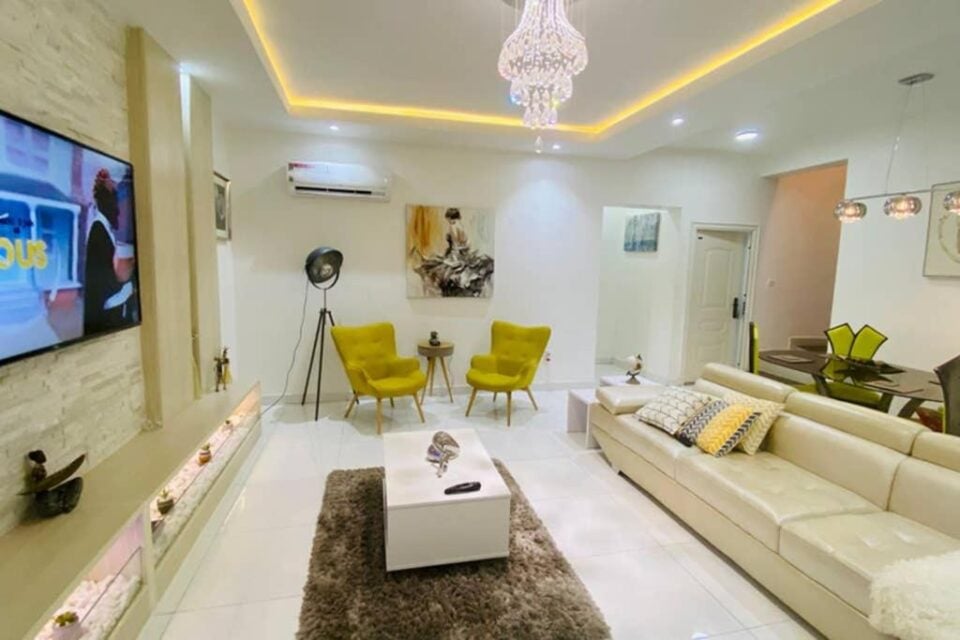
Lagos short-let market generated an estimated N281.03bn in revenue in 2025, maintaining stability despite high inflation and growing competition, according to a report by Edala Development.
The Lagos Shortlet Market Report 2025 revealed that although the era of rapid, unregulated expansion is fading, the sector remains a vital contributor to the city’s real estate economy. Revenues are projected to rise modestly to N285.5bn in 2026.
Demand continues to be driven by Lagos’ large population and economic scale. With nearly 27 million residents, the city remains Africa’s leading commercial hub, attracting both local and international investors.
Within the market, Lekki emerged as the top revenue generator, with Phase I and Phase II contributing nearly N165bn combined in 2025. Victoria Island followed, with revenues almost doubling to N34.8bn.
In contrast, Banana Island recorded a sharp decline, dropping to N9bn due to regulatory suspensions. Projections indicate a further fall to N1.5bn in 2026 after short-let activities were completely halted in February.
“The Lagos short-let market is transitioning from a boom driven by opportunistic growth to a more professional, compliance-driven industry,” the report stated, noting that success now depends on strategic investment, proper management, and adherence to stricter regulations.
On the mainland, areas such as Ikeja, Yaba, and Gbagada are gaining traction, showing steady growth and presenting new opportunities for investors. However, Surulere experienced a decline to N6.15bn, reflecting adjustments in response to regulatory changes.
Infrastructure developments are also supporting the sector’s outlook. Progress on the Lagos-Calabar Coastal Highway saw 47 kilometres completed and temporarily opened in 2025, marking early momentum on the 700-kilometre corridor.
Additionally, work has begun on the Lagos Green Line Rail Project, while construction continues on the Sokoto-Badagry Superhighway to improve access to key industrial zones. The Lagos State Government also launched the Omi Eko Project, a €410m programme aimed at expanding inland waterways and easing road congestion.
Commenting on the report, Temidayo Oloyede noted that the sector’s rapid growth in recent years has been fueled by demand from corporate travellers, tourists, digital nomads, and investors seeking high-yield opportunities.
He added that while projections had earlier placed the market at N300bn by 2025, the actual figure of N281.03bn reflects a maturing industry where increasing supply is beginning to impact occupancy rates.
Beyond business travel, Lagos continues to evolve into a global leisure and lifestyle destination, hosting over 200 international events during the festive season and attracting more than 1.2 million tourists. Many visitors now prefer premium short-term accommodations that offer comfort and proximity to the city’s vibrant social scene.