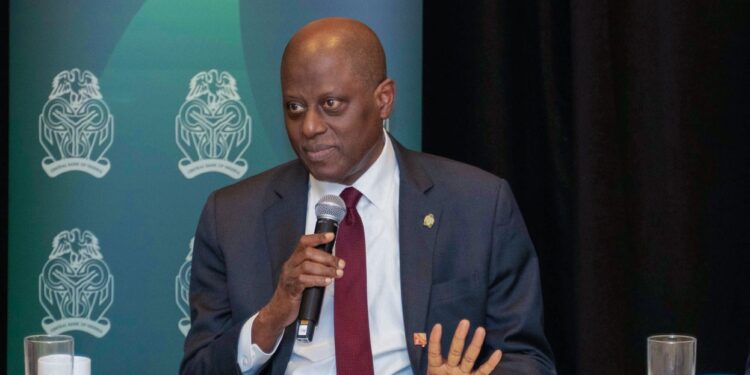
Nigerian banks have attracted a total of N4.61 trillion in new capital under the Central Bank of Nigeria’s recapitalisation programme, signaling renewed investor confidence in the country’s financial system.
The disclosure was made on Tuesday in a press statement issued by the Central Bank of Nigeria during the 4th Annual IMF/AFRITAC West 2 High-Level Executive Forum for Financial Sector Regulation and Supervision held at its headquarters in Abuja.
According to the apex bank, the capital inflow followed the launch of the Banking Sector Recapitalisation Programme in 2024, an initiative aimed at strengthening the resilience of Nigerian banks amid ongoing economic reforms.
The statement noted that the programme has already begun to yield significant results, with nearly 27 per cent of the N4.61 trillion coming from foreign investors. Despite challenges such as subsidy removals and exchange rate adjustments, Nigerian banks have not only attracted substantial investments but also expanded their presence across African markets.
“The Governor outlined how Nigeria’s regulatory and supervisory reforms exemplify proactive leadership,” the statement said. “In 2024, the CBN anticipated upcoming challenges and launched the Banking Sector Recapitalisation Programme to strengthen the resilience of Nigerian banks.”
The initiative, according to the bank, is designed to position financial institutions to absorb economic shocks while supporting sustainable growth. It also highlighted the importance of increased cooperation among African financial regulators, especially as cross-border financial integration continues to deepen.
CBN Governor Olayemi Cardoso reiterated the bank’s commitment to enforcing strict corporate governance standards, emphasizing zero tolerance for regulatory violations.
“Our stance on corporate governance is unequivocal: zero tolerance for violations. By ending years of regulatory forbearance, we have reinforced accountability, tightened supervision, and elevated compliance standards across the sector,” he stated.
Cardoso also disclosed that the CBN has introduced measures to strengthen credit discipline by restricting banking services for chronic defaulters, particularly large-ticket obligors with non-performing loans.
The apex bank further reaffirmed its commitment to orthodox monetary policies aimed at restoring price stability and improving policy credibility, while also advancing regulatory reforms in the financial technology space to balance innovation with financial stability.
The high-level forum, which brought together central bank officials and regulators from six African countries, focused on addressing emerging risks such as digital finance disruptions, artificial intelligence, and climate-related financial challenges.
The N4.61 trillion figure represents an increase of about N560 billion compared to the N4.05 trillion in verified and approved capital earlier disclosed in February 2026 by the CBN governor ahead of the March 31 recapitalisation deadline.