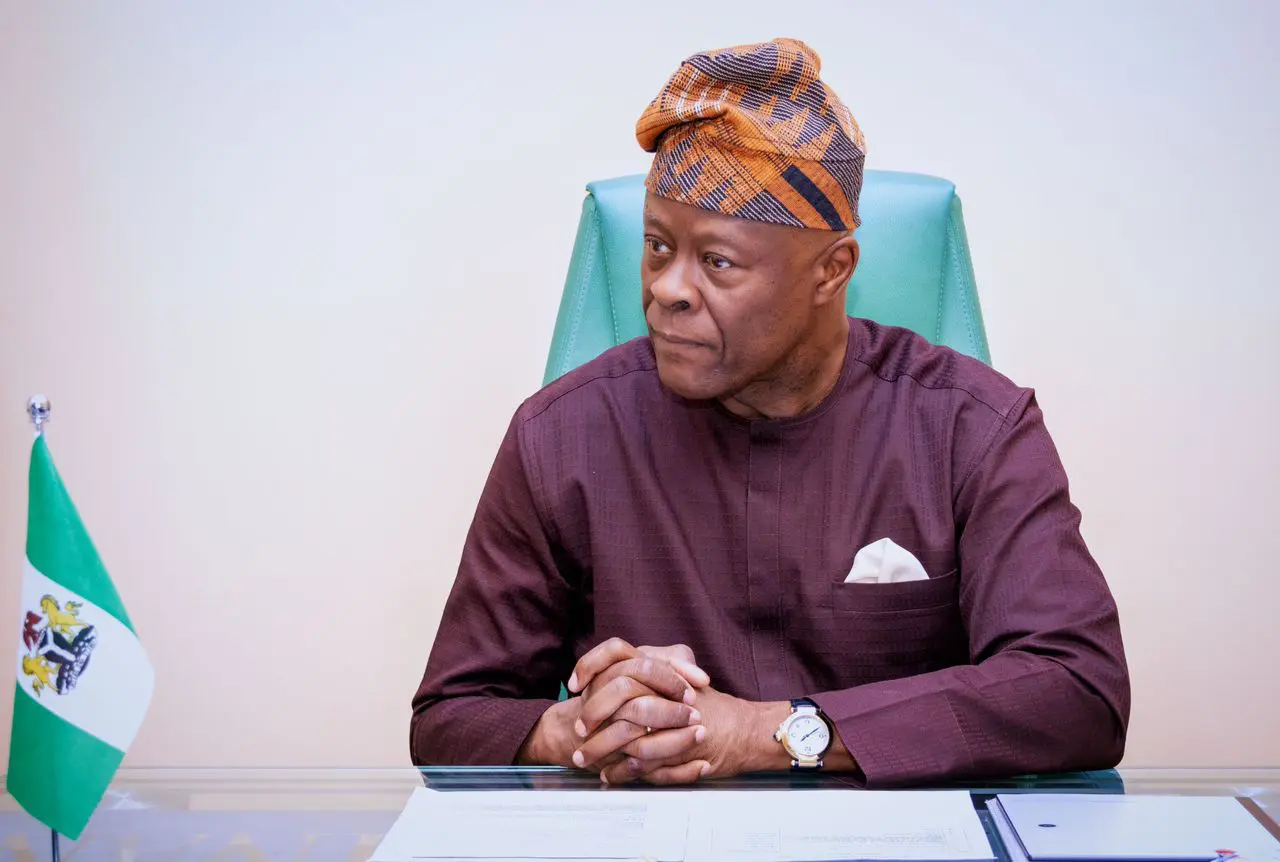
The Minister of Finance and Coordinating Minister of the Economy, Wale Edun, on Tuesday warned that Africa and Nigeria cannot continue to depend heavily on external borrowing while losing massive resources to illicit financial flows.
Edun made the remarks at the opening of the 5th Session of the African Union Sub-Committee on Tax and Illicit Financial Flows held in Abuja.
He said Africa must prioritise domestic revenue mobilisation to finance development, stressing that reliance on foreign debt, aid, and external investment is unsustainable.
“Africa cannot sustainably finance its development through debt, aid, or external investment alone,” the minister said.
He explained that such funding sources are often uncertain and influenced by external economic and political factors beyond the continent’s control.
Edun also raised concerns over the scale of illicit financial flows from Africa, noting that the continent loses an estimated $88bn every year.
According to him, the lost resources could otherwise be invested in critical sectors such as infrastructure, education, healthcare, and productive industries.
The minister’s comments come amid growing concerns over Nigeria’s rising debt levels and fiscal pressures.
He said the changing global economic environment has made dependence on external funding increasingly risky.
“We are witnessing significant shifts in the international system… reshaping how countries engage, compete, and collaborate,” Edun said.
He added that Africa must now rely more on its institutions, resources, and economic strength to achieve sustainable growth.
Edun noted that under the African Union’s Agenda 2063, African countries aim to mobilise up to 90 per cent of development financing from domestic resources.
He described the goal as essential for achieving long-term economic stability across the continent.
The minister also highlighted key challenges facing African economies, including tax evasion, weak institutional capacity, limited economic diversification, and reliance on external financing.
He warned that addressing these issues is critical for sustainable development.
On Nigeria’s economic reforms, Edun said the Federal Government has introduced measures to reduce reliance on foreign borrowing by strengthening domestic revenue generation.
He noted that comprehensive tax reforms introduced since May 2023 are aimed at simplifying the tax system, expanding the tax base, reducing the burden on vulnerable citizens, and improving compliance.
According to him, the reforms formally took effect in January 2026.
Edun also revealed that the government had introduced new accountability measures for oil revenue management.
He said the President signed an executive order requiring that all oil and gas revenues be remitted into constitutionally designated accounts before disbursement.
The minister added that key economic policies, including the removal of fuel subsidies and the unification of the foreign exchange market, have improved fiscal transparency and strengthened investor confidence.
He further disclosed that Nigeria has launched a National Single Window system designed to enhance trade efficiency and reduce leakages linked to trade-based illicit financial flows.
“These reforms are already yielding results,” Edun said, citing improvements in non-oil revenue performance, stronger fiscal buffers, and rising investor confidence.
He stressed the need for stronger cooperation among African countries to combat illicit financial flows through coordinated enforcement and information sharing.
In his welcome address, the Executive Chairman of the Nigeria Revenue Service, Zacch Adedeji, also called for stronger fiscal systems across the continent.
He warned that illicit financial flows, tax evasion, and aggressive tax avoidance continue to drain resources needed for infrastructure, healthcare, and social development.
Adedeji described the impact of such leakages as “lost opportunities, lost hospitals, lost schools, lost infrastructure.”
He said revenue authorities across Africa are modernising tax systems and adopting digital tools to improve compliance and transparency.
The NRS chairman added that Nigeria is implementing reforms to build a technology-driven tax administration capable of supporting national development.
He emphasised that stronger continental cooperation is essential to tackle illicit financial flows, given their cross-border nature.
Also speaking at the event, the Executive Secretary of the African Tax Administration Forum, Mary Baine, said African governments must urgently strengthen their tax systems to cope with rising fiscal pressures.
She warned that global economic shocks and tightening fiscal space are placing increasing strain on government finances across the continent.
Baine noted that while tax revenues have improved gradually in many African countries, they remain below global benchmarks.
She stressed that Africa’s development goals can only be achieved through strong, fair, and efficient tax systems that enable countries to finance growth internally.