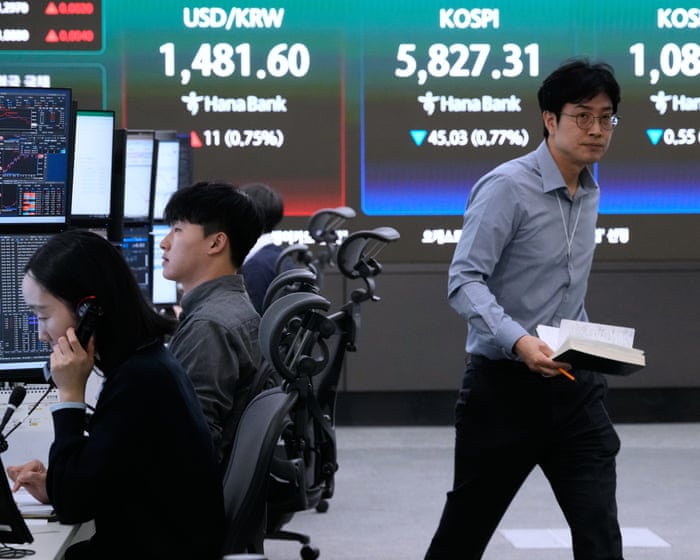
Global stocks declined on Thursday while oil prices climbed after optimism surrounding the ceasefire between the United States and Iran began to fade.
The cautious mood followed comments from Mohammad Bagher Ghalibaf, Speaker of Iran’s Parliament, who said several terms of the ceasefire agreement had already been breached.
According to Ghalibaf, three clauses of the proposal had been violated, raising fresh concerns about stability in the region and its impact on global markets.
As a result, the MSCI Asia Pacific Index fell by 0.9 per cent, with two stocks declining for every one that advanced.
Futures for major equity benchmarks in United States and Europe also slipped by about 0.2 per cent, signalling that a four-day rally in global stocks could soon end.
Just a day earlier, global equities had surged after investors welcomed news of the ceasefire, which raised hopes that oil shipments through the strategically important Strait of Hormuz would remain uninterrupted.
The Asian equity gauge had recorded its biggest gain in a year during Wednesday’s rally.
However, oil prices moved higher as uncertainty resurfaced. Brent crude rose about 2 per cent to nearly $97 per barrel, rebounding after its steepest drop in more than six years.
Market analysts noted that shipping traffic through the Strait of Hormuz remained limited, adding to concerns about global oil supply.
Meanwhile, US Treasuries were largely steady after earlier gains in the American trading session were erased.
Government bonds in Japan and Australia also declined as investors worried that rising oil prices could fuel inflation in major economies.
Financial markets remain sensitive to developments in the Middle East, as disruptions in energy supply routes often have significant effects on global growth and inflation.