ADVERTISEMENT
  • Africa
  • World
  • Our Shows
    • Entrepreneurship
    • Destination Business
    • 101business TV Show
Business 360 News
  • Home
  • Africa
    • East Africa
    • West Africa
    • South Africa
  • News
    • Feature
  • Economy
    • Maritime
    • Agriculture
      • Agribusiness
    • Energy
      • Electricty
      • Oil
      • Petrol
      • Gas
  • Finance
    • Insurance
    • Tax
    • Real Estate
  • Capital Market
  • Tech
    • ICT
    • Solar Energy
    • Electric Vehicles
    • Blockchain
    • IoT
    • AI
    • EV
  • SMEs
    • Success Stories
    • Start-Ups
    • Entrepreneurship
  • Global Economy
    • UK
    • US
    • Russia
    • CHINA
    • Japan
  • Business 360 Weekly
No Result
View All Result
  • Home
  • Africa
    • East Africa
    • West Africa
    • South Africa
  • News
    • Feature
  • Economy
    • Maritime
    • Agriculture
      • Agribusiness
    • Energy
      • Electricty
      • Oil
      • Petrol
      • Gas
  • Finance
    • Insurance
    • Tax
    • Real Estate
  • Capital Market
  • Tech
    • ICT
    • Solar Energy
    • Electric Vehicles
    • Blockchain
    • IoT
    • AI
    • EV
  • SMEs
    • Success Stories
    • Start-Ups
    • Entrepreneurship
  • Global Economy
    • UK
    • US
    • Russia
    • CHINA
    • Japan
  • Business 360 Weekly
No Result
View All Result
Business 360 News
No Result
View All Result
Home Economy

World Bank Flags Weaknesses in Nigeria’s Public Finance System

Victoria Emeto by Victoria Emeto
April 13, 2026
in Economy
0
World Bank Says Job Creation Key to Reducing Poverty Amid Global Uncertainty

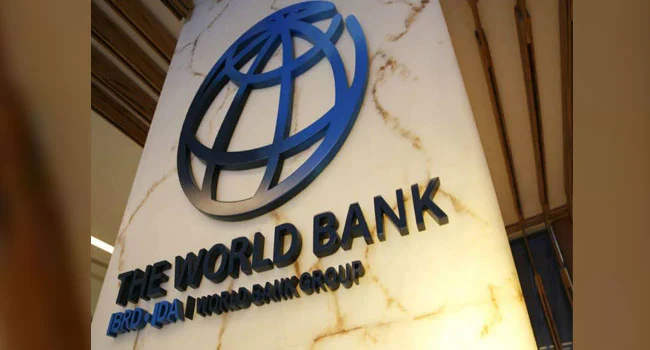
The World Bank has raised fresh concerns about weaknesses in Nigeria’s public finance management system, warning that persistent gaps in treasury operations, auditing, and financial reporting are undermining fiscal transparency and credibility.

The concerns were outlined in the bank’s April 2026 Nigeria Development Update titled “Nigeria’s Tomorrow Must Start Today: The Case for Early Childhood Development.” The report noted that structural and institutional shortcomings continue to hinder effective fiscal management in the country.

According to the report, Nigeria’s treasury operations remain fragmented, with thousands of government accounts not fully integrated into the consolidated revenue framework.

“Underlying these macro-fiscal challenges are persistent institutional and system weaknesses that constrain fiscal transparency, consolidation, and effective cash management,” the report stated.

It revealed that more than 5,000 sub-accounts linked to the Treasury Single Account are yet to be fully integrated into the national revenue framework. The bank also highlighted incomplete reconciliation between the Government Integrated Financial Management Information System and records from the Central Bank of Nigeria.

The World Bank said key modules of Nigeria’s financial management architecture, including those responsible for revenue tracking, assets, liabilities, and commitment controls, are not yet fully operational. This has resulted in manual adjustments, reporting delays, and inconsistencies across fiscal reports.

The report also pointed to coordination challenges among key fiscal institutions such as the Office of the Accountant-General of the Federation, the Debt Management Office, and the Budget Office of the Federation. According to the bank, the lack of seamless integration among their systems slows reporting processes and weakens the reliability of fiscal data.

Transparency in public financial reporting was another major concern raised in the report. The World Bank noted that audited financial statements of the Federal Government have not been published since 2021, while the country’s audit framework is still anchored in a law enacted in 1956 and awaiting reform.

It warned that a growing backlog of audits is limiting effective oversight of government finances. “Audit backlogs constrain oversight, weaken accountability, and limit the ability of stakeholders to assess the government’s financial performance accurately,” the report stated.

The bank said these institutional gaps weaken the credibility of Nigeria’s fiscal projections and complicate efforts to determine the country’s true financial position.

Despite these concerns, the report acknowledged recent reforms introduced by the Office of the Accountant-General of the Federation aimed at strengthening revenue collection and reducing leakages across Ministries, Departments, and Agencies.

In November 2025, the office introduced the Federal Treasury e-Receipt as the sole legally recognised payment receipt for government transactions, effective January 1, 2026. The government also rolled out the Revenue Optimisation and Assurance Platform to unify billing systems and automate revenue processes.

The platform integrates several government systems, including the Treasury Single Account, GIFMIS, the Central Bank of Nigeria, and the Federal Inland Revenue Service, enabling real-time monitoring, reconciliation, and remittance of government revenues. Officials say the initiative is designed to eliminate unauthorised deductions, improve transparency, and save billions of naira previously lost to leakages.

The World Bank noted that fiscal pressures could intensify ahead of the 2027 general elections, although higher oil revenues in 2026 may partly offset the strain.

According to the report, Nigeria’s medium-term fiscal outlook will depend largely on the success of ongoing tax and revenue reforms introduced earlier in 2026. The reforms aim to modernise tax laws, introduce a global minimum tax, streamline incentives, and strengthen tax administration.

However, the bank warned that some measures could have short-term revenue impacts. Allowing value-added tax input credits without raising the VAT rate could reduce collections initially, though the policy is expected to broaden the tax base and improve compliance over time.

The report also highlighted the role of digital tools such as VAT e-invoicing in improving transparency and reducing leakages across the tax system.

In the oil sector, policy adjustments introduced in February 2026—including the suspension of selected deductions and the move to direct cash remittances of oil revenues—are expected to boost government income by about 0.4 percent of GDP annually.

Looking ahead, the World Bank said further reforms at the state level could help improve Nigeria’s revenue performance. Even with projected improvements, the country’s revenue-to-GDP ratio is expected to reach about 10.5 percent by 2028—still far below the Sub-Saharan Africa average of 19 percent.

The bank stressed that sustained fiscal discipline and stronger institutional coordination will be critical to improving Nigeria’s public finance management and restoring investor confidence.


Tags: #FiscalReforms#NigeriaEconomy#PublicFinance#WorldBank
Previous Post

FG Tasks Dangote Sugar to Hit 600,000MT Annual Production by 2030

Next Post

Providus Bank Launches Training to Transaction Programme to Boost SME Exports

Victoria Emeto

Victoria Emeto

Next Post
Providus Bank Launches Training to Transaction Programme to Boost SME Exports

Providus Bank Launches Training to Transaction Programme to Boost SME Exports

Leave a Reply Cancel reply

Your email address will not be published. Required fields are marked *

  • Trending
  • Comments
  • Latest
FMDQ Exchange Admits Flour Mills of Nigeria’s ₦30.00bn Commercial Paper Notes

FMDQ Admits TSL SPV PLC ₦12.00 billion Series 1 Guaranteed Fixed Rate Infrastructure Bond to its Platform

March 11, 2021
NCAC inaugurates Creative Industry Sub-Committees

NCAC inaugurates Creative Industry Sub-Committees

September 20, 2020
#EndSARS: Protesters receive heavy gun fire at Lekki toll gate

#EndSARS: Protesters receive heavy gun fire at Lekki toll gate

October 21, 2020
SMEs in Nigeria must be ready to grow with or without Government …Evans Edozie, C.E.O., Cospharma Nig. Ltd.

SMEs in Nigeria must be ready to grow with or without Government …Evans Edozie, C.E.O., Cospharma Nig. Ltd.

September 21, 2020
‘The existence of a production hub in Nigeria will go a long way for the Fashion Industry’. FUNMI RUFAI LADIPO, President Fashion Designers Association of Nigeria.(FADAN)

‘The existence of a production hub in Nigeria will go a long way for the Fashion Industry’. FUNMI RUFAI LADIPO, President Fashion Designers Association of Nigeria.(FADAN)

25
Goldlink’s restructures board

Goldlink’s restructures board

10
Airtel Africa Plc gets admitted to the NSE Main Board

Airtel Africa Plc gets admitted to the NSE Main Board

6
Stallion Tank Farm resumes operations

Stallion Tank Farm resumes operations

3
Oil Prices Slip After Recent Rally Amid U.S.-Iran Tensions

Oil Surges Above $102 as Trump Orders Strait of Hormuz Blockade, Markets Tumble

April 13, 2026
Oil Tops $100 as Iran Tensions Flare and Markets React to Collapsed US–Iran Talks

Oil Tops $100 as Iran Tensions Flare and Markets React to Collapsed US–Iran Talks

April 13, 2026
World Bank, IMF Urge Inflation Control as NESG Forecasts 5.5% GDP Growth

IMF to Downgrade Global Growth Forecast as US–Iran Tensions Disrupt World Economy

April 13, 2026
Nigeria’s Economy in Shock Amid Middle East Crisis, Says Finance Minister Wale Edun

Nigeria’s Economy in Shock Amid Middle East Crisis, Says Finance Minister Wale Edun

April 13, 2026
Business 360 News

Business 360 News is a Business and Financial News Platform with an SMEs drive. Published by 360 Network Limited, and created with the aim of disseminating unbiased business stories to readers within and outside Nigeria, providing in-depth analysis of our stories from a critical perspective against the backdrop of realities, actualities, objectivity and balance.

Follow Us

Browse by Category

  • Africa
  • Agribusiness
  • Agriculture
  • AI
  • Art
  • Arts
  • Aviation
  • Banking
  • Blockchain
  • Business 360 Weekly
  • Business news
  • Business Travels
  • Capital Market
  • CHINA
  • Corporate
  • Cryptocurrency
  • Destination Business
  • East Africa
  • Economy
  • Education
  • Electric Vehicles
  • Electricty
  • Energy
  • Entertainment
  • Entertainment
  • Entrepreneurship
  • EV
  • Fashion
  • Fashion
  • Feature
  • Finance
  • Gas
  • Global Economy
  • Health
  • Hospitality
  • ICT
  • Insurance
  • IoT
  • Japan
  • Lifestyle
  • Luxury
  • Maritime
  • Meetings
  • Mortgage
  • News
  • NGOs
  • Oil
  • Petrol
  • Political Economy
  • politics
  • Real Estate
  • Real Estate
  • SMEs
  • Society
  • Solar Energy
  • South Africa
  • Sports
  • Start-Ups
  • Stocks
  • Success Stories
  • Tax
  • Tech
  • Tourism
  • Transportation
  • UK
  • Uncategorized
  • US
  • World

Recent News

Oil Prices Slip After Recent Rally Amid U.S.-Iran Tensions

Oil Surges Above $102 as Trump Orders Strait of Hormuz Blockade, Markets Tumble

April 13, 2026
Oil Tops $100 as Iran Tensions Flare and Markets React to Collapsed US–Iran Talks

Oil Tops $100 as Iran Tensions Flare and Markets React to Collapsed US–Iran Talks

April 13, 2026
  • Africa
  • World
  • Our Shows

© Business 360 News - Business, Finance And SMEs News | Design by Manifest!

No Result
View All Result
  • Home
  • Africa
    • East Africa
    • West Africa
    • South Africa
  • News
    • Feature
  • Economy
    • Maritime
    • Agriculture
      • Agribusiness
    • Energy
      • Electricty
      • Oil
      • Petrol
      • Gas
  • Finance
    • Insurance
    • Tax
    • Real Estate
  • Capital Market
  • Tech
    • ICT
    • Solar Energy
    • Electric Vehicles
    • Blockchain
    • IoT
    • AI
    • EV
  • SMEs
    • Success Stories
    • Start-Ups
    • Entrepreneurship
  • Global Economy
    • UK
    • US
    • Russia
    • CHINA
    • Japan
  • Business 360 Weekly

© Business 360 News - Business, Finance And SMEs News | Design by Manifest!