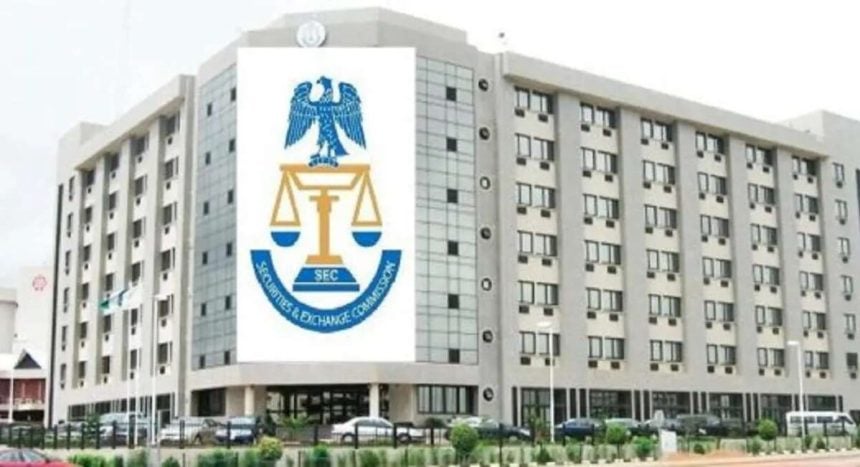
Nigeria’s Securities and Exchange Commission (SEC) has ordered the immediate freezing of assets belonging to 13 newly designated terrorism-linked entities operating within the country’s capital market.
The directive, contained in a compliance notice titled “Commission’s sweeping compliance directive issued to capital market operators,” follows the designation of 10 individuals and three corporate entities by the Nigeria Sanctions Committee under the Nigeria Sanctions List.
The SEC said the action is grounded in the Terrorism (Prevention and Prohibition) Act, 2022, which mandates the immediate freezing of funds, assets, and other economic resources linked to sanctioned individuals and organisations without prior notice.
According to the Commission, all Capital Market Operators (CMOs) and stakeholders are required to comply immediately with the directive, which includes identifying and freezing all assets linked to the designated persons and reporting such actions to the Nigeria Sanctions Committee Secretariat.
The SEC further stated that the sanctions also extend to Designated Non-Financial Businesses and Professions (DNFBPs), reflecting a broader enforcement scope across Nigeria’s financial ecosystem.
Details of the designation indicate that several of the individuals had previously been convicted by the Abu Dhabi Federal Court of Appeal in April 2019 for terrorism financing activities linked to Boko Haram. The offences reportedly involved the collection of funds in Dubai and their transfer to Nigeria to support terrorist operations, with sentences ranging from 10 years to life imprisonment.
The Commission emphasised that the asset-freezing measures are preventive rather than punitive, aimed at disrupting financial channels that could support terrorism activities before funds are utilised.
It also warned that failure to comply with the directive could result in both civil and criminal liabilities, as well as reputational damage for financial institutions and operators.
The SEC stressed that market operators must strengthen transaction monitoring systems, enhance real-time name screening, and ensure rapid reporting mechanisms to remain compliant with anti-money laundering and counter-terrorism financing (AML/CFT) regulations.
The latest move underscores Nigeria’s intensified regulatory stance on financial transparency and its commitment to aligning with global standards in combating terrorism financing within the capital market system.