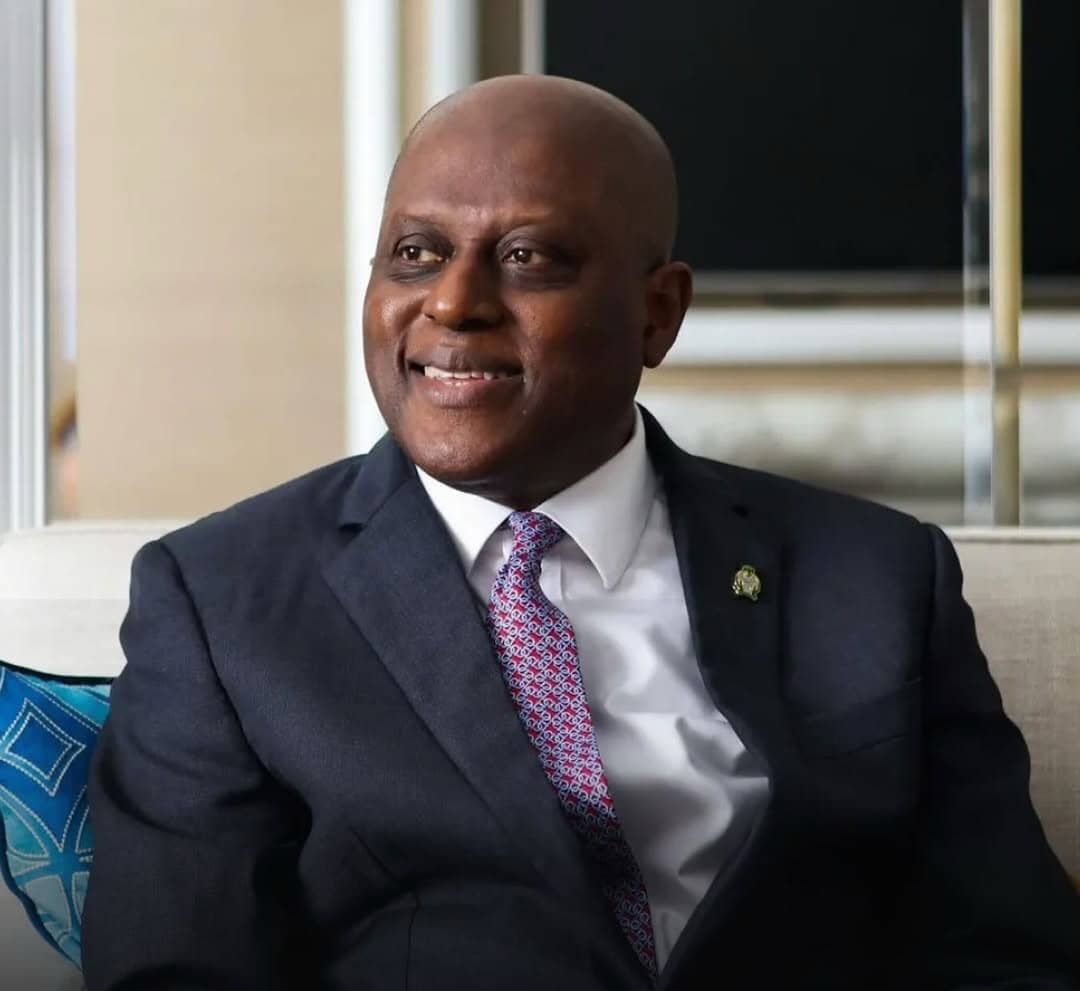
President Bola Tinubu has commended the Governor of the Central Bank of Nigeria, Olayemi Cardoso, for ongoing reforms aimed at stabilising the country’s financial system and driving long-term economic growth.
Speaking after the March 31, 2026 deadline for bank recapitalisation, Tinubu praised Cardoso’s leadership, describing him as focused and committed to implementing critical monetary and regulatory changes.
“I must single out one man here, Olayemi Cardoso, thank you very much, for all that you are doing for the country,” the President said in a video clip. He added that the CBN governor has demonstrated a clear understanding of policy timing and execution.
The President noted that recent measures, including foreign exchange adjustments and stricter financial regulations, have helped improve investor confidence and strengthen the banking sector.
The recapitalisation exercise, a key component of the reforms, introduced new minimum capital requirements for banks, including ₦500 billion for international banks and ₦200 billion for national banks. The policy marks a significant shift in Nigeria’s regulatory framework, aimed at enhancing the resilience of financial institutions.
However, some banks are yet to fully meet the requirements. Union Bank of Nigeria, Polaris Bank, and Keystone Bank remain under close regulatory oversight due to ongoing legal and compliance challenges.
An earlier audit by the CBN flagged issues in the books of Union Bank, leading to the removal of its board and senior management in January 2024. The decision is currently the subject of litigation, with the apex bank pursuing an appeal following a court ruling that questioned the legality of the action.
Meanwhile, a proposed merger involving Providus Bank and Unity Bank is facing legal hurdles, though regulators indicate that a resolution may be imminent.
For Polaris Bank and Keystone Bank, recapitalisation efforts are ongoing under the supervision of the CBN. Both institutions had previously received regulatory support and are expected to complete the process once outstanding issues are resolved.
Despite these challenges, the CBN has maintained that the affected banks remain stable and fully operational.
Analysts say the recapitalisation programme, combined with broader monetary reforms, is expected to position Nigeria’s banking sector for greater stability, improved risk management, and enhanced capacity to support economic growth.