Okomu Oil Palm Company Plc has reported a pretax profit of N34.09 billion in its unaudited results for the first quarter of 2026, reflecting a solid start to the year driven by improved cost efficiency and resilient domestic demand.
The figure represents a 5.88 per cent increase from the N32.2 billion recorded in the corresponding period of 2025.
Revenue for the quarter rose marginally by 1.45 per cent to N58.9 billion, compared to N58.1 billion a year earlier. The performance was supported by oil palm and rubber sales, with local demand accounting for a dominant 92.9 per cent of total revenue.
A significant decline in cost of sales—down 24.5 per cent to N11.6 billion from N15.4 billion—boosted profitability and strengthened margins. This was largely attributed to reduced oil palm production costs, which fell to N8.1 billion from N12.04 billion in the prior year.
As a result, gross profit climbed by 10.9 per cent to N47.2 billion, up from N42.6 billion recorded in Q1 2025.
However, rising operating expenses, which increased by 22.83 per cent to N11.7 billion, moderated the overall gains. Operating profit still grew by 7.44 per cent to N35.4 billion from N33.02 billion.
After accounting for finance income of N1.05 million and finance costs of N1.3 billion, pretax profit settled at N34.09 billion. Profit after tax rose by 8.57 per cent to N23.6 billion, while earnings per share improved to N24.74 from N22.79, indicating stronger returns for shareholders.
A closer look at revenue composition shows robust domestic performance, with sales within Nigeria rising to N54.7 billion from N50.7 billion in the previous year. In contrast, export sales declined to N4.1 billion from N7.3 billion, reflecting softer international demand relative to the domestic market.
On the balance sheet, fixed assets stood at N97.3 billion, slightly higher than N97.02 billion, while biological assets remained the largest component at N85.4 billion.
Current assets saw a sharp increase, driven by inventory valued at N39.8 billion and cash and cash equivalents of N31.8 billion, bringing total current assets to N80.4 billion from N41.8 billion.
Equity also strengthened, with revenue reserves of N72 billion lifting total equity to N72.4 billion, representing a 48.35 per cent year-on-year increase. On the liabilities side, trade payables stood at N59.9 billion as the company’s largest obligation.
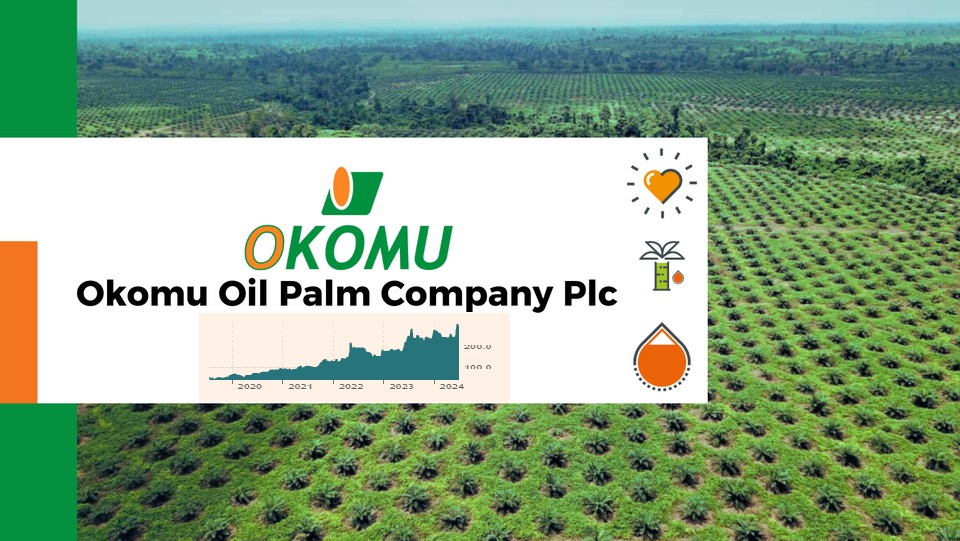
Despite the strong financial performance, the company’s shares showed little immediate reaction, trading flat on April 30, 2026, when the results were released. However, year-to-date, the stock has delivered an impressive return of 59.82 per cent, with shares priced at N1,750 per unit.