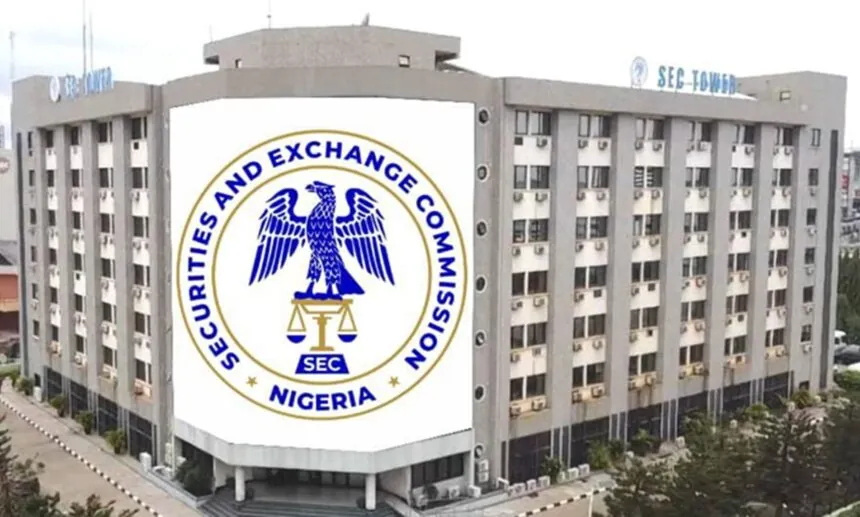
Nigeria’s Securities and Exchange Commission (SEC) has announced guidelines for the transition to a T+1 settlement cycle for equities and commodities transactions in the Nigerian capital market.
The new settlement framework will officially take effect on Monday, June 1, 2026, according to a notice issued by the Commission and signed by SEC management on Monday, May 18, 2026.
The transition forms part of the Commission’s broader market modernisation agenda aimed at improving liquidity, strengthening market efficiency, and aligning Nigeria’s capital market with international best practices.
Under the new system, all eligible trades executed in the Nigerian capital market will settle one business day after the trade date, replacing the existing two-business-day settlement cycle known as T+2.
According to the SEC, the final trading day under the current T+2 framework will be May 29, 2026.
The Commission explained that trades executed on both May 29 and June 1, 2026, will settle on the same date — Tuesday, June 2, 2026 — to ensure a smooth transition into the new framework.
From June 1 onward, all eligible trades will be governed strictly by the T+1 settlement structure.
The SEC directed all capital market operators, securities exchanges, clearing and settlement infrastructure providers, custodians, registrars, issuers, and other stakeholders to achieve full operational readiness before the implementation date.
The Commission noted that the shift from T+2 to T+1 would significantly reduce counterparty risk by shortening the period between trade execution and settlement.
According to the regulator, reducing the settlement timeline from two days to one lowers the volume of unsettled transactions within the market at any given time and improves overall market stability.
The SEC also stated that the new framework would improve capital efficiency for brokers, custodians, and institutional investors, as cash and securities would become available earlier for reinvestment into new positions.
The Commission added that the reform aligns Nigeria with developments in major global financial markets.
The United States migrated to a T+1 settlement cycle in May 2024, while Canada and Mexico also adopted similar systems. India has equally advanced its settlement process and is currently piloting instantaneous settlement for selected trades.
The SEC said Nigeria’s migration reflects the country’s commitment to modernising its financial market infrastructure and attracting foreign institutional investment.
The reform also marks another stage in Nigeria’s settlement cycle transition, with the market moving from T+3 to T+2 and now to T+1 within a period of less than seven months.
For retail investors, the new framework means proceeds from share sales will become available sooner.
However, institutional investors, custodians, and brokers are expected to urgently reconfigure back-office systems and reconciliation workflows currently designed around the T+2 structure.
The SEC warned that market participants who fail to achieve operational readiness before June 1 could face settlement failures and possible regulatory consequences.
The Commission stated that the accelerated pace of reform demonstrates Nigeria’s determination to close the infrastructure gap with more advanced markets while improving investor confidence in the country’s capital market.