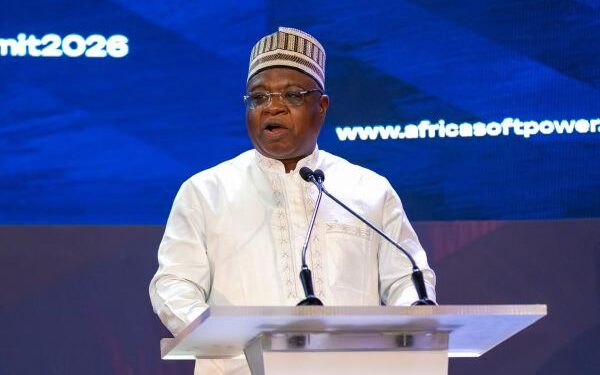
The Chairman of Nigerian Exchange Group, Umaru Kwairanga, has called on African capital markets and financial institutions to expand beyond traditional industries by embracing the continent’s fast-growing creative and innovation economy.
Kwairanga made the call during his opening remarks at the Africa Soft Power Summit held in Nairobi on Thursday.
The summit brought together policymakers, investors, creatives, entrepreneurs and business leaders to discuss Africa’s cultural, technological and economic future.
Convened by the Africa Soft Power Group, the summit focused on strengthening the relationship between Africa’s creative industries, technology ecosystem and capital markets.
Discussions also explored how the continent can convert its growing global cultural influence into sustainable economic value.
Speaking at the event, Kwairanga said Africa’s booming music, film and innovation industries present major investment opportunities that remain largely underdeveloped despite their increasing global popularity.
According to him, Africa’s creative economy should no longer be treated as a cultural side note but as a serious economic sector capable of generating sustainable returns for investors.
He stressed that African financial institutions must begin to view the creative and innovation economy as a viable asset class.
Kwairanga pointed to the growing global success of African entertainers and creatives as evidence of the sector’s economic potential.
He referenced internationally recognised artists including Tyla, Burna Boy and Diamond Platnumz.
However, he questioned whether many African artists were fully benefiting from revenue streams such as branding, copyrights, concerts and ticket sales.
He also raised concerns about the lack of proper monetisation structures and financing systems across Africa’s creative industries.
According to him, sectors such as Nollywood and East Africa’s movie industry still lack value chains capable of adequately rewarding the thousands of contributors behind successful productions.
Kwairanga further highlighted the need for stronger financing systems and institutional support to help African technology companies scale across the continent.
He questioned how Africa could replicate the success of Safaricom in other technology hubs without deeper capital market support.
The NGX chairman stressed that African exchanges and financial institutions must evolve in line with changing economic realities.
He explained that the future of African capital markets depends on their ability to support businesses driven by intellectual property, artificial intelligence, digital enterprise and technology innovation.
According to him, the Nigerian Exchange Group already recognises the importance of adapting to Africa’s evolving economic structure.
Kwairanga said exchanges of the future must connect not only with traditional industries but also with creators, innovators, entrepreneurs and technology-driven businesses shaping Africa’s next phase of growth.
He added that summit discussions would also cover issues surrounding artificial intelligence, data ownership, diaspora capital, creator economics and investment opportunities within Africa’s innovation ecosystem.
His remarks come as the Nigerian Exchange Group continues implementing reforms aimed at deepening investor participation and increasing activity in Nigeria’s capital market.
As part of those reforms, the Nigerian Exchange Limited recently extended its daily trading hours to 4:00 p.m. from April 27, 2026.
The exchange also adjusted its market opening time to 9:00 a.m. from 9:30 a.m., significantly expanding the trading window for investors and market participants.
The Group has also reported strong financial performance amid increased market activity.
NGX Group posted a pre-tax profit of N5.98bn in the first quarter of 2026, representing a 140.5 per cent increase compared to the N2.49bn recorded during the same period in 2025.
Its revenue also rose by 102.5 per cent to N7.22bn from N3.56bn in Q1 2025, driven mainly by stronger trading activity and higher transaction fees.