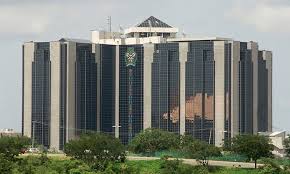
The Central Bank of Nigeria (CBN) conducted one of its most aggressive Open Market Operations auctions on May 21, 2026, absorbing a total of ₦3.692 trillion from the financial system in a major move to tighten liquidity and control inflationary pressure.
According to OMO auction results analysed by Nairametrics, investor demand for the apex bank’s short-term securities far exceeded expectations, with subscriptions reaching more than six times the ₦600 billion initially offered.
The auction featured two instruments — a 33-day bill and a 138-day bill — each offered at ₦300 billion.
On the 33-day bill, investors submitted bids worth ₦1.525 trillion, representing a 5.1 times oversubscription.
The CBN accepted the full amount at a marginal rate of 21.57 per cent.
Demand was even stronger for the 138-day bill, which attracted ₦2.168 trillion in subscriptions against the ₦300 billion offer.
The apex bank also accepted all bids for the longer tenor instrument at a marginal rate of 19.97 per cent.
The outcome marked a sharp shift from the CBN’s earlier OMO auction on May 12, 2026, when the bank accepted only ₦116 billion out of ₦872 billion subscribed across two bills.
Financial analysts say the decision to accept all subscriptions in the May 21 auction signals a deliberate effort by the CBN to drain excess liquidity from the banking system amid persistent inflation concerns.
The short-tenor bill carried a higher interest rate than the longer-dated instrument, reflecting strong demand for immediate liquidity management tools.
The ₦3.692 trillion absorbed in a single day is regarded as one of the largest liquidity tightening operations carried out by the CBN in recent years.
Data from the apex bank also showed that the Standing Deposit Facility, where banks deposit excess funds overnight with the CBN, dropped sharply after the auction.
The SDF reportedly declined from ₦6.103 trillion on May 20 to ₦5.797 trillion on May 21 before plunging further to ₦2.703 trillion on May 22.
This represented a decline of more than 55 per cent within two days, indicating that large volumes of cash were redirected into OMO instruments.
Opening balances within the banking system also declined from ₦102.47 billion on May 20 to ₦78.96 billion on May 22.
In addition to the OMO auction, the CBN simultaneously recorded major activity in the primary market for Nigerian Treasury Bills and Federal Government bonds.
On May 21 alone, total primary market sales reached ₦829.33 billion.
Analysts linked the high liquidity levels to significant repayments from maturing government securities.
Primary market repayments surged to ₦634.47 billion on May 21, compared to only ₦8.43 billion on May 20 and ₦9.29 billion on May 22.
The inflow of funds from matured instruments reportedly contributed to the massive subscriptions recorded during the OMO auction.
Further data showed that the CBN repaid ₦4.78 trillion through earlier OMO maturities during the first three weeks of May.
A separate OMO repayment of ₦2.247 trillion recorded on May 19 also injected substantial liquidity into the financial system ahead of the May 21 auction.
A comparison between the May 12 and May 21 auctions highlighted a major shift in strategy by the apex bank.
While the CBN adopted a selective allotment approach on May 12, it accepted 100 per cent of subscriptions on May 21.
The difference in liquidity absorbed between both auctions stood at more than 3,000 per cent.
Economists say the aggressive liquidity tightening reflects growing concerns over inflation, exchange rate stability and excess money supply within the economy.
Nigeria’s 2026 budget deficit is estimated at ₦20.12 trillion, with more than 70 per cent expected to be financed through domestic borrowing.
Analysts warn that rising government borrowing could increase interest rates and reduce credit available to the private sector.
Under Governor Olayemi Cardoso, the CBN has increasingly relied on OMO bills to manage liquidity within the banking system.
Available data indicate that cumulative OMO sales within the first four months of 2026 have reached approximately ₦30.12 trillion.