Mastercard’s Global Chief Executive Officer, Michael Miebach, has disclosed that the company contributes approximately $2 billion in foreign exchange inflows to Nigeria while preventing nearly $200 million in fraudulent financial activities.
Miebach made the disclosure during a meeting with President Bola Ahmed Tinubu at the Presidential Villa in Abuja, where he led a delegation from the global payment technology company.
The Mastercard chief reaffirmed the company’s commitment to supporting the Federal Government’s economic reform agenda and expanding digital inclusion across Nigeria.
“It’s been a long-standing history, and today we facilitate a big aspect of the economy,” Miebach said.
“In Nigeria, we are preventing $200 million in fraud and bringing in $2 billion in foreign exchange. We are helping the SME sector thrive and, of course, partner with your banks.”
Miebach noted that Mastercard has maintained a presence in Nigeria since 2011 and has witnessed the country’s economic and technological evolution over the years.
“We have a business here since 2011, and we have seen the country grow, and we have seen the country lead. We have seen your obviously clear alignment of fiscal and monetary policy that you have driven. In our world systems, there is a lot of momentum in Nigeria,” he stated.
Recalling the company’s entry into the Nigerian market, he added, “I was the one who set up the Mastercard business in Nigeria in 2011. I was in Lagos and hired employee number one. So it’s a little bit like coming home.”
The CEO said Mastercard is focused on unlocking opportunities for Nigeria’s estimated 40 million small and medium-sized enterprises by connecting them to digital financial services and global markets.
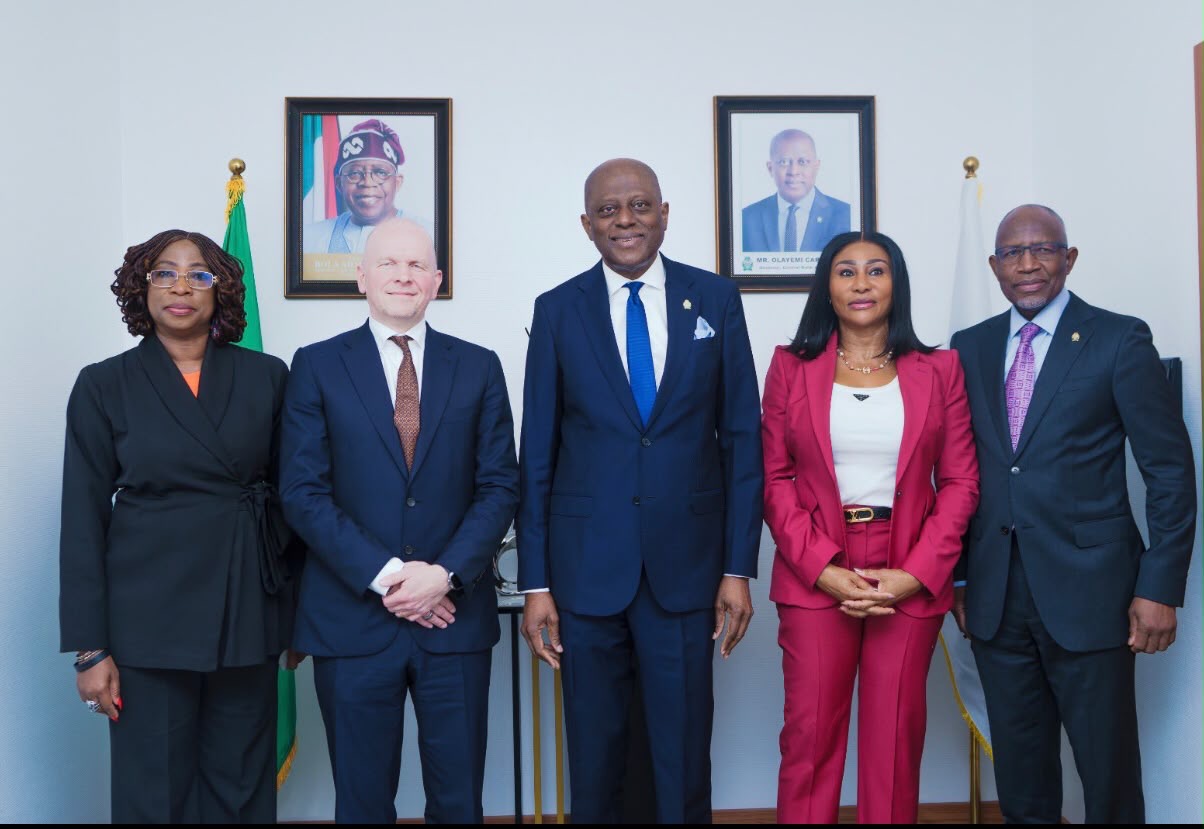
“We recognise the moment that we are in. We spent time with the CBN Governor and had an opportunity to meet the leading bankers yesterday in Lagos to see where everything is going and the opportunity here to unlock the power of the 40 million SMEs in Nigeria,” he said.
According to Miebach, the company aims to strengthen connections between Nigerians in the diaspora and businesses at home while driving growth in Africa’s digital economy.
“We want to drive the intra-African digital economy,” he added.
He further disclosed that Mastercard has developed a three-year programme designed to equip small businesses with digital capabilities and cybersecurity awareness.
“Many small businesses would like to have a digital part of their business, and they don’t know how to do that. Capacity building of small businesses goes beyond just opening a shop and keeping them safe in a cyber-world,” he said.
“We have a three-year programme for small businesses. A technical workshop has been planned for this, so it is not just talk but action and impact.”
Miebach also announced plans to invest in digital trust, cybersecurity and resilience through a Cyber Centre of Excellence focused on threat intelligence, incident response, artificial intelligence risks and emerging cyber threats.
Speaking during the meeting, President Tinubu described Nigeria’s youthful population as the country’s most valuable resource and assured investors of a workforce capable of competing in the global digital economy.
“The most important asset is our youth,” the President said.
Tinubu welcomed Mastercard’s proposal to train five million Nigerian businesses and provide them with digital skills, describing the initiative as critical to the country’s economic transformation.
According to him, ongoing reforms have stabilised the economy and positioned Nigeria to take advantage of opportunities in the global digital marketplace.
The President said the formalisation of Nigeria’s large informal sector would create more opportunities for digital transactions, investments, employment and economic growth.
“Payment plans and platforms are very necessary for the inclusion of small and medium-scale businesses,” Tinubu stated.
“What you have been doing with our young population is commendable, and we will continue to support that in every form.”
He also noted that more small businesses are embracing technology and formal registration, creating a stronger foundation for sustainable economic development.
Earlier, Chairman of the Presidential Fiscal Policy and Tax Reforms Committee, Taiwo Oyedele, said the administration’s reforms have opened up significant opportunities in digital payments, financial inclusion and credit systems.
According to Oyedele, more than 10,000 informal businesses have been applying for formal registration daily in recent months due to ongoing fiscal and tax reforms.
“This speaks to the opportunities that abound in Nigeria for organisations like Mastercard,” he said.
Oyedele added that government policies are expanding access to mortgages, consumer loans, student loans, auto financing and small-business credit, creating new opportunities for financial service providers.
He further noted that five of Africa’s nine fintech unicorns are based in Nigeria, underscoring the country’s growing influence in the continent’s digital economy.
The meeting highlighted growing collaboration between the Federal Government and global technology firms aimed at expanding financial inclusion, strengthening digital infrastructure and supporting the growth of Nigeria’s small business ecosystem.