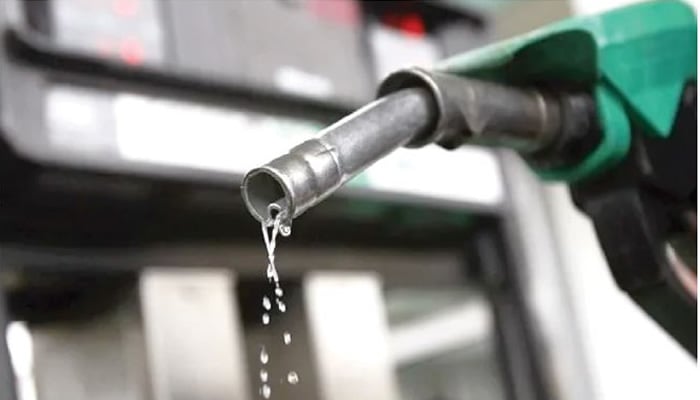
The Minister of State for Petroleum Resources, Senator Heineken Lokpobiri, has directed petroleum marketers to immediately reduce the pump prices of Premium Motor Spirit (PMS) and other petroleum products to reflect the recent decline in global crude oil prices.
Lokpobiri gave the directive on Monday in Abuja during the 2026 Nigerian Midstream and Downstream Petroleum Regulatory Authority (NMDPRA) General Counsel and Legal Advisers Forum, themed “Beyond Compliance: Certainty and Investment Confidence in Nigeria’s Petroleum Sector.”
According to the News Agency of Nigeria (NAN), the minister said the de-escalation of tensions between Iran and the United States had led to a decline in global oil prices, which should ordinarily translate into lower domestic fuel prices.
He, however, expressed concern that the expected reductions had yet to be reflected at filling stations across the country.
Lokpobiri said that although market forces under Nigeria’s deregulated downstream petroleum sector would eventually restore price equilibrium, marketers should not exploit prevailing market conditions to make excessive profits at the expense of consumers.
He stressed that regulators have a statutory responsibility to ensure deregulation does not become an avenue for profiteering, adding that oversight must be carried out in accordance with the provisions of the Petroleum Industry Act (PIA) 2021.
The minister said the focus of regulation should go beyond ensuring compliance with industry rules to creating a clear, consistent, and predictable regulatory environment capable of attracting long-term investment.
According to him, investors are more likely to commit capital where regulatory frameworks provide certainty and stability.
Lokpobiri also warned that regulators must ensure consumers receive the correct quantity of petroleum products for every purchase.
He said Nigerians who pay for 10 litres of petrol must receive exactly 10 litres, stressing that accurate product measurement is as important as fair pricing.
The minister credited the full deregulation of the downstream petroleum sector, introduced under President Bola Tinubu’s administration, with creating the conditions for the operationalisation of the Dangote Refinery and other ongoing refinery projects.
He added that deregulation has eliminated the era of persistent fuel scarcity, noting that petroleum products have remained available across the country since 2023 despite recent supply disruptions linked to the conflict involving the United States, Israel, and Iran.
Lokpobiri described general counsel and legal advisers as strategic partners whose responsibilities extend beyond interpreting regulations to shaping investment decisions and improving regulatory frameworks.
He urged legal advisers to provide constructive feedback whenever regulations create uncertainty that could discourage investment in the petroleum industry.
According to him, attracting more investment into the sector will require policy consistency, transparent regulation, efficient dispute resolution, and stronger collaboration among government agencies, regulators, operators, and legal practitioners.
Meanwhile, the Federal Competition and Consumer Protection Commission (FCCPC) has also raised concerns over the slow pace of reductions in petrol prices despite the significant decline in international crude oil prices.
In a statement issued by its Director of Corporate Affairs, Ondaje Ijagwu, the commission warned that refiners, marketers, depot operators, and retailers found engaging in unfair pricing practices could face regulatory sanctions.
The FCCPC said its ongoing surveillance of the downstream petroleum sector showed that recent reductions in gantry and retail prices were not proportional to the sharp fall in global crude oil prices, leaving consumers without the full benefits of lower international oil costs.