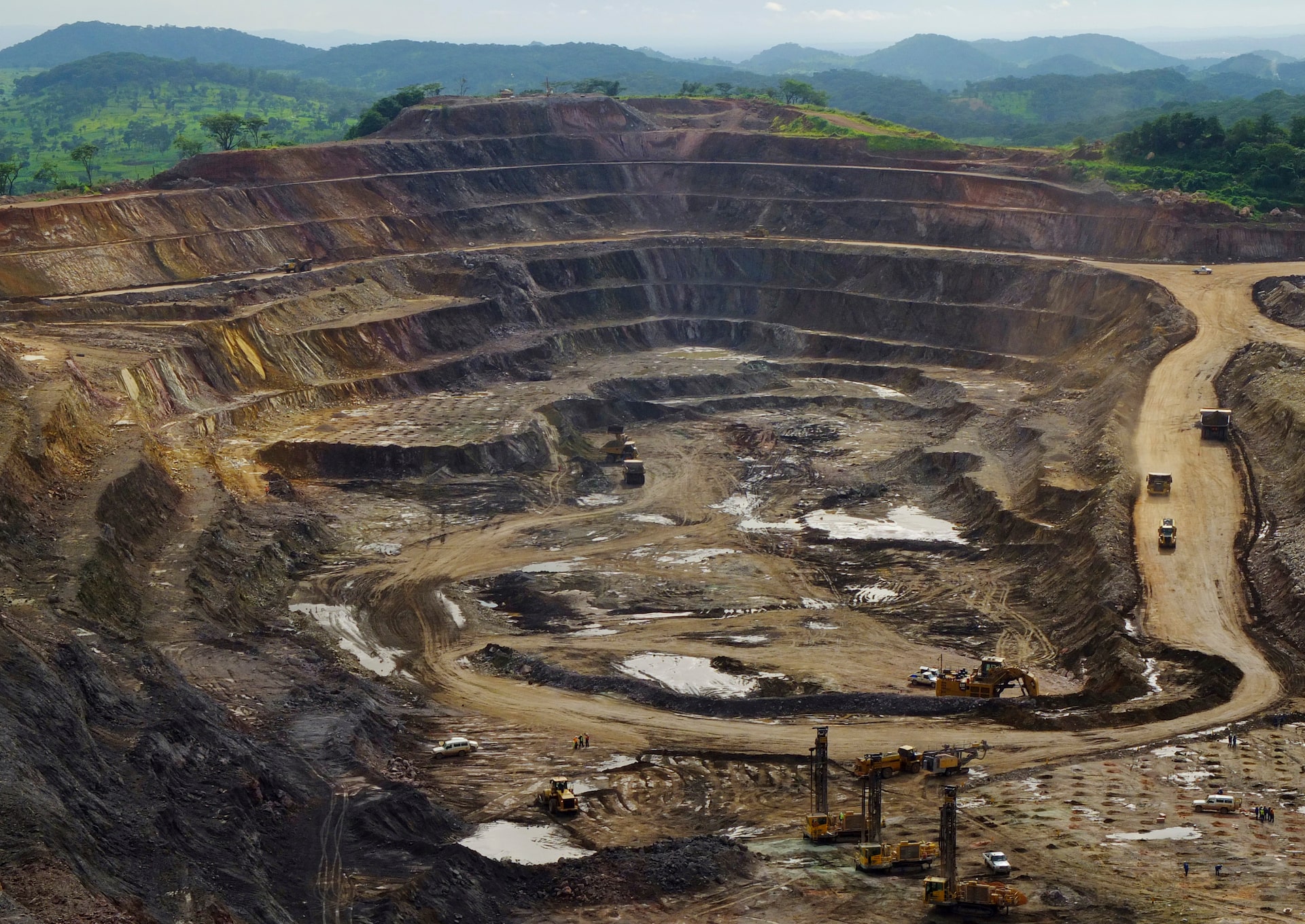
The Democratic Republic of Congo (DRC) has banned the export of copper and cobalt concentrates as part of efforts to encourage domestic processing and retain more value from its mineral resources.
The government order, reviewed by Reuters on Thursday, stated that exports of copper and cobalt concentrates are prohibited, with limited exemptions possible under strategic circumstances.
The directive, signed on June 29 by Mines Minister Louis Kabamba Watum, Foreign Trade Minister Julien Paluku Kahongya and Economy Minister Daniel Mukoko Samba, takes immediate effect.
“The export of copper and cobalt concentrates is prohibited,” the order stated.
The government said the decision was driven by the need to encourage mining companies to process minerals locally and export products with higher added value.
The order also introduced a new tax framework covering economically significant mining by-products, with a three-month transition period.
The move triggered a rise in global copper prices, with benchmark three-month copper on the London Metal Exchange climbing by as much as 1.8 per cent to $14,369.50 per metric tonne, its highest level since January 29.
The metal was trading at $14,300 per tonne as of 0930 GMT.
DR Congo is seeking to maximise its position as the world’s largest cobalt producer and a major supplier of energy-transition minerals, including copper, by developing domestic processing capacity.
The country has previously introduced similar restrictions on copper and cobalt concentrate exports in 2013, 2019 and 2023, while granting exemptions when domestic smelting capacity was insufficient.
The latest order replaces the 2023 directive and removes previous exemptions, creating a broader framework for mineral exports and taxation of mining by-products.
Official data showed that DR Congo largely exports copper in refined form.
The country exported 696,725 tonnes of copper cathodes in the first quarter of 2026, compared with 53,926 tonnes of copper concentrates containing 18,863 tonnes of copper metal.
During the same period, the country exported 51,940 tonnes of cobalt hydroxides containing 17,054 tonnes of cobalt metal.
Mining analyst Christian-Geraud Neema of the China-Global South Project said the new restrictions were unlikely to significantly affect most mining companies because much of Congo’s copper and cobalt production is already processed domestically.
However, he said the Kamoa-Kakula mining project could be among the most affected because it still exports some concentrates under existing exemptions.
The Kamoa-Kakula venture is owned by Ivanhoe Mines, China’s Zijin Mining and the Congolese government.
Ivanhoe Mines, Zijin Mining and the Congolese chamber of mines did not immediately respond to requests for comment.
The new tax regime also covers a broad range of minerals, including trace and ultra-trace minerals recovered during refining.
Under the framework, mining by-products will be valued using a 55 per cent valuation coefficient, with royalties applied alongside those charged on the main mineral.
The government said the policy is intended to strengthen local processing, increase economic benefits from mining activities and support greater domestic participation in the global mineral supply chain.