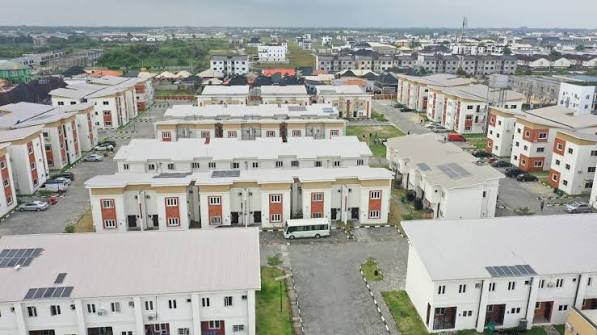
The Lagos State Government is intensifying efforts to attract private-sector investment into housing as the state confronts an estimated 3.4 million-unit housing deficit that authorities say cannot realistically be addressed through public funding alone.
The government estimates that approximately N6 trillion will be required to substantially address the housing and associated infrastructure gap, making public-private partnerships increasingly central to its strategy.
The position was outlined by the Lagos State Commissioner for Housing, Moruf Akinderu-Fatai, who said the scale of demand requires stronger collaboration between government, developers, financial institutions and other private investors.
Population Growth Puts Housing Under Pressure
Housing has become one of Lagos’ most difficult urban-development challenges.
Nigeria’s commercial capital continues to attract people seeking employment, education and business opportunities, creating sustained demand for residential accommodation.
But housing construction has struggled to keep pace.
The resulting supply gap contributes to rising rents, overcrowding and the expansion of informal settlements, while pushing many lower- and middle-income workers farther away from major employment centres.
The state’s estimate of a 3.4 million-unit deficit demonstrates the scale of the problem.
Even an aggressive government construction programme would struggle to eliminate a gap of that size.
That explains why Lagos is increasingly positioning government as an enabler of housing investment rather than expecting the state to directly build every required home.
Private Capital Becomes Central
Under a public-private partnership model, government can provide land, planning support, infrastructure or other incentives while private developers supply substantial portions of the financing and construction capacity.
The approach can accelerate development without requiring the entire cost to appear on the state budget.
But affordability remains the central question.
Building thousands of new apartments does not automatically solve a housing deficit if most residents cannot afford to buy or rent them.
Lagos will consequently need to balance commercial viability for developers with the purchasing power of residents.
Mortgage financing is particularly important.
A worker who cannot raise tens of millions of naira upfront may still be capable of purchasing a home if affordable long-term mortgage products are available.
Without that financing ecosystem, new housing developments risk remaining accessible primarily to wealthier households and investors.
Infrastructure Adds to Cost
The housing challenge extends beyond the buildings themselves.
New residential communities require roads, drainage, electricity, water, schools, healthcare facilities, waste-management systems and transportation connections.
Those requirements substantially increase development costs.
This is why Lagos’ housing challenge is closely connected to its broader infrastructure deficit.
A large estate built without adequate transport links can simply create another commuting problem.
Similarly, housing development without proper drainage and waste systems can create environmental risks.
The state’s increasing reliance on structured partnerships therefore needs to integrate residential construction with the infrastructure required to make communities functional.
Lagos Needs Scale
Lagos has implemented several housing projects under different government programmes, but a deficit measured in millions of homes requires a substantially larger response.
The private sector provides access to capital that government alone cannot realistically mobilise.
However, the success of the strategy will depend on creating an investment environment in which developers can obtain land and approvals efficiently while residents can access homes at sustainable prices.
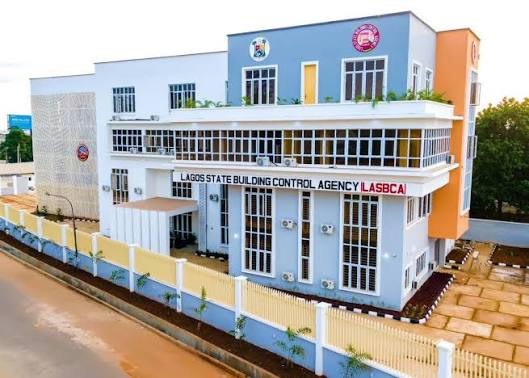
Planning and building regulation will also remain critical as construction accelerates.
The ultimate objective cannot simply be to build more structures. Lagos needs safe, properly planned and financially accessible housing.
The N6 trillion estimate illustrates why the state is looking beyond conventional government-funded estates.
Closing a 3.4 million-unit deficit will require Lagos to transform housing development into a much larger investment market — while ensuring that the homes produced are within reach of the people who actually need them.