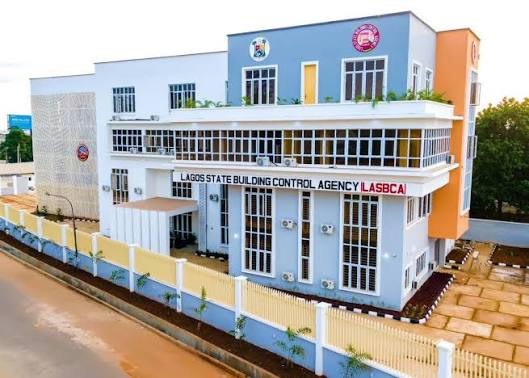
The Lagos State Government has intensified its push for stricter compliance with building regulations, warning property owners and developers that construction must conform to approved plans, specifications and applicable safety standards.
The Lagos State Building Control Agency, LASBCA, said it would continue to enforce regulations governing construction across the state as authorities attempt to reduce unsafe developments and strengthen confidence in Lagos’ rapidly expanding property market.
LASBCA General Manager Gbaye Florence reaffirmed the agency’s commitment to ensuring construction activities comply strictly with approved building plans and relevant regulations.
The renewed enforcement drive comes as Lagos faces the difficult task of simultaneously encouraging massive housing development and preventing rapid construction from compromising safety.
Developers Must Build What Was Approved
One of the recurring problems in urban development is the difference between what authorities approve and what developers eventually construct.
A developer may obtain permission for a particular building specification but later modify the structure during construction.
Changes involving the number of floors, structural design, setbacks or intended use can create significant safety and planning problems if they are made without regulatory approval.
LASBCA says developments must remain consistent with the plans approved by the relevant authorities.
The agency’s broader mandate is to regulate building construction and ensure structures are safe, healthy and compliant with established standards.
That enforcement becomes particularly important in a densely developed city such as Lagos, where the consequences of structural failure can extend beyond the occupants of an individual building.
Building Collapse Remains Major Concern
Lagos has experienced repeated incidents involving distressed and collapsed buildings over the years.
Some cases have been linked to ageing structures, while others have raised questions about construction quality, structural modifications and regulatory compliance.
LASBCA has previously sealed structures found to have departed from their original approvals.
Its records include a case involving a structure in Gbagada where construction had reportedly reached 10 floors despite an original approval for six. The agency sealed the development and directed the owner to revert to the approved permit.
Such cases illustrate why approval cannot simply be treated as paperwork obtained at the beginning of construction.
Regulation must continue throughout the building process.
Enforcement and Housing Expansion Must Work Together
The timing is particularly important because Lagos is simultaneously trying to accelerate housing construction.
The state estimates that it faces a 3.4 million-unit housing deficit and says approximately N6 trillion is required to tackle the housing and infrastructure gap, increasing pressure to attract private investment.
That creates a delicate balance.
Lagos needs faster development, but speed cannot come at the expense of structural integrity.
If developers view regulation as unpredictable or excessively slow, investment can suffer.
But if enforcement becomes too weak, unsafe construction can proliferate.
The more sustainable approach is therefore a regulatory system that provides clear requirements, faster legitimate approvals and strong penalties for developers who deliberately violate those approvals.
Public Awareness Part of Enforcement
LASBCA has also stressed the importance of public and media participation in improving compliance.
Florence said government cannot achieve its objectives without cooperation from stakeholders, highlighting the role of public awareness in supporting building-control policies.
Residents can play an important role by reporting dangerous construction, distressed buildings or developments that appear to violate planning rules.
Professionals in the built environment — architects, engineers, builders and surveyors — carry an even greater responsibility because their decisions directly affect structural safety.
Lagos’ Construction Boom Needs Stronger Oversight
Lagos’ property market will remain under pressure as population growth, commercial expansion and housing shortages generate demand for more buildings.
That construction activity can produce jobs, investment and economic growth.
But every new structure also becomes part of the city’s long-term physical environment.
Poorly constructed buildings can remain a safety problem for decades.
LASBCA’s renewed compliance push should therefore be measured not simply by the number of buildings sealed or notices issued, but by whether violations are identified before they become disasters.
For Lagos, the objective is increasingly clear: the state needs millions of additional homes and commercial properties, but it also needs confidence that every building rising across its skyline is being constructed according to the standards under which it was approved.