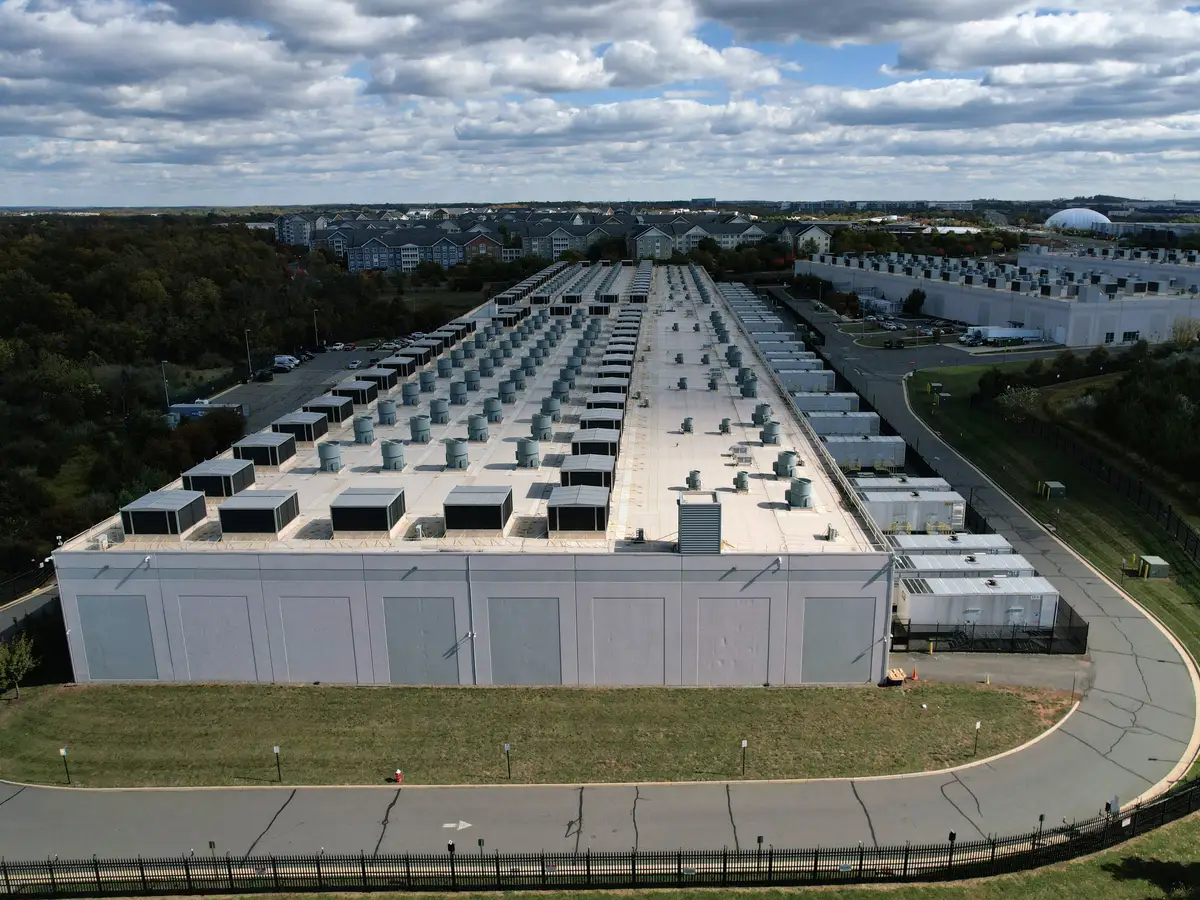
The world’s biggest technology companies are increasingly using financial guarantees to support an estimated $300 billion in financing for artificial-intelligence chips and data centres, highlighting the extraordinary amount of capital required to sustain the global AI boom.
The financing structures allow technology companies to support borrowing used to construct AI infrastructure while keeping significant portions of the underlying debt outside their conventional corporate balance sheets.
The Financial Times reports that companies are using mechanisms known as residual value guarantees, which effectively promise lenders that expensive assets such as AI processors and data-centre equipment will retain a minimum value.
The arrangements are helping companies finance the massive expansion of computing infrastructure required by AI developers including Anthropic and OpenAI.
AI Race Creates Enormous Capital Requirement
Building advanced artificial-intelligence systems has become one of the most capital-intensive activities in technology.
AI companies require tens of thousands of high-performance processors.
Those processors must then be installed inside specialised data centres equipped with sophisticated networking, cooling and power infrastructure.
The cost can quickly run into billions of dollars.
Rather than financing every project directly from corporate cash or conventional debt, technology companies are increasingly working with banks, infrastructure investors and special-purpose vehicles.
That spreads the financing requirement across multiple parties.
It can also allow technology companies to preserve stronger conventional balance-sheet metrics while continuing to make enormous commitments to AI infrastructure.
Meta Helped Pioneer Model
Meta used a version of the financing structure in 2025, while other companies and AI infrastructure providers have since adopted related arrangements.
Financial institutions including Morgan Stanley and Goldman Sachs have played important roles in arranging financing, according to the Financial Times.
The fundamental assumption behind the model is that the infrastructure will retain substantial value.
If AI demand remains strong, data centres and advanced processors should continue generating revenue.
The danger emerges if the industry builds significantly more computing capacity than customers eventually require.
What Happens if AI Demand Slows?
That question is becoming increasingly important.
The technology industry has committed extraordinary sums based on expectations that demand for artificial intelligence will continue expanding rapidly.
If those expectations prove correct, the financing structures could allow companies to construct infrastructure faster without overwhelming their balance sheets.
But if AI demand disappoints, the guarantees could become more financially significant.
Processors also depreciate rapidly because newer generations of chips can provide substantially better performance.
A data centre filled with today’s most advanced AI hardware may therefore be considerably less valuable several years from now.
Credit analysts are consequently examining how much exposure technology companies could ultimately face if the underlying assets lose value faster than anticipated.
AI Boom Becomes a Financing Story
The development illustrates how the AI race is evolving.
The first phase centred on models.
The next phase became a semiconductor race dominated by Nvidia and other chipmakers.
The current phase increasingly involves financial engineering, electricity generation, data-centre construction and debt markets.
That means banks and credit-rating agencies are becoming almost as important to the next stage of AI infrastructure development as semiconductor companies.
The technology may be digital, but the infrastructure behind it is extraordinarily physical — and extraordinarily expensive.
With hundreds of billions of dollars now being committed, investors will increasingly focus not simply on which company has the best AI model, but on who ultimately carries the financial risk of building the infrastructure that runs it.