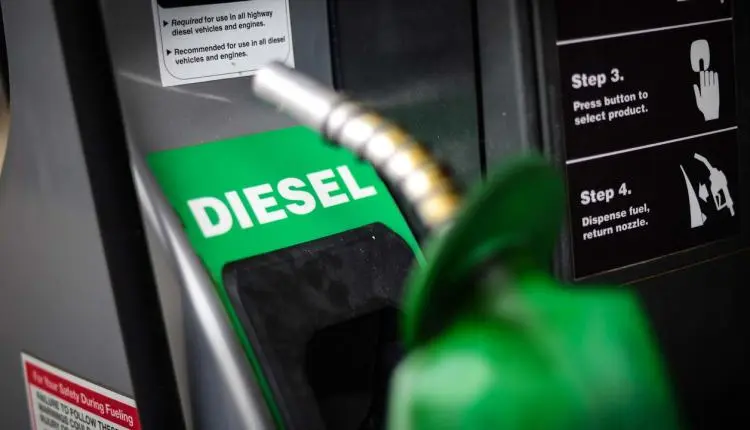
The global diesel shortage could continue into 2027, with inventories falling to historically low levels as conflicts involving Iran and Ukraine disrupt fuel supplies from two major producing regions.
Storage-market indicators and industry participants suggest that the shortage is unlikely to disappear quickly, extending pressure on businesses and consumers that depend heavily on middle-distillate fuels.
The disruption has particular economic significance because diesel is widely used in freight transport, agriculture, construction, mining and manufacturing.
Unlike petrol, which is primarily associated with passenger transportation, diesel is deeply embedded in industrial supply chains.
That means sustained increases in diesel prices can eventually filter into the cost of transporting and producing food and other goods.
US Diesel Tops $6 Per Gallon
The impact is already visible in the United States, where retail diesel prices exceeded $6 per gallon this month for the first time, increasing costs for farmers and trucking companies.
US diesel inventories have also fallen to their lowest level for September since 1982, illustrating the severity of the supply squeeze.
Storage availability in North America and the Caribbean has consequently risen as inventories decline, providing another indication that less fuel is being held in tanks.
The US Energy Information Administration expects inventories to remain relatively low through much of 2027.
Europe, Asia Also Under Pressure
The problem extends beyond North America.
European and Asian trading centres have also experienced unusually tight supplies.
Asian diesel refining margins recently exceeded $87 per barrel, reaching a record high as refiners benefited from the shortage.
Higher refining margins can encourage refiners to increase diesel production, potentially providing some relief.
China could also increase exports if domestic supplies allow.
But additional production may take time to rebuild depleted inventories, particularly while geopolitical disruptions continue.
The global shortage illustrates the wider economic consequences of energy-market instability.
Expensive diesel can raise transportation costs even in countries that are not directly involved in the conflicts affecting supply.
Those higher costs can eventually reach consumers through more expensive food, manufactured goods and logistics.
The direction of diesel prices will therefore depend heavily on geopolitical developments, refinery operations and how quickly global inventories can be rebuilt.
Without a meaningful improvement in supply, businesses dependent on heavy transportation and industrial fuel may continue facing elevated energy costs well into next year.