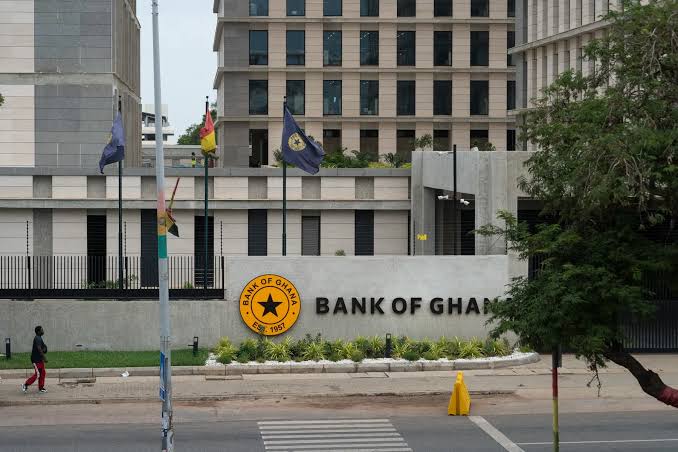
The Bank of Ghana has placed the rebuilding of the country’s foreign-exchange reserves among its top priorities as policymakers prepare for the seasonal rise in currency demand during the fourth quarter and monitor external risks linked to elevated energy costs.
Governor Johnson Asiama said maintaining adequate buffers was necessary to strengthen the economy’s resilience after a weaker current account and pressure on reserves.
The central bank’s strategy comes as Ghana attempts to strengthen foreign-exchange inflows through gold exports and a new framework involving the Ghana Gold Board, or GoldBod.
Asiama said the central bank’s “prime objective” was to maintain adequate reserves because they provide an important buffer against external shocks.
Gold Shipments Resume
The governor clarified that Ghana’s gold export shipments slowed in August rather than stopping entirely, with regular shipments subsequently resuming.
Official gold reserves increased from 24.4 tonnes in June 2026 to 25.2 tonnes in August, according to Bank of Ghana data reported by the Ghana News Agency.
Gross international reserves stood at $11.07 billion at the end of August, equivalent to approximately 4.2 months of import cover.
By September 22, the figure had increased to $12.05 billion, equivalent to about 4.5 months of imports, according to the same report.
Asiama said policymakers were also preparing for the traditional increase in foreign-exchange demand associated with the Christmas period.
Ghana Raises Gold Offtake Requirement
Gold has become increasingly important to Ghana’s strategy for accumulating reserves.
GoldBod reached an agreement requiring large-scale mining companies to sell 30 per cent of their gold output locally, up from the 20 per cent arrangement previously used.
The new requirement took effect on July 1.
Under the arrangement, GoldBod purchases the gold in cedis before it is refined and ultimately delivered to the Bank of Ghana as part of the country’s reserves.
GoldBod has also projected substantial foreign-exchange generation under its financing model, with part of the proceeds earmarked for commercial banks and another portion for central-bank reserve accumulation.
For Ghana, stronger reserves can provide policymakers with a larger buffer for meeting external obligations and managing periods of heightened foreign-exchange demand.
The challenge will be sustaining reserve accumulation while responding to commodity-price movements and other external pressures.