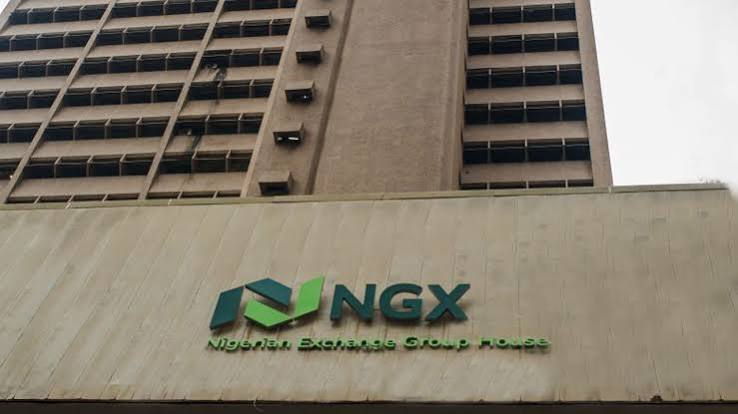
Investors on the Nigerian Exchange Limited (NGX) recorded an estimated ₦419 billion decline in market value on Monday, October 12, 2026, as selling pressure on major banking and energy stocks dragged the equities market into negative territory.
The downturn followed renewed profit-taking in several large-capitalisation stocks, with Zenith Bank, Access Holdings, First HoldCo and Oando among the major contributors to the market’s decline.
According to the Daily Market Update released by Cordros Securities, the NGX All-Share Index depreciated by approximately 0.26 per cent to close at 247,736.20 points, compared with 248,381.76 points recorded at the previous trading session.
The decline reduced the market’s month-to-date return to negative 1.38 per cent, while its year-to-date gain remained positive at 59.20 per cent.
Despite the bearish performance, trading activity improved, suggesting that investors continued to participate actively in the market.
Market Capitalisation Falls to ₦160.85tn
The market’s total capitalisation closed at ₦160.85 trillion, reflecting the impact of falling share prices on the overall value of listed equities.
Based on the reported daily percentage decline, the reduction in market value is estimated at approximately ₦419 billion.
The actual change in capitalisation may differ slightly because of rounding and changes in listed securities.
The decline came as investors reduced their exposure to selected banking and energy stocks.
Zenith Bank and Access Holdings each depreciated by 4.2 per cent, while First HoldCo declined by 2.5 per cent.
Oando recorded a steeper loss of approximately 7.6 per cent.
These declines contributed significantly to the negative market performance.
Banking Stocks Lead Sectoral Losses
The banking sector emerged as the weakest-performing major sector during the session.
The NGX Banking Index declined by 1.8 per cent, reflecting selling pressure across several financial institutions.
The Oil and Gas Index also slipped by 0.2 per cent.
However, other sectors recorded modest gains.
The Insurance Index advanced by 0.1 per cent, while the Consumer Goods Index appreciated by the same margin.
The Industrial Goods Index closed unchanged.
The mixed sectoral performance indicates that the decline was not evenly distributed across the market.
Trading Volume Rises 38%
Despite falling stock prices, trading activity strengthened considerably.
Investors exchanged approximately 405.39 million shares valued at ₦19.87 billion across 52,977 deals.
The trading volume represented an increase of 38.1 per cent compared with the previous session.
Transaction value also rose by approximately 7.1 per cent from ₦18.56 billion recorded on Friday.
The increase in activity suggests that investors remained active despite the negative market sentiment.
However, higher trading volumes do not necessarily indicate renewed buying interest, as increased selling can also contribute to higher turnover.
Access Holdings Tops Trading Volume
Access Holdings emerged as the most actively traded stock by volume, with approximately 33.28 million shares exchanged.
Zenith Bank followed with 27.98 million shares, while Jaiz Bank recorded 27.61 million shares.
Regal Insurance and FCMB also featured among the five most actively traded securities.
In terms of transaction value, Zenith Bank led with ₦3.63 billion.
Aradel Holdings followed with ₦2.16 billion, while First HoldCo recorded ₦1.77 billion.
MTN Nigeria and Access Holdings completed the leading stocks by transaction value.
Neimeth, UPDC REIT Lead Gainers
Despite the broader market decline, some equities recorded substantial gains.
Neimeth International Pharmaceuticals and UPDC Real Estate Investment Trust each appreciated by 10 per cent.
Guinness Nigeria gained 9.93 per cent, while Livestock Feeds advanced by 9.89 per cent.
Multitrex recorded a 9.52 per cent increase.
On the losing side, Sunu Assurances declined by 9.85 per cent, followed by CMFC with a 9.78 per cent loss.
Oando, LivingTrust Mortgage Bank and University Press also recorded notable declines.
Overall market breadth remained negative, with 25 gainers compared with 31 declining stocks.
Investors Await Fresh Market Direction
The bearish opening to the week comes after a period of significant gains in the Nigerian equities market.
With the All-Share Index still up more than 59 per cent since the beginning of the year, some investors may be reassessing their positions and taking profits.
The market’s next direction will depend on corporate earnings expectations, domestic liquidity, investor sentiment and developments in the wider economy.
Although the latest decline reflects renewed caution, the exchange’s strong year-to-date performance indicates that the broader market has retained much of its earlier gains.