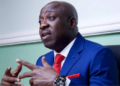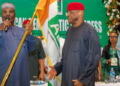
The Africa Finance Corporation (AFC) has appointed Central Bank of Nigeria (CBN) Governor Olayemi Cardoso as chairman of its board of directors, bringing his experience in banking, investment management and economic policy to the leadership of the pan-African infrastructure financier.
Cardoso succeeds Ireti Samuel-Ogbu, who will remain on the board as a member following the end of her tenure as chair.
The appointment comes as AFC continues to mobilise capital for infrastructure and industrial projects aimed at addressing Africa’s infrastructure deficit, supporting regional integration and expanding productive capacity.
The corporation said Cardoso’s background in financial-sector reform, institutional governance and capital markets would provide valuable experience as it advances its investment strategy.
Cardoso’s financial-sector experience
Since becoming CBN governor in September 2023, Cardoso has overseen major monetary and financial-sector reforms intended to restore macroeconomic stability, strengthen policy credibility and improve investor confidence in Nigeria.
The AFC highlighted reforms to the foreign-exchange market, efforts to address outstanding foreign-exchange obligations, measures to improve monetary policy transmission and changes aimed at strengthening governance and transparency.
During his tenure, the CBN also concluded a banking-sector recapitalisation programme designed to strengthen the capacity and resilience of Nigerian banks.
Before his appointment as governor, Cardoso spent 12 years as chairman of Citibank Nigeria and served as Lagos State Commissioner for Economic Planning and Budget, where he was involved in economic planning and fiscal management.
He holds a degree from Aston University in the United Kingdom and a master’s degree in public administration from Harvard Kennedy School.
AFC expands infrastructure investment
AFC finances and develops infrastructure projects across Africa, with interests spanning transport, power, industrial development and digital infrastructure.
Its investment portfolio includes the Lobito Corridor Railway Project in Angola, for which it achieved financial close on a reported US$753 million project. The railway corridor is intended to support transport links and trade across the region.
The corporation has also supported a US$600 million facility for the Dangote Group’s US$7 billion fertiliser expansion programme in Nigeria and committed US$300 million alongside Vision Invest in WIOCC Group to accelerate digital infrastructure development.
These projects illustrate AFC’s strategy of supporting infrastructure platforms that connect markets, improve industrial value chains and attract additional investment.
Productive capacity at the centre of strategy
AFC President and Chief Executive Officer Samaila Zubairu said Cardoso shared the corporation’s belief that Africa’s long-term stability depends on stronger productive capacity.
Cardoso, in turn, said he looked forward to working with the board, management and member states to advance the corporation’s development agenda.
He said the success of Africa’s infrastructure drive should be measured by the industries created, productive capacity developed and jobs supported.
For African economies, the challenge remains turning infrastructure financing into projects that improve electricity supply, reduce transport costs, support manufacturing and create employment.
Cardoso’s appointment adds a senior Nigerian financial policymaker to the leadership of an institution seeking to expand investment in strategic infrastructure. The impact of the appointment will ultimately be judged by the corporation’s ability to translate its financing commitments into completed projects and measurable economic benefits.