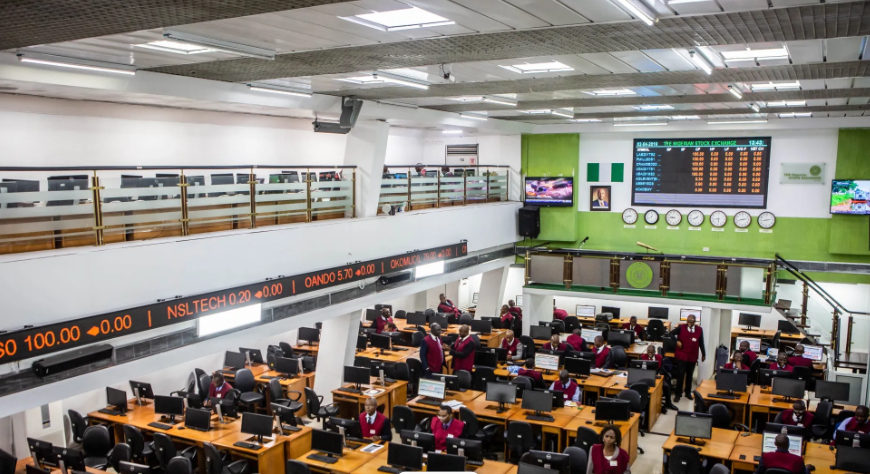
The Nigerian stock market recorded a significant decline on Thursday, November 5, as renewed selling pressure wiped approximately ₦3.28 trillion off the total market capitalisation of listed companies.
The Nigerian Exchange (NGX) All-Share Index fell by 1.98 per cent to close at 249,710.59 points, compared with 254,762.81 points recorded in the previous trading session.
Market capitalisation also declined from approximately ₦165.42 trillion to ₦162.13 trillion, reflecting the sharp reduction in the combined value of listed equities.
The downturn reversed the positive performance recorded earlier in the week, when investors had supported selected banking and industrial stocks.
Dangote Cement was among the major contributors to Thursday’s decline. The company’s share price reportedly dropped by 10 per cent, accounting for approximately ₦2.5 trillion of the market’s total value loss.
The industrial sector also recorded considerable pressure, with its index declining by 7.14 per cent.
Market breadth remained negative, as 36 equities closed lower against 20 gainers. This indicated that selling activities extended beyond a few major companies.
The development reflects investors’ changing appetite for equities amid concerns about market valuations, profit-taking and uncertainty surrounding the domestic and international economic environment.
Trading activities were also significant, with approximately ₦74.09 billion worth of shares exchanged during the session. First HoldCo accounted for a substantial 60.66 per cent of the total traded value.
Meanwhile, the naira weakened slightly in the official foreign exchange market, exchanging at approximately ₦1,348.74 per dollar, representing a 0.07 per cent depreciation.
Despite Thursday’s losses, the Nigerian equities market has maintained substantial gains over the course of 2026. However, the latest performance highlights the possibility of increased volatility as investors reassess their portfolios.
Market analysts will be watching the performance of major stocks, particularly Dangote Cement and banking equities, to determine whether the decline represents temporary profit-taking or the beginning of a broader market correction.