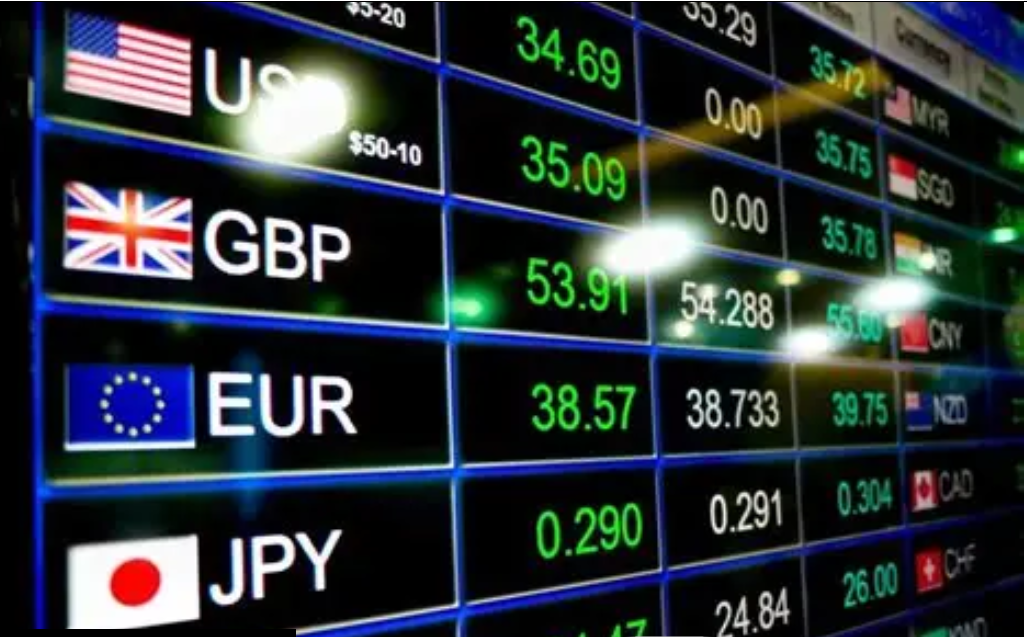
Nigeria’s foreign exchange market recorded a significant decline in trading activity during the week ended November 6, 2026, as the total value of transactions fell by 51.29 per cent to $1.81 billion from $3.71 billion recorded in the preceding week.
The decline represents a reduction of approximately $1.90 billion in weekly foreign exchange turnover, highlighting a substantial slowdown in dollar transactions between authorised dealers and their customers.
Data from FMDQ, which tracks activities in Nigeria’s official foreign exchange market, showed that average daily turnover dropped to $361.67 million from $742.51 million recorded in the previous week.
The latest figures indicate that both immediate foreign exchange transactions and forward contracts contributed to the decline.
Spot transactions accounted for the largest portion of the contraction, falling by 50.91 per cent to $1.79 billion from $3.64 billion in the preceding week.
Spot transactions involve the buying and selling of foreign currencies for immediate or near-immediate delivery. They represented approximately 98.77 per cent of total foreign exchange turnover during the period.
Average daily spot transactions declined to $357.23 million from $727.74 million, reflecting the reduced volume of immediate dollar trading.
The forward market also experienced a considerable decline, with transactions falling by 69.93 per cent to $22.20 million from $73.83 million recorded a week earlier.
Forward transactions accounted for just 1.23 per cent of total market turnover during the week, compared with 1.99 per cent in the preceding period.
Average daily forward turnover also dropped to $4.44 million from $14.77 million.
The decline in forward transactions is significant because these contracts allow businesses and financial market participants to agree on exchange rates for future currency deliveries. Such arrangements can help companies manage foreign exchange risks when planning international payments.
The decline in both segments suggests that the reduction in trading activity was not limited to immediate dollar purchases but also affected transactions involving future currency delivery.
According to the reported market data, forward exchange rates weakened across all the reported maturities.
The one-month forward rate depreciated by 0.2 per cent to ₦1,370.19 per dollar, while the three-month rate also weakened by 0.2 per cent to ₦1,405.78.
The six-month forward rate declined by 0.2 per cent to ₦1,455.88, while the one-year forward rate depreciated by 0.6 per cent to ₦1,557.65 per dollar.
The one-year contract recorded the largest percentage movement among the reported maturities.
Although foreign exchange turnover measures the value of transactions completed during a particular period, it does not independently establish the availability of dollars in the market or the reasons behind changes in demand.
Nevertheless, a sharp reduction in trading activity is an important development for businesses that depend on foreign currency to pay suppliers, purchase raw materials and settle international obligations.
Manufacturers, importers, airlines and other companies with foreign currency exposure closely monitor exchange rate movements because changes in the cost of obtaining dollars can influence their operating expenses.
The reduction in forward transactions also deserves attention from businesses seeking to manage currency risks over longer periods.
The financial market is expected to monitor liquidity developments during the week, particularly as Treasury bills maturities of ₦148.57 billion and Open Market Operations maturities of ₦774.53 billion are due.
Together, the expected maturities amount to ₦923.10 billion.
The funds entering the financial system could influence liquidity conditions and investors’ decisions, depending on how the proceeds are reinvested.
For the Central Bank of Nigeria and other market participants, maintaining confidence in the foreign exchange market remains important for improving currency stability and supporting business planning.
The latest figures therefore provide another indication of changing activity in Nigeria’s foreign exchange market as businesses and investors continue to monitor the naira and dollar supply conditions.