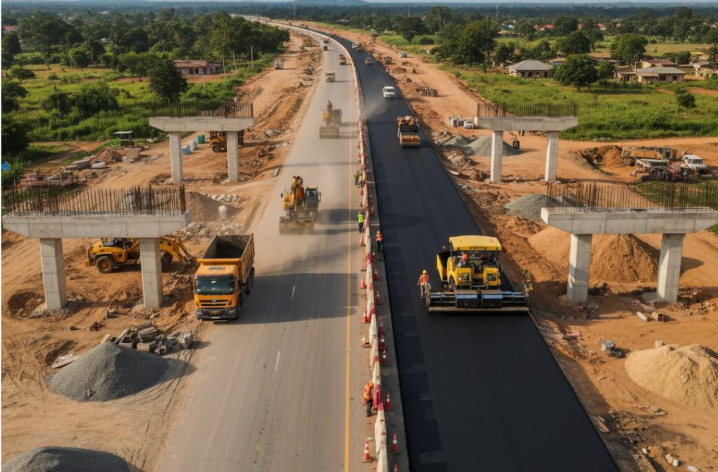
Nigeria’s pension industry is moving towards establishing a proposed $750 million infrastructure investment fund in partnership with UK-funded development agency FSD Africa, in an initiative aimed at directing long-term domestic savings towards critical development projects.
The proposed Nigeria Infrastructure Investment Platform (PIIP) is expected to mobilise investment from Nigerian pension funds and development finance institutions to support infrastructure projects in Nigeria and selected markets across the region.
The initiative follows an agreement signed between the Pension Industry Leadership Council (PILC) and FSD Africa in Lagos.
According to information released by FSD Africa on November 10, 2026, the proposed investment platform has already attracted interest from 19 Nigerian pension funds.
The development represents an important step towards increasing the participation of institutional investors in financing infrastructure projects.
Nigeria continues to require substantial investment in electricity, transportation, digital connectivity and other essential services. However, limited access to long-term financing has remained one of the challenges affecting the country’s infrastructure development.
The proposed fund is designed to connect available institutional capital with projects requiring long-term investment.
Fund targets $350 million initial capital
Under the proposed structure, the infrastructure platform is targeting an initial capital mobilisation of $350 million at its first close, expected in 2027.
The fund will subsequently work towards its ultimate target of $750 million.
At full capacity, approximately $600 million is expected to come from Nigerian pension funds, while development finance institutions are expected to contribute at least $150 million.
The arrangement is intended to create a funding structure that combines domestic institutional investment with international development finance.
The proposed platform will focus on equity and quasi-equity investments rather than operating solely as a traditional lending arrangement.
This approach is expected to provide investors with access to professionally managed infrastructure opportunities while supporting businesses and projects that require patient capital.
According to FSD Africa, an initial assessment identified 39 infrastructure projects with potential relevance to the platform. These projects represent approximately $20 billion in investment requirements.
The assessment provides an indication of the potential investment opportunities available to the proposed fund.
However, the identification of these projects does not mean that all of them have secured funding or been approved for investment.
Energy, transportation and digital infrastructure
The proposed investment platform is expected to concentrate on sectors that are important to Nigeria’s economic development.
Energy is one of the major priorities because reliable electricity remains essential for manufacturing, commercial activities and household consumption.
Businesses operating in Nigeria frequently face high operating costs associated with unreliable electricity supply. Investment in energy infrastructure could help expand generation, improve distribution and support the development of alternative energy solutions.
Transportation is another important area.
Investment in roads, railways, logistics facilities and related infrastructure could improve the movement of goods and people, reduce transportation costs and strengthen commercial connections between different parts of the country.
Digital infrastructure is also expected to benefit from the proposed platform.
As businesses increasingly depend on digital services, investment in connectivity and supporting infrastructure is becoming more important to economic productivity.
Under the proposed allocation arrangement, at least 60 per cent of the fund’s portfolio will be directed towards projects in Nigeria, while the remaining allocation will be available for selected investments across the region.
This structure is intended to maintain a strong domestic focus while allowing opportunities for regional diversification.
Role of PenCom and FSD Africa
The Pension Industry Leadership Council is developing the initiative with support from the National Pension Commission (PenCom) and FSD Africa.
PenCom’s involvement is particularly important because pension funds represent retirement savings belonging to millions of contributors.
Any investment involving pension assets must therefore take account of regulatory requirements, risk management, investment returns and the protection of contributors’ funds.
FSD Africa will provide technical assistance and expert advisory support to help establish the investment platform.
Its responsibilities include supporting the selection of a fund manager through a competitive process, engaging prospective investors and development finance institutions, building institutional capacity and supporting necessary regulatory reforms.
PenCom Director-General and PILC Chair, Omolola Oloworaran, welcomed the proposed platform, describing it as an opportunity to mobilise long-term pension capital for infrastructure while protecting contributors’ retirement savings.
FSD Africa Chief Executive Officer, Mark Napier, also highlighted the opportunity to address the gap between the availability of institutional capital and Africa’s infrastructure financing requirements.
What the development means for Nigeria
The proposed fund could create another financing channel for infrastructure development without relying entirely on government budgets or conventional bank loans.
It could also strengthen the relationship between Nigeria’s pension industry and the wider economy.
For pension contributors, however, the success of the initiative will depend on sound investment decisions, transparent governance and effective management of risks.
The proposed fund is still being developed, and its successful establishment will depend on the completion of the necessary processes and regulatory arrangements.
If implemented successfully, the platform could provide long-term financing for infrastructure projects, support job creation and improve the environment for businesses operating in Nigeria.
Its progress towards the planned $350 million first close in 2027 will therefore be an important development to watch.