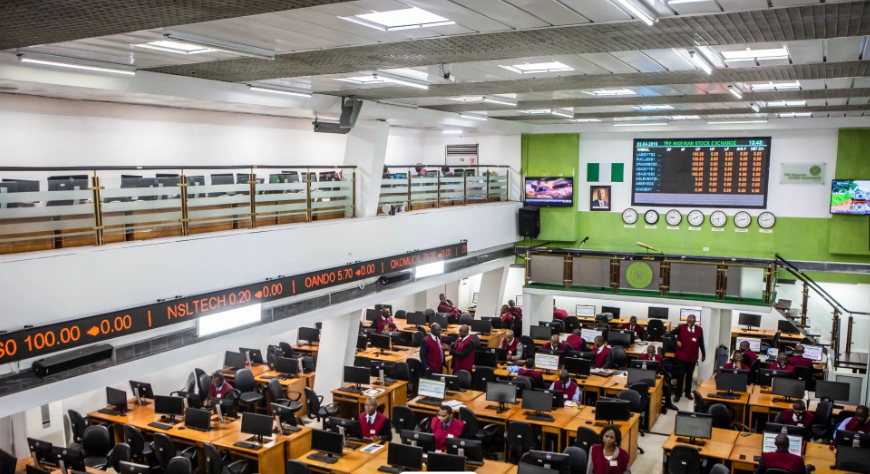
Nigeria has proposed a series of regional capital-market reforms aimed at making it easier for investors to trade bonds and other financial instruments across West Africa.
The proposal, announced by Finance Minister Taiwo Oyedele on Tuesday, November 10, 2026, is designed to address the fragmentation of financial markets in the region and improve access to long-term investment capital.
Speaking at the S&P Global Ratings Africa Summit in Lagos, Oyedele explained that the fragmented nature of West African capital markets has continued to limit the ability of countries to attract the scale of financing required for major infrastructure and economic development projects.
The proposed reforms are expected to create a more connected investment environment by reducing regulatory barriers and making cross-border transactions easier.
According to the minister, one of the major challenges facing the region is that individual national markets may not be deep enough to independently attract the level of investment required for large-scale infrastructure projects.
A more integrated market could provide investors with access to a wider range of opportunities while allowing governments and businesses to reach a larger pool of capital.
Proposed regional passport system
One of the major proposals is the introduction of a regional passport regime.
Under the proposed arrangement, issuers approved in one participating market would be able to raise capital in other participating countries without having to obtain separate regulatory approvals in every market.
This could reduce the time and administrative costs associated with issuing bonds across multiple West African countries.
For example, a company or government that has met the necessary regulatory requirements in one participating market could potentially access investors in another participating market through the regional arrangement.
The proposal is intended to encourage more companies and governments to raise funds across national borders.
It could also improve the attractiveness of West Africa as an investment destination by giving international investors access to a larger and more organised capital market.
However, the implementation of such a system would require cooperation among national regulators and agreement on common standards.
Unified investor identification system
Nigeria is also advocating a unified investor identification system that would allow investors registered in one participating market to purchase bonds and equities across the region without repeatedly completing onboarding requirements.
Currently, differences in registration processes and regulatory requirements can make cross-border investments more complicated.
Investors seeking opportunities in multiple countries may have to complete separate procedures and provide similar documentation to different financial institutions and market operators.
A unified identification arrangement could simplify these processes and improve efficiency.
It could also encourage more institutional investors, including pension funds, asset managers and other financial institutions, to consider investment opportunities outside their domestic markets.
The proposed system would need to operate within appropriate regulatory, security and investor-protection frameworks.
Other proposed market reforms
Beyond the regional passport system and unified investor identification, Nigeria is also advocating additional measures to strengthen the West African financial market.
These include a regional local-currency bond index and a credit enhancement facility to support cross-border infrastructure financing.
A regional local-currency bond index could provide investors with a clearer benchmark for assessing the performance of bond markets across participating countries.
It could also improve market transparency and help investors compare investment opportunities across the region.
The proposed credit enhancement facility is intended to help support infrastructure financing by improving the attractiveness of eligible projects to investors.
Credit enhancement mechanisms can reduce certain investment risks through guarantees or other financial support arrangements.
This can make projects more attractive to lenders and institutional investors that may otherwise be reluctant to provide long-term financing.
The measures are particularly relevant to infrastructure projects, which often require substantial capital and long repayment periods.
Why regional integration matters
West Africa has considerable infrastructure financing needs.
Countries across the region require investment in roads, electricity, railways, ports, telecommunications and other essential services.
However, limited access to long-term financing has continued to affect the pace at which some projects can be developed.
A more integrated capital market could help mobilise savings and investment from across the region rather than depending mainly on domestic financial resources.
It could also create opportunities for businesses seeking to expand into neighbouring countries.
For Nigeria, which has one of the largest economies and financial markets in West Africa, the proposed reforms could strengthen its position as a regional investment and financial services centre.
The Nigerian capital market could also benefit from increased participation by foreign investors and institutions seeking opportunities across multiple African markets.
Challenges facing the proposal
Despite its potential benefits, regional capital-market integration will require significant cooperation among participating countries.
Differences in legal systems, taxation policies, currencies, settlement arrangements and regulatory frameworks could create challenges.
National regulators would need to agree on common standards that protect investors while allowing transactions to take place more efficiently.
Exchange-rate risks would also remain an important consideration for investors purchasing securities denominated in different West African currencies.
Furthermore, successful implementation would require reliable market infrastructure and effective cooperation among stock exchanges, central securities depositories and financial regulators.
The minister’s proposals therefore represent an important policy direction, but they should not be interpreted as reforms that have already been fully implemented.
The coming months will be important in determining how the proposals develop and whether participating countries can agree on a practical framework.
If successfully implemented, the reforms could improve investment flows, strengthen regional financial markets and provide additional financing opportunities for West Africa’s infrastructure and private-sector development.