The World Food Programme (WFP) has warned that reductions in humanitarian funding are worsening the hunger crisis in Sudan, where millions of people continue to struggle with food shortages following prolonged conflict.
The warning was issued after the organisation’s new Executive Director, Luke Lindberg, completed his first field mission to the country.
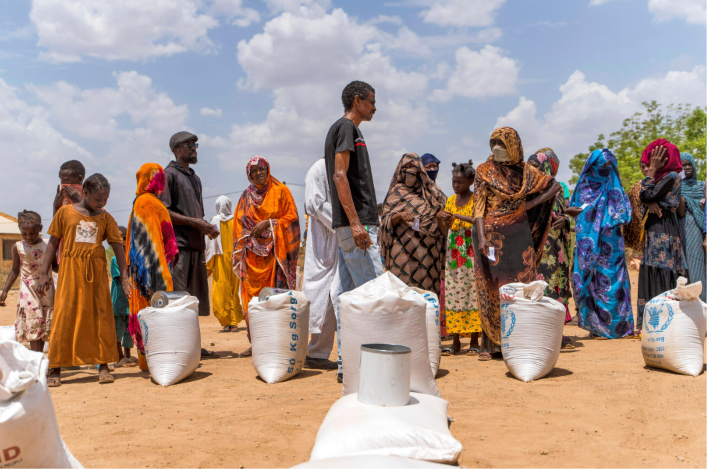
During the visit, Lindberg met families displaced by the conflict and witnessed the difficulties facing communities attempting to obtain enough food to survive.
The organisation said humanitarian assistance remains essential for millions of Sudanese people who have lost their homes, livelihoods and access to basic services because of the fighting.
The conflict has disrupted agricultural activities, damaged infrastructure and affected the movement of goods across different parts of the country.
As a result, many households have experienced difficulties obtaining food, while humanitarian organisations continue to face challenges delivering assistance to vulnerable communities.
The WFP described food assistance as a critical lifeline for families who have few other options for meeting their daily needs.
However, reductions in international humanitarian funding are making it increasingly difficult for aid organisations to maintain the level of support required.
The organisation warned that funding shortages could force difficult decisions about which communities receive assistance and how much food can be distributed.
Such limitations are particularly concerning in a country where millions of people have already been affected by displacement and economic disruption.
Sudan has experienced a prolonged conflict between the Sudanese Armed Forces and the paramilitary Rapid Support Forces, which began in April 2023.
The fighting has affected major population centres, including Khartoum, and spread to other regions, creating widespread insecurity.
The conflict has also damaged hospitals, schools, markets and other essential facilities, making it difficult for residents to access basic services.
Agricultural production and commercial activities have been disrupted in several areas, placing additional pressure on household incomes and food availability.
Displacement has further increased the number of people depending on humanitarian assistance.
Families forced to leave their communities often lose access to farms, businesses and other sources of income, making it difficult to purchase food even when markets remain operational.
Children, pregnant women, older people and individuals with existing vulnerabilities are among those who face serious risks when access to adequate nutrition is limited.
The WFP’s latest warning highlights the importance of maintaining humanitarian funding during prolonged emergencies.
Humanitarian organisations depend on contributions from governments, international institutions and private donors to provide food, medical assistance and other essential services.
When funding declines, emergency operations can become more difficult to sustain, especially in conflict-affected regions where transportation and security costs are already high.
The organisation has therefore called for increased international support to ensure that vulnerable Sudanese families are not abandoned during the crisis.
The situation also highlights the need for a peaceful resolution to the conflict.
Although humanitarian assistance can help prevent further suffering, it cannot independently address the political and security problems responsible for the emergency.
An end to hostilities would be important for restoring economic activities, allowing displaced people to return home safely and rebuilding damaged infrastructure.
For now, the WFP says millions of Sudanese people continue to depend on humanitarian assistance as the conflict and funding challenges place additional pressure on their daily lives.