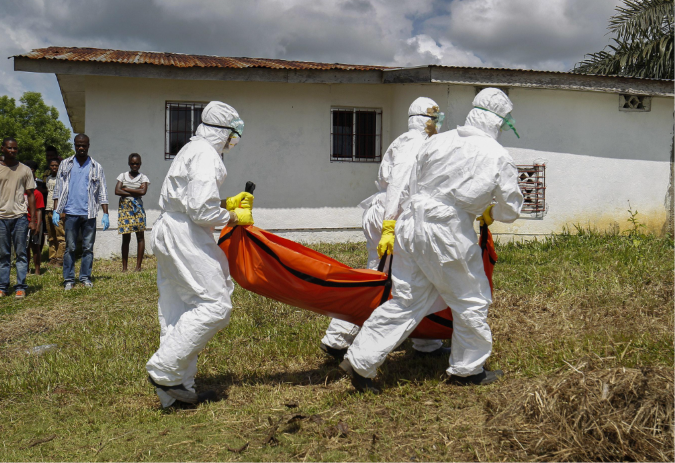
The Africa Centres for Disease Control and Prevention has warned that the Ebola outbreak in the Democratic Republic of Congo remains out of control, raising fresh concerns about the capacity of health authorities to contain the deadly disease.
The warning comes approximately six months after the outbreak was declared on May 15, 2026, with health officials expressing concern about the increasing difficulties facing response teams.
According to a report published by Reuters on November 15, Africa CDC Director-General Jean Kaseya said the outbreak remained serious and warned that it could become the worst Ebola outbreak on record if urgent measures were not taken to stop its spread.
The outbreak is caused by the Bundibugyo virus, a rare species of Ebola virus responsible for severe illness and potentially fatal complications.
Government figures cited by Reuters indicated that more than 11,200 infections and approximately 5,500 deaths had been reported.
The World Health Organisation’s November 6 situation report provided an earlier official reporting snapshot, recording 10,668 confirmed cases and 5,198 deaths as of November 3. The figures cover different reporting dates and should not be treated as identical datasets.
One of the major difficulties facing health authorities is the increasing number of infections being identified outside established contact-tracing networks.
Reuters reported that more than 80 per cent of new cases were appearing outside known contact lists. This makes it difficult for response teams to identify how individuals became infected and determine who may have been exposed.
Contact tracing is an important part of controlling Ebola because it enables health workers to identify people who may have had contact with infected individuals and monitor them for symptoms.
The outbreak has also placed considerable pressure on healthcare workers and medical facilities.
According to the Reuters report, more than 65 per cent of deaths were occurring within communities rather than healthcare centres.
This situation highlights the difficulties surrounding early diagnosis, access to treatment and public awareness.
Insecurity has further complicated the response. Attacks against healthcare workers, inadequate resources and difficulties accessing affected communities have limited the ability of response teams to carry out essential activities.
Some health workers have reportedly gone unpaid, while shortages of trained personnel and operational resources have affected the delivery of medical assistance.
Ambulances have also faced fuel shortages, creating additional difficulties in transporting patients and supporting emergency operations.
Despite international financial commitments, concerns remain about whether pledged funds are reaching the communities most affected by the outbreak.
Reuters reported that donors had pledged approximately $2.9 billion, while Médecins Sans Frontières raised concerns that assistance was not reaching some of the outbreak hotspots.
Africa CDC has called for stronger coordination among donors and the Congolese government to ensure that available resources are used effectively.
The outbreak is particularly concerning because Ebola can spread through direct contact with the blood and bodily fluids of infected people or contaminated materials.
Symptoms can include fever, weakness, muscle pain, headache, vomiting and diarrhoea. Severe cases can lead to internal and external bleeding and organ failure.
Health authorities have continued to encourage communities to report suspected cases and seek medical assistance rather than relying on unverified treatments.
The WHO has also documented the geographical expansion of the outbreak, reporting active transmission across several health zones in the Democratic Republic of Congo.
The situation demonstrates the importance of strengthening healthcare infrastructure, improving disease surveillance and ensuring that medical workers have the equipment and financial support required to respond effectively.
For other African countries, the outbreak is a reminder that infectious diseases can create regional risks when surveillance systems and emergency preparedness are inadequate.
Although the response remains challenging, stronger cooperation between African governments, international health organisations and humanitarian agencies will be essential to controlling the outbreak.