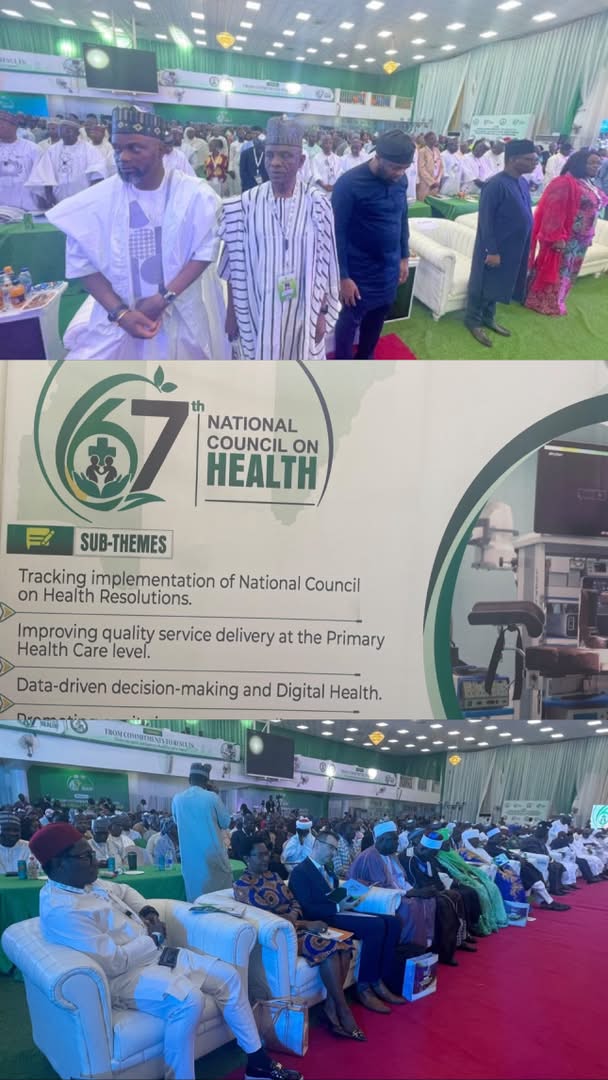
The Federal Government and health sector stakeholders have begun a fresh review of Nigeria’s healthcare reform programme as the 67th National Council on Health opens in Lafia, Nasarawa State.
The meeting has brought together state commissioners for health, policymakers, heads of health agencies and development partners to assess progress, identify implementation gaps and strengthen coordination in delivering accessible and quality healthcare across the country.
Coordinating Minister of Health and Social Welfare, Professor Muhammad Ali Pate, said the government had revitalised 3,526 primary healthcare centres, while more than 8,000 health facilities were benefiting from the Basic Health Care Provision Fund.
He also disclosed that approximately ₦249.5bn had been disbursed under the Tinubu administration to support healthcare delivery and strengthen access to essential services.
Pate highlighted improvements in maternal and newborn healthcare, alongside an increase in the number of Nigerians covered by health insurance from 16 million to nearly 24 million.
He further said more than 78,000 frontline health workers had been trained as part of efforts to improve the capacity of healthcare facilities and strengthen service delivery, particularly at the primary healthcare level.
The minister also cited the vaccination of 100 million children against measles and rubella, as well as more than 17 million adolescent girls against the human papillomavirus (HPV), among the achievements recorded in the health sector.
Despite these interventions, stakeholders acknowledged that Nigeria continues to face significant public health challenges, including malaria, HIV/AIDS, tuberculosis and persistently high maternal and neonatal mortality.
They stressed the need for sustained investment in disease surveillance, improved access to essential medicines, stronger health systems and better coordination between federal and state authorities.
The council is being held under the theme, “From Commitments to Results: Delivering Quality and Equitable Healthcare for All Nigerians.”
The meeting is expected to provide a platform for stakeholders to evaluate existing policies, address implementation challenges and develop strategies for translating government commitments into measurable improvements in healthcare outcomes.
A major focus is expected to be the strengthening of primary healthcare, which remains the first point of contact for many Nigerians seeking medical services.
The council also provides an opportunity to improve collaboration between the federal and state governments, particularly in financing, workforce development, health insurance expansion and the delivery of essential services.