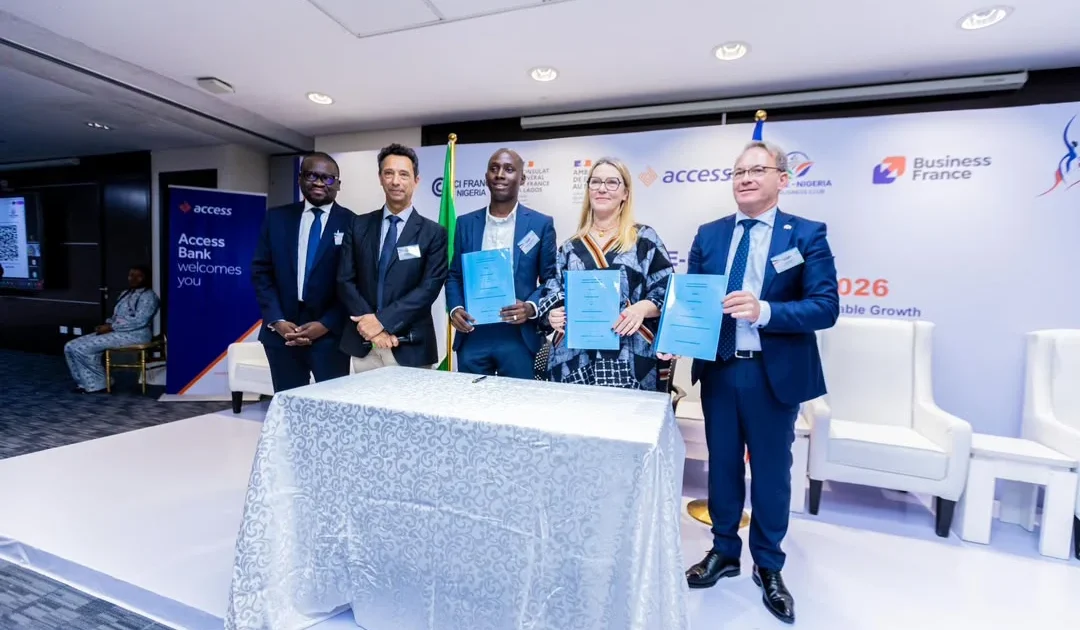
Nigeria and France are seeking to deepen bilateral economic relations through new cooperation in energy and agriculture, following the signing of three agribusiness agreements and plans to develop an energy roadmap during French Week 2026 in Lagos.
The week-long programme, organised by the Franco-Nigerian Chamber of Commerce and Industry (FNCCI), brought together government officials, business leaders, investors and industry stakeholders to explore opportunities for stronger commercial partnerships between both countries.
The engagements focused on expanding French investment in Nigeria, particularly in the energy and agribusiness sectors, while strengthening collaboration between companies operating in both markets.
In a statement, the FNCCI said the programme was designed to move bilateral economic relations beyond diplomatic engagement towards practical business opportunities and investment partnerships.
The Consul General of France in Lagos, Laurent Favier, said the outcomes of the engagements reflected a shift towards translating the longstanding relationship between both countries into concrete commercial activities.
A major feature of the programme was the inaugural France-Nigeria Energy Roundtable, co-chaired by energy companies TotalEnergies and SPIE Global Services Energy.
The roundtable provided a platform for discussions on energy-sector cooperation and the development of a roadmap intended to guide future engagements between Nigerian and French stakeholders.
Energy remains a major area of potential cooperation, given Nigeria’s need for investment in oil and gas infrastructure, power generation, renewable energy and related services. French companies have maintained interests in Nigeria’s energy industry, while the country continues to seek capital, technology and technical expertise to expand its energy capacity.
The programme also featured the France-Nigeria Agri-Business Summit, organised in partnership with the France-Nigeria Agribusiness Club.
Three agribusiness agreements were signed during the engagements, although the available announcement did not provide details of the companies involved, financial commitments or the specific projects covered by the agreements.
Agriculture remains a strategic sector for Nigeria because of its contribution to employment, food production and rural economic activity. Stronger partnerships could support investment in agricultural processing, technology, logistics, storage and access to markets.
The technology sector was also represented during the week-long programme, reflecting the growing importance of innovation and digital solutions to the development of both countries’ economies.
For Nigeria, the success of the renewed economic engagement will depend on the extent to which the agreements and proposed energy roadmap translate into actual investments, business expansion, technology transfer and employment opportunities.
The initiative underscores the potential for stronger private-sector collaboration between Nigeria and France, particularly in sectors where investment, technical expertise and improved infrastructure are critical to long-term economic growth.