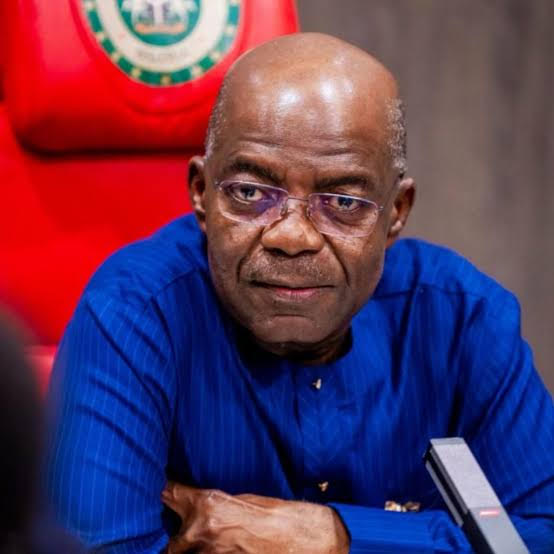
Abia State is set to disconnect from the national grid once a new 125-megawatt gas turbine is added to Geometric Power, Aba, boosting the facility’s current 141-megawatt capacity to 266 megawatts, Governor Alex Otti announced at a recent media chat.
The expansion will provide sufficient electricity to Umuahia and surrounding areas, with excess power available for sale, as the state works to achieve self-sufficiency in power generation, transmission, and distribution.
Eight local governments in the Aba “ring-fence” area have already detached from the national grid under Geometric Power’s operations. The state is now focusing on providing independent power to the remaining eight local governments, aiming for complete detachment from the grid.
Governor Otti also revealed that Abia State University (ABSU), Uturu will disconnect from the national grid upon completion of a 15-megawatt independent power project. This follows the recent restoration of a 5-megawatt substation at the university, ending 13 years of darkness.
“Today again, we were able to restore public power to Abia State University. We commissioned and switched on the substation, so anytime there is no power in the grid, ABSU will have power,” Otti said.
He added that the proposed 15-megawatt gas-turbine-powered station at ABSU would provide a more permanent solution to the university’s power challenges and could enable the institution to detach entirely from the national grid.
The governor disclosed that the Commissioner for Power and Public Utilities, Monday Ikechukwu, identified a General Electric-built 125-megawatt gas turbine in the Netherlands for Geometric Power’s acquisition. Once installed alongside Geometric’s existing three turbines, the total 266-megawatt capacity will meet Umuahia and environs’ power needs of about 100 megawatts.
Otti further noted that if enough power is generated from the existing independent power company in Aba, there would be no need to build a separate facility in Umuahia.
He emphasised that the government will not subsidise electricity once independent power generation begins, suggesting that consumers would benefit from continuous 24-hour supply at lower costs.