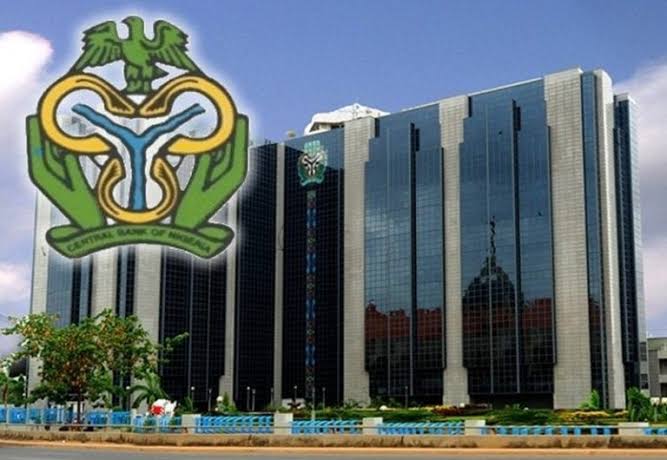
The Central Bank of Nigeria (CBN) has given Deposit Money Banks 18 months to fully comply with its newly introduced baseline standards for automated Anti-Money Laundering (AML) solutions.
Other financial institutions have been granted 24 months from March 10, 2026, to meet the same requirements under the new regulatory framework.
The directive represents an extension from the earlier 12-month compliance window initially proposed by the apex bank.
In a circular dated March 10, 2026, the CBN stated that implementation of the guidelines would begin immediately.
“The implementation of these guidelines shall start from the date of issuance, while full compliance shall be 18 months (for Deposit Money Banks) and 24 months (for Other Financial Institutions) from the date of issuance,” the circular noted.
The document, titled “Issuance of Baseline Standards for Automated Anti-Money Laundering Solution for Financial Institutions in Nigeria,” was signed by the Director of the Banking Supervision Department, Akinwunmi Olubukola, alongside Olubunmi Ayodele-Oni, who signed on behalf of the Director of the Compliance Department.
The circular was addressed to banks, mobile money operators, international money transfer operators, payment service providers, and other financial institutions.
The CBN also directed affected institutions to submit implementation roadmaps within three months to its Compliance Department.
According to the regulator, the new standards aim to strengthen the stability and integrity of Nigeria’s financial system by improving the detection and reporting of suspicious financial activities.
The framework covers automated systems for anti-money laundering, combating the financing of terrorism, and countering proliferation financing.
“The Baseline Standards provide a framework for implementing automated solutions that strengthen the detection and reporting of suspicious transactions in real time and enhance compliance with applicable AML/CFT/CPF laws and regulations,” the CBN said.
Under the new framework, all financial institutions supervised by the CBN must operate automated AML systems. However, the complexity of the systems will depend on factors such as the institution’s size, risk profile, transaction volumes, and business model.
The guidelines are anchored on the CBN Act 2007 and the Banks and Other Financial Institutions Act 2020, and are designed to complement existing financial regulations rather than replace them.
The CBN emphasised that manual monitoring systems are no longer adequate as financial services become more digital and complex.
Institutions are therefore required to deploy systems that support risk-based customer due diligence, real-time transaction monitoring, and prompt reporting of suspicious activities to relevant authorities, including the Nigerian Financial Intelligence Unit (NFIU).
The new standards align with recommendations by the Financial Action Task Force (FATF) and include requirements covering:
Transaction monitoring
Know-Your-Customer (KYC) and Know-Your-Business (KYB) processes
Sanctions and politically exposed persons screening
Fraud monitoring and case management
Data security and audit trails
Vendor and system management
Financial institutions operating in high-risk sectors are also required to apply enhanced monitoring measures and integrate AML systems with customer risk profiles and KYC repositories.
The CBN further encouraged the use of artificial intelligence, machine learning, and advanced analytics to strengthen financial crime detection. However, these technologies must undergo independent annual validation, accuracy checks, fairness audits, and bias testing.
The apex bank stated that compliance would be monitored through off-site surveillance, on-site examinations, and thematic reviews.
Financial institutions seeking fresh authorisation must demonstrate compliance or present credible plans to meet the standards.
Failure to comply with the guidelines could lead to administrative sanctions, penalties, and regulatory directives under existing laws, affecting both institutions and responsible individuals.
The CBN urged all stakeholders to ensure strict adherence to the new rules as it continues to monitor developments in the financial sector.