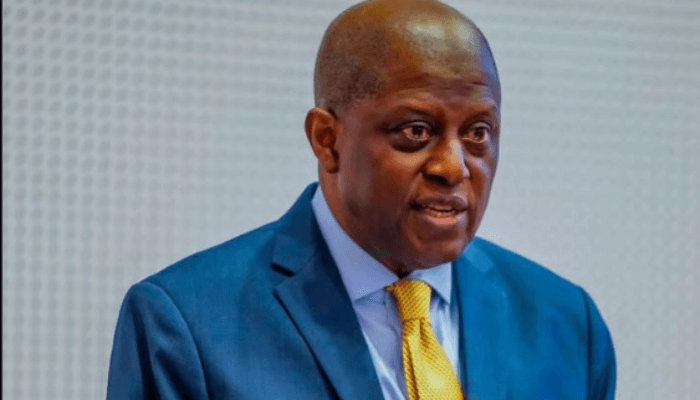
Nigeria’s Central Bank Governor, Olayemi Cardoso, has warned that escalating geopolitical tensions involving the United States, Israel, and Iran could affect future interest-rate decisions, noting that higher oil prices may both support export earnings and drive domestic inflation.
In an interview with the Financial Times, Cardoso said the impact of geopolitical shocks on Nigeria would likely come through energy prices and global financial conditions—two factors closely monitored by policymakers ahead of a key monetary policy meeting in May.
“Higher oil prices can support export earnings and strengthen the balance of payments, but they can also feed into domestic inflation through fuel, transport, and imported goods,” Cardoso said, highlighting the trade-offs facing Africa’s largest oil producer.
Brent crude has recently climbed above $100 per barrel as tensions in the Middle East deepened, raising concerns about potential supply disruptions. For Nigeria, where oil accounts for the bulk of foreign-exchange earnings, a sustained rally can improve fiscal and external buffers, but also risks reigniting inflationary pressures in an economy that has only recently begun to moderate after prolonged price growth.
Headline inflation slowed for the 12th consecutive month in February 2026 to 15.06 percent, while the naira strengthened to N1,345 per dollar after weeks of mild fluctuations amid rising Middle East tensions.
Cardoso emphasized that policymakers are vigilant to the risk that higher global energy costs could reverse progress in stabilizing prices. Imported inflation, particularly via refined fuel and other dollar-denominated goods, remains a key vulnerability despite ongoing foreign-exchange reforms.
The governor also noted that global risk sentiment is another transmission channel. Heightened geopolitical uncertainty tends to reduce investor appetite for emerging and frontier markets, potentially slowing capital inflows and tightening financial conditions. Any pullback in portfolio investments could test recent gains in the naira and Nigeria’s external reserves.
Despite these risks, Cardoso expressed confidence in Nigeria’s preparedness to withstand external shocks. Over the past two years, the central bank has rebuilt policy buffers, strengthened reserves, and restored greater functionality to the foreign-exchange market. Monetary policy has also returned “to a more orthodox footing,” referencing the bank’s tightening cycle aimed at curbing inflation and stabilizing the currency.
The governor’s comments suggest the Central Bank is unlikely to ease policy quickly, even if higher oil prices provide short-term windfalls. Nigeria’s benchmark interest rate currently stands at 26.50 percent. Any renewed spike in inflation due to global oil markets could complicate the path toward eventual rate cuts anticipated by investors.